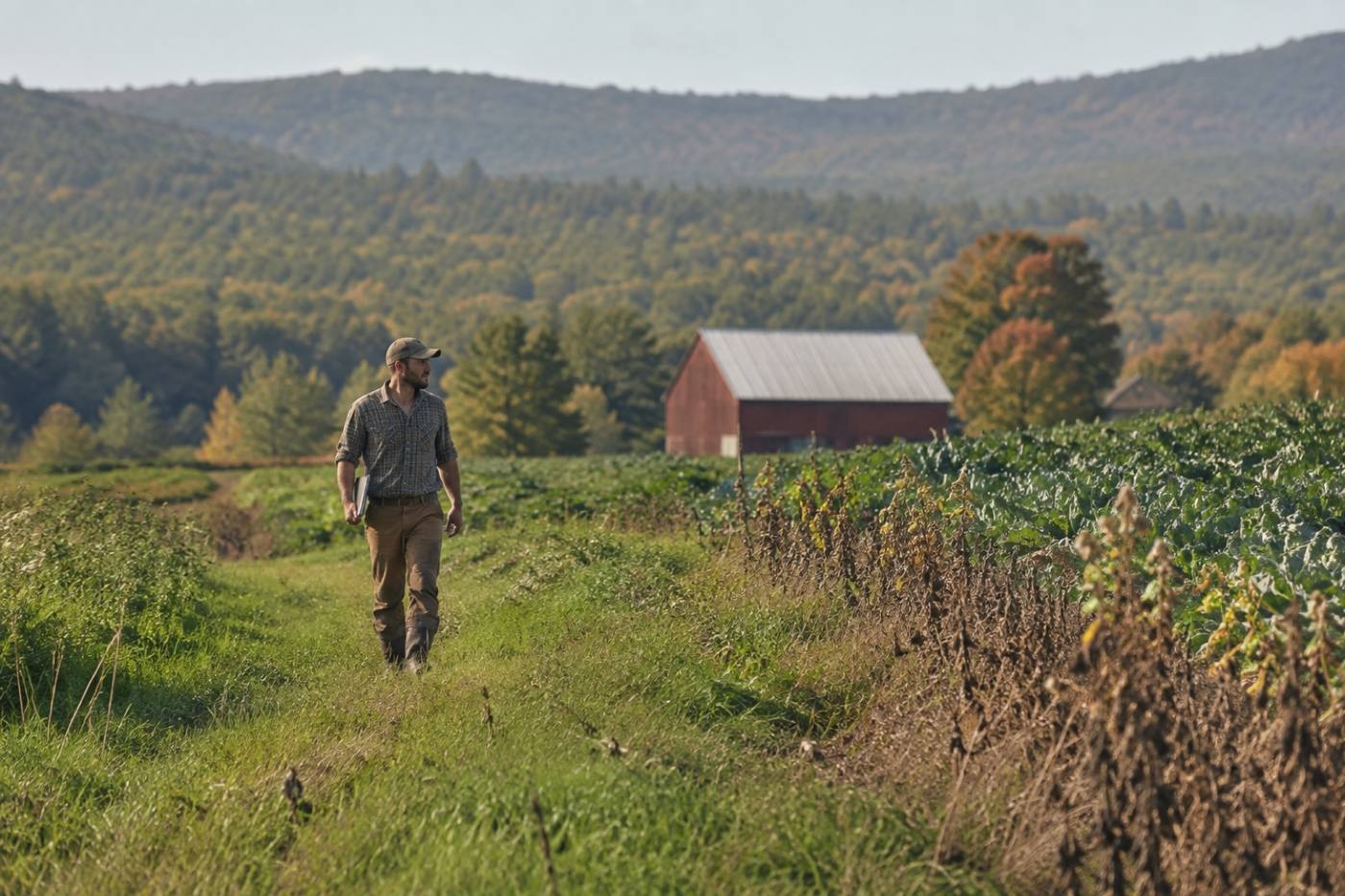
Brattleboro, Vermont · A land trust for working farms
Whetstone Valley Farmland Trust works on the layers that decide whether a farm stays a farm: the soil in the first foot, the plan that outlives a season, and the deed that stays with the land.
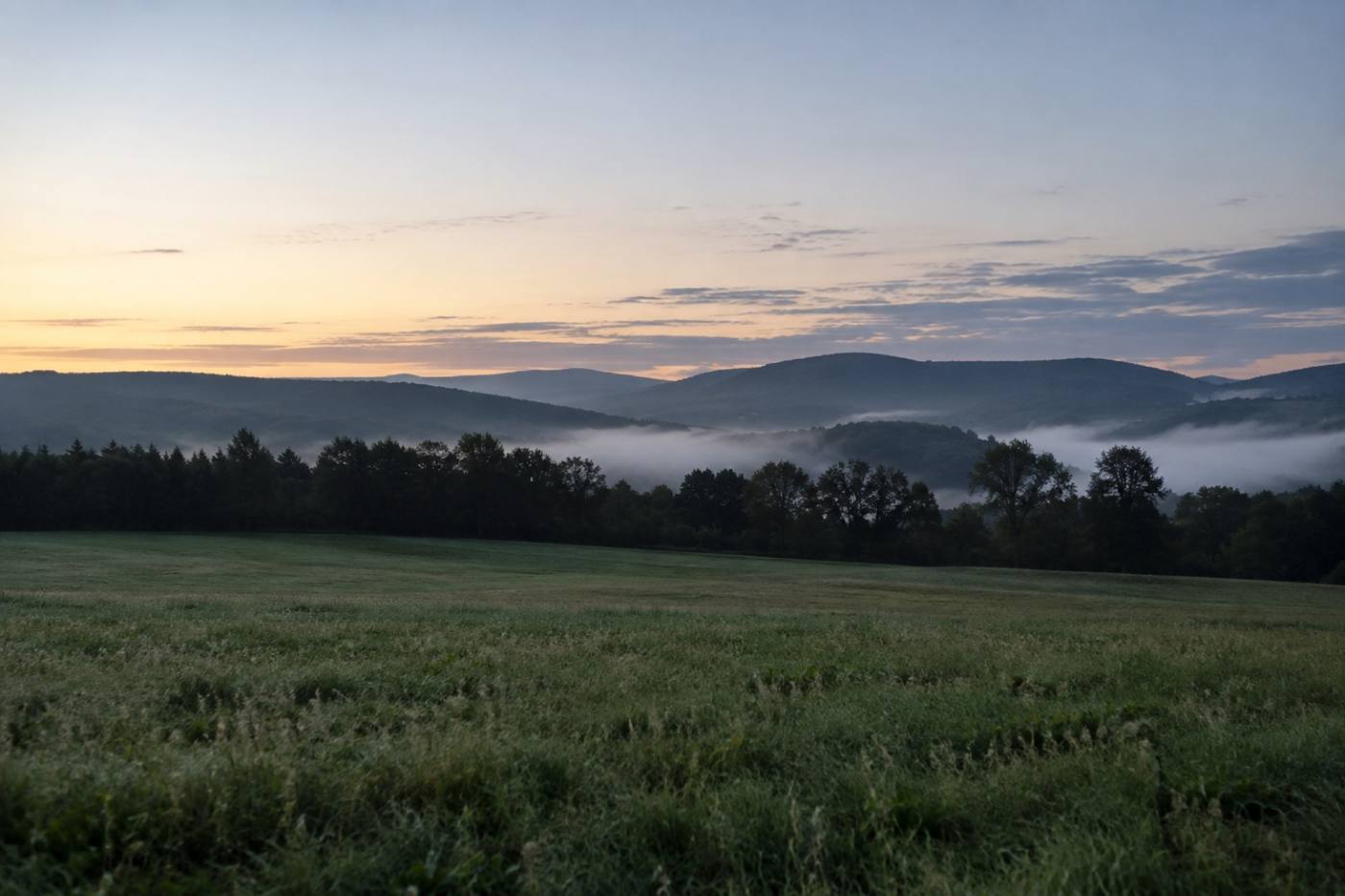
Ground in production now, and the people running it.
A working plan for soil, water and rotation that outlives one season.
Farmers who need ground, paired with landowners who have it.
The agreement that keeps a farm a farm, whoever holds the deed next.
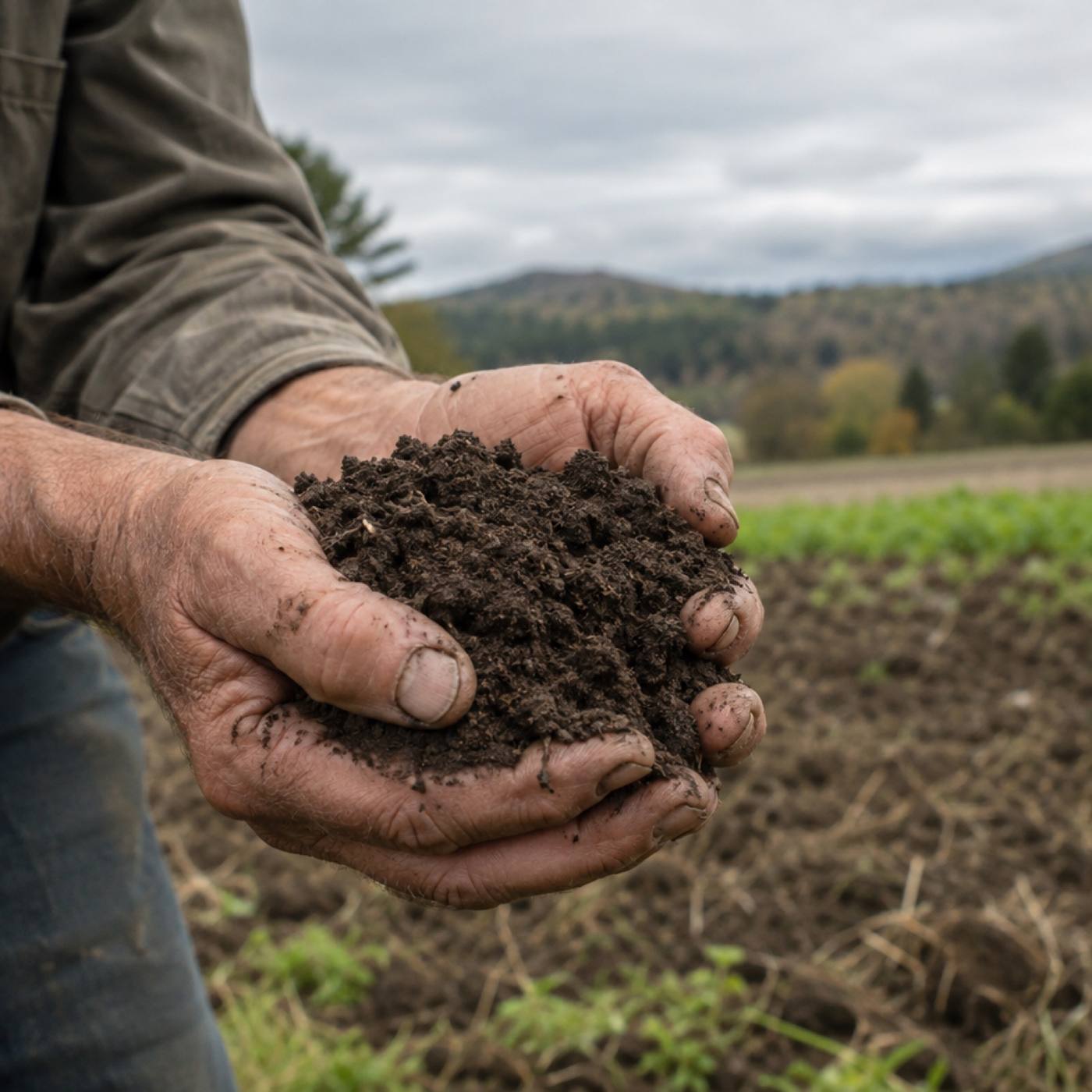
Layer 01 · Topsoil
Annual membership funds the slow work: sitting at a kitchen table with a farm family, walking a boundary line, and staying with a farm long after the paperwork is signed.
Stewardship is not a single event. A plan written for one season gets revised for the next. A matched lease gets renewed or renegotiated. An easement has to be monitored every year, by someone who knows the fields.
Recurring members are what make that possible. Membership is annual, it renews, and it goes directly to stewardship planning, the farmer land-match program, and the care of the easements we hold.
Written plans with farm families, revisited as the farm changes.
Introductions between farmers looking for ground and landowners with fields to lend.
Holding agricultural conservation easements, and keeping them on the land.
Layer 02 · Subsoil
One keeps a working farm working. The other puts farmers and available land in the same room.
We sit down with a farm family and write the plan that governs the ground: rotation, cover cropping, water, fence lines, the woodlot, and the places on the farm that should be left alone. It is drawn for the fields in front of us, not for a template, and it gets revisited as the farm and the family change.
Some farmers are looking for ground. Some landowners want their fields farmed again. We keep both lists, walk both properties, and make the introduction — then help work out a lease that both sides can live with for more than one season.
Layer 03 · Bedrock
An agricultural conservation easement is a voluntary agreement that keeps land in farming. We hold it, we monitor it, and it stays with the land when the farm changes hands.
An easement is written with the landowner, for the landowner's farm. It limits subdivision and non-agricultural development, and it leaves the farming to the farmer. Nothing about it requires selling the land or giving up the operation.
Because the terms run with the deed rather than with a person, they hold through a sale, an inheritance, or a change in the farm business. That is the point: the land keeps its use even when everything above it changes.
We walk interested landowners through the whole conversation — what the easement covers, what it leaves open, and what the farm looks like in ten years.
Layer 04 · Daylight
Volunteer workdays run through the season — fence repair, hedgerow planting, invasive removal, and the kind of work that goes faster with more hands on it.
Tell us whether you want to join as a member, come out to a workday, or talk through an easement on your farm. A steward will follow up.
Members hear about workdays and field walks first, and membership is annual — the recurring kind that keeps a stewardship plan alive between seasons.
Whetstone Valley Farmland Trust
Brattleboro, Vermont