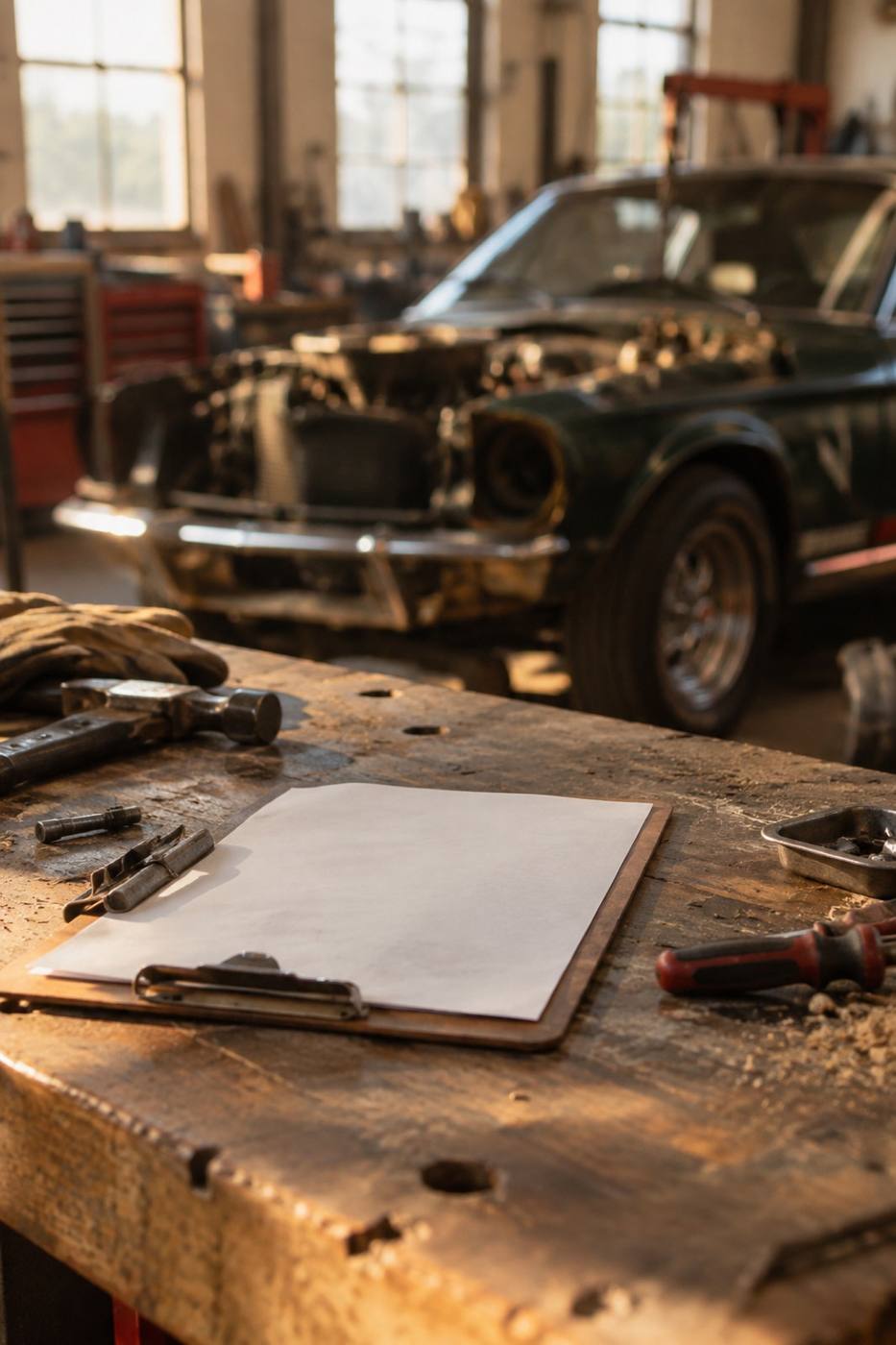
Work order — sheet 001
Tell us what you’ve got. We’ll write it down, then we’ll tell you the truth about it — what it needs, what it’ll take, and whether it’s worth doing at all.
Section 02 — Line items
Seven lines of work, in the order they normally happen. None of it is a package deal — you choose the lines, we write the estimate against them.
Parts come off in order — bagged, tagged and photographed before anything else moves.
Body off the frame. The frame and the shell get worked separately, then they go back together as one car.
Strip, machine, assemble, break in. The engine gets its own page in the file.
Panel by panel: blocked, primed, sprayed. The colour it left the factory with, or something else entirely.
Brightwork is cleaned up and checked against the car on the bench before any of it goes back on.
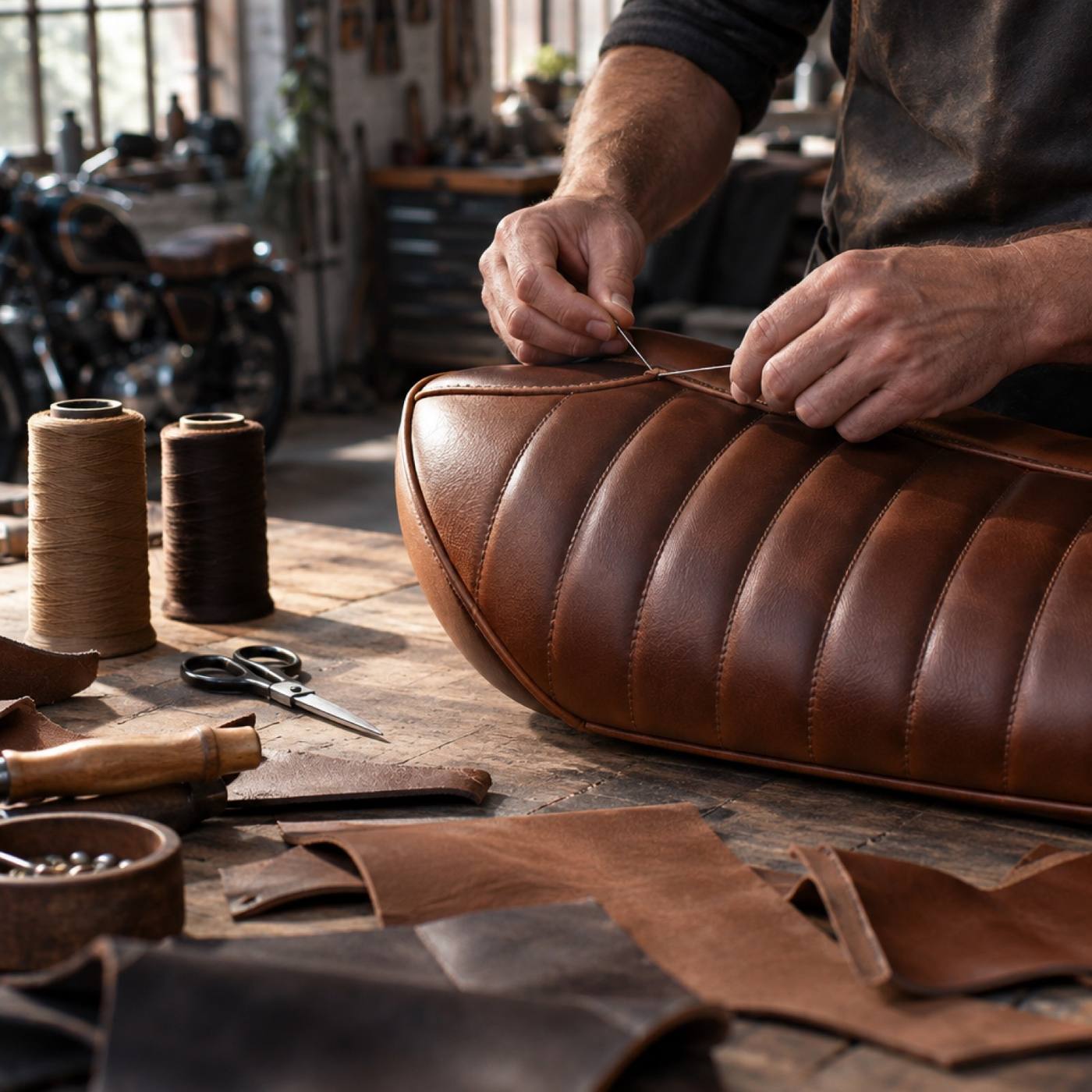
Seats, door cards, headliner and trim, stitched to the pattern the car came with — or the one you want.
Finished and ready to move on? We can handle the sale on your behalf.
Section 03 — How we work
Old cars hide things. The sheet is how we keep track of what we find, and how we keep you in the loop while we find it.
What you’ve got, what it needs, what it’ll take. You get a copy of the same sheet we work from.
Rust hides. We open the panels, shoot what’s behind them, and show you before the repair gets added to the estimate.
Some cars are better sold for parts. We’d rather tell you that up front than take the work and let you find out later.
Line item 07
Not every restoration ends in your own driveway. If you decide to sell once the work is finished, we can handle the sale on your behalf — the same car, the same sheet, a new owner’s name at the top.
Talk to us about consignmentWhat the car is, where it is now, and what you’d like out of it.
Bring the paperwork you have — title, receipts, old photographs. We’ll add it to the file.
Section 05 — Sign-off
Send the basics and we’ll come back with questions, then a written estimate built from the lines you choose.