01 Privacy
Cedar privacy
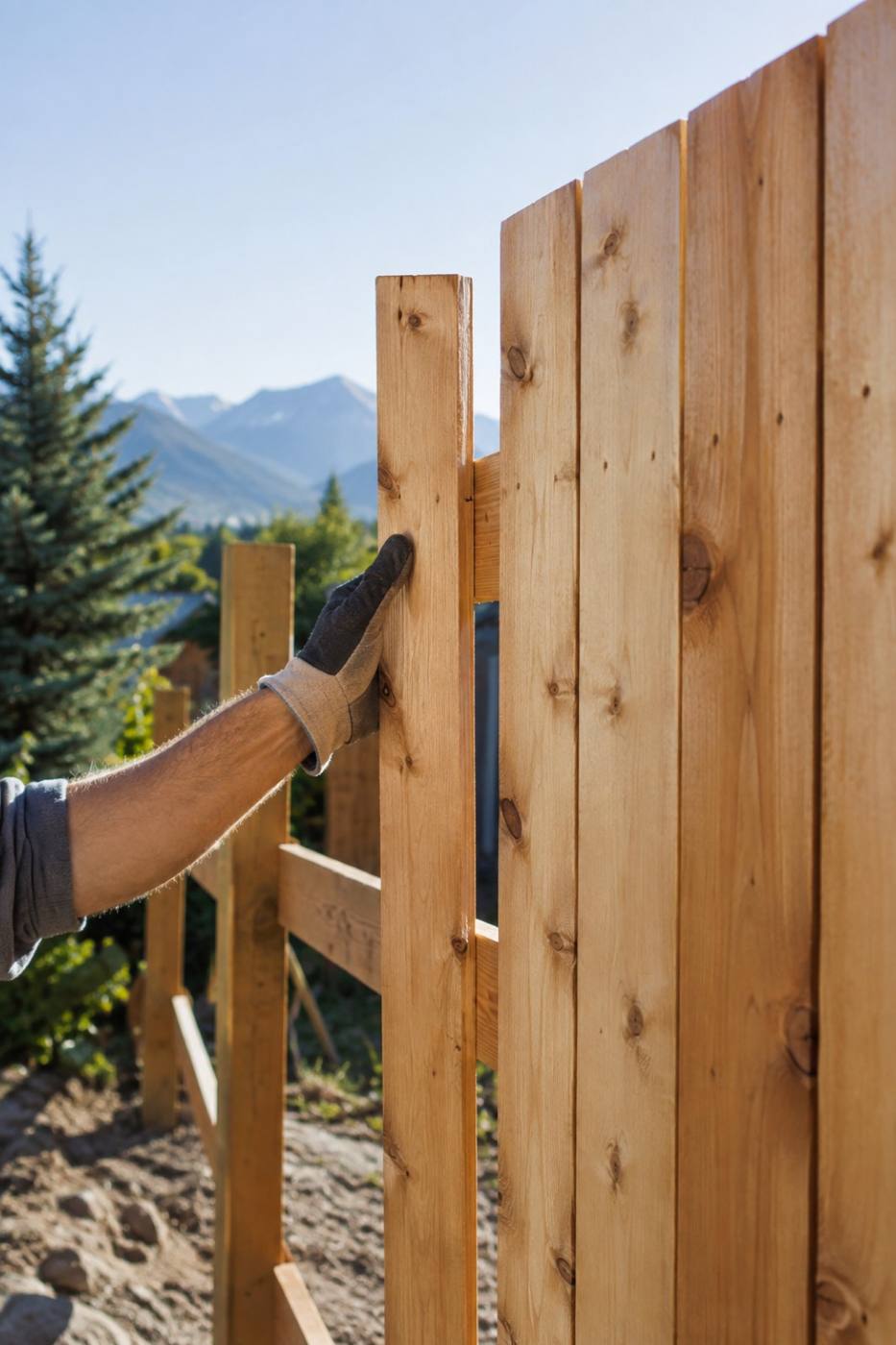
Cedar takes a Montana winter and keeps standing. Boards go up tight for a solid screen, with posts set plumb so the line reads clean from the house.
Bozeman, Montana · Fence builders
Cedar, chain link, aluminum, vinyl and ranch rail — measured to the boundary you already have.
Cedar privacy · Chain link · Aluminum · Vinyl · Ranch rail
Five lines we hold
Every property out here asks for a different line. These are the five styles we build most around Bozeman, and what each one is good at.
01 Privacy
Cedar takes a Montana winter and keeps standing. Boards go up tight for a solid screen, with posts set plumb so the line reads clean from the house.
02 Boundary
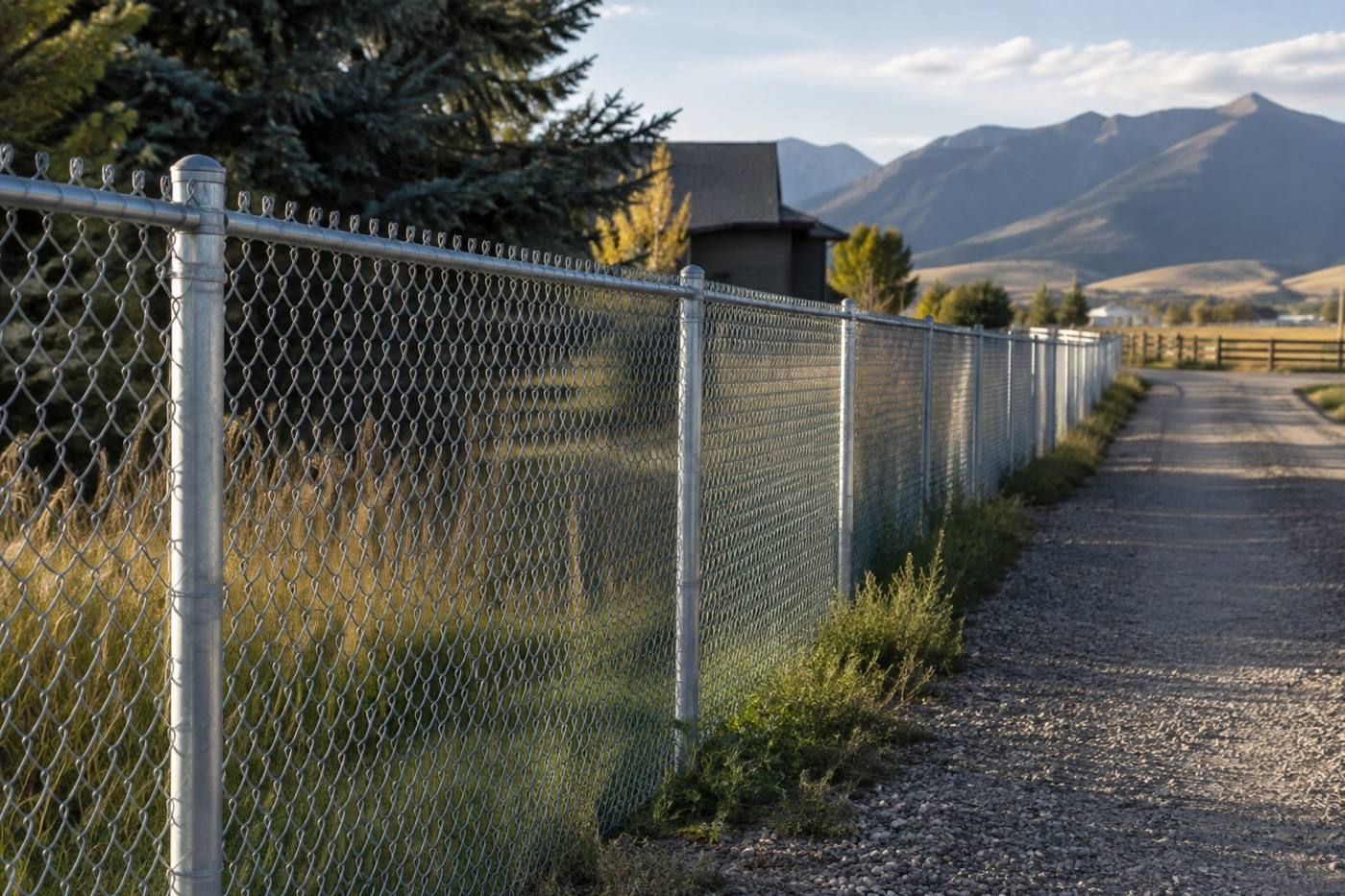
The working fence. Galvanized mesh on steel posts, pulled straight and tensioned, for the dog, the driveway and the shop yard.
03 Frontage
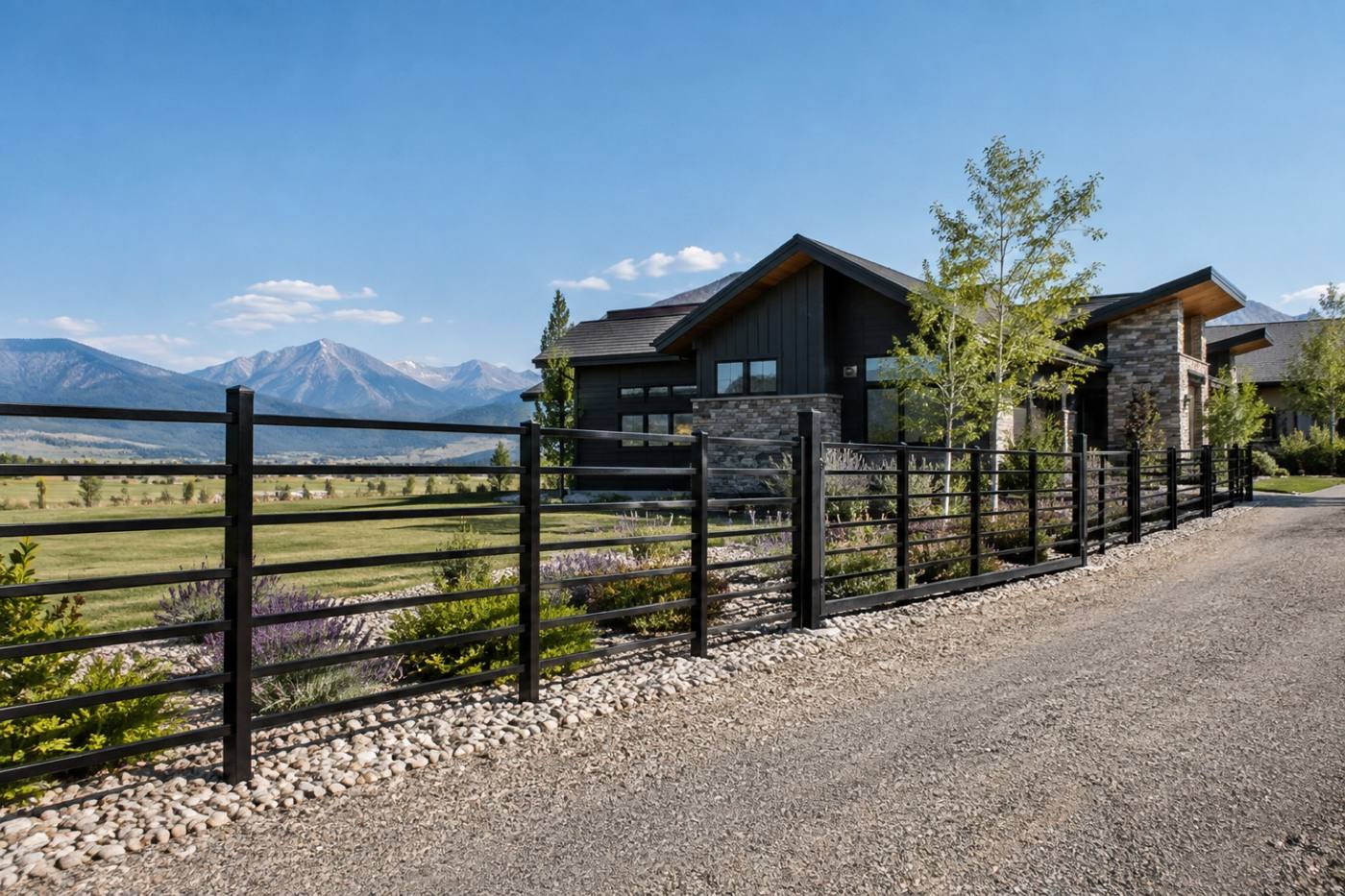
Powder-coated aluminum keeps the front of a property light and open — a thin, ornamental line you notice up close and barely at all from the road.
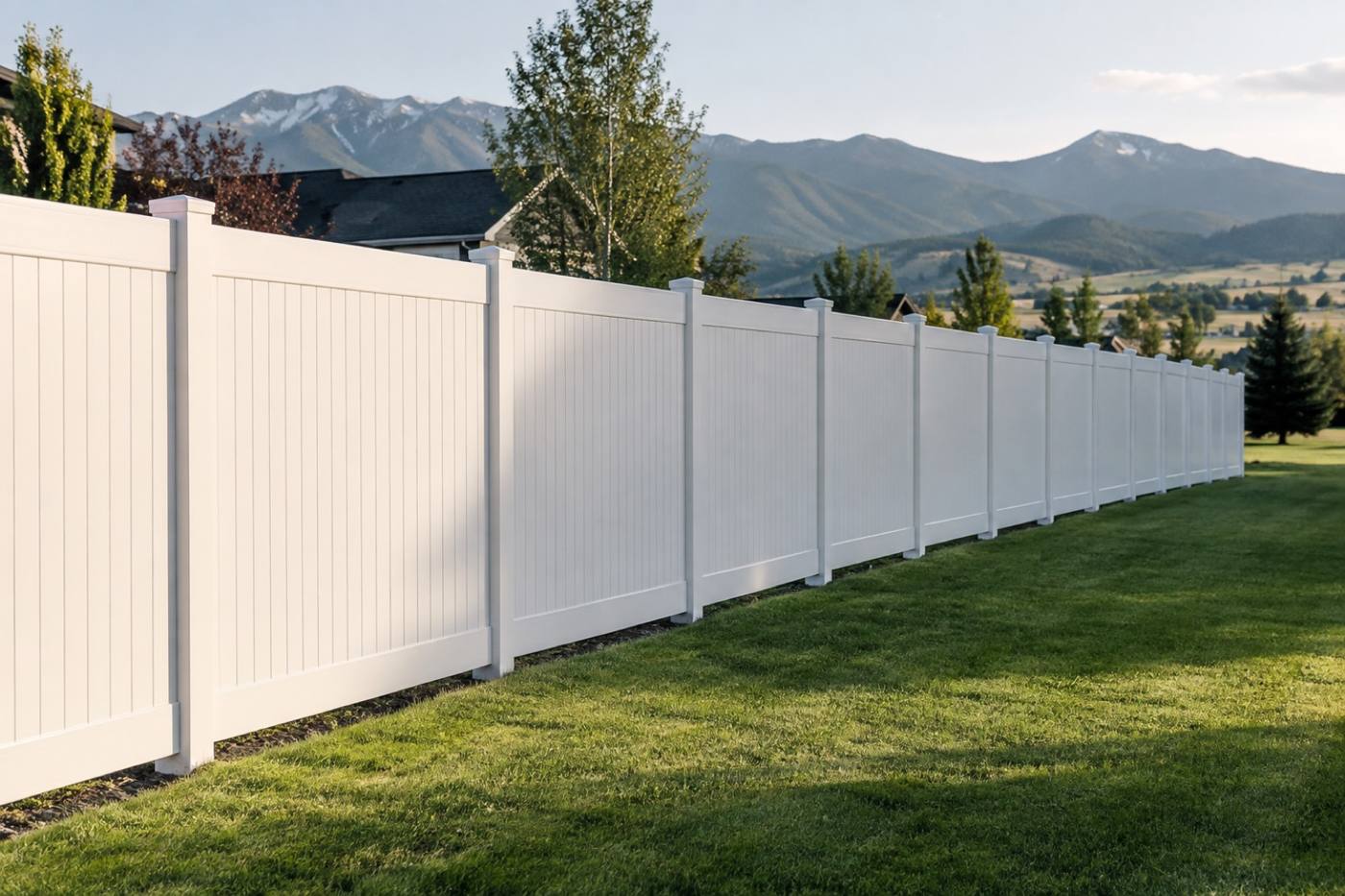
04 Easy keep
Vinyl holds its color and asks for nothing once it is set — no stain, no sanding, no weekend work. It suits a fence you would rather not think about again.
05 Open land
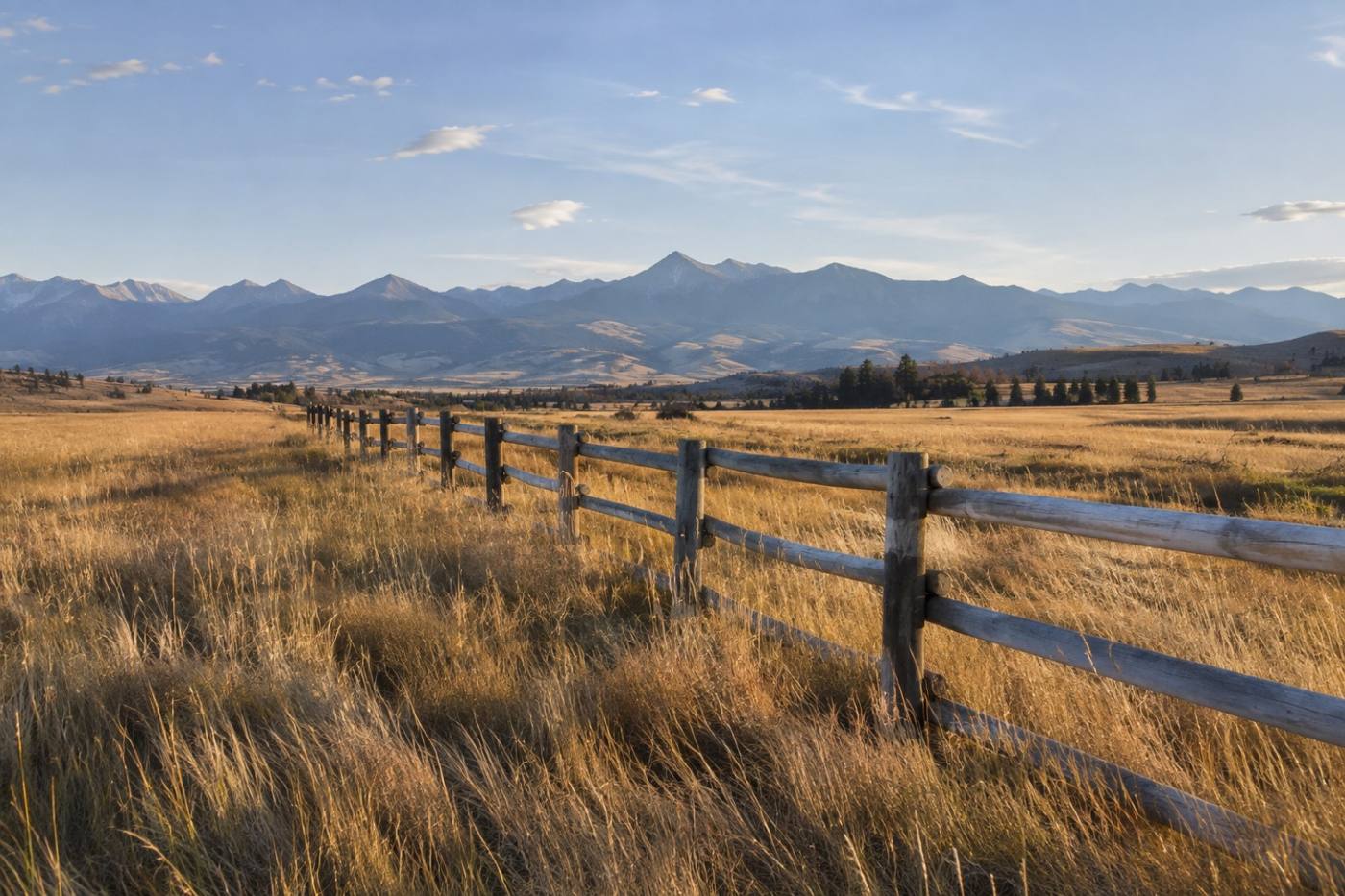
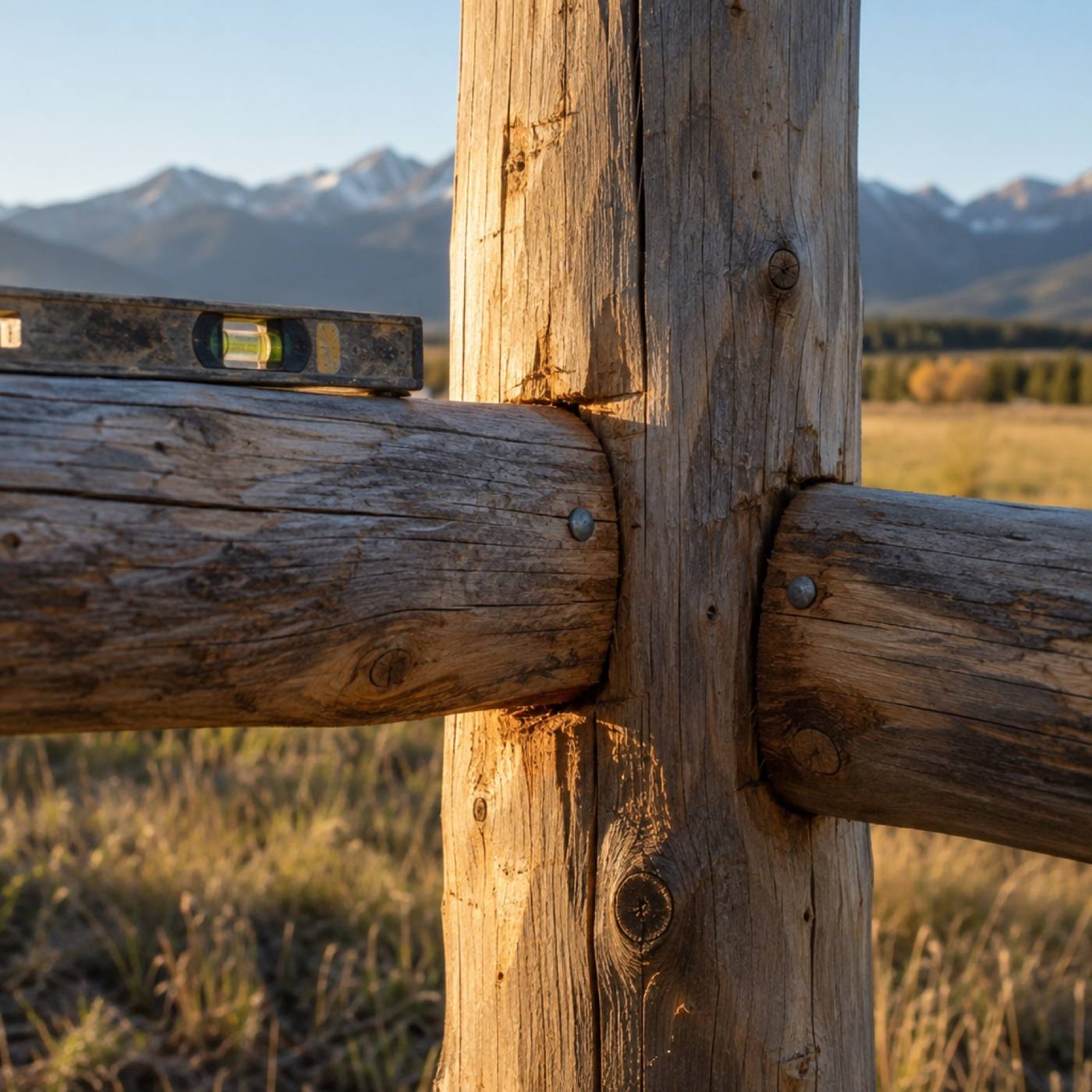
Three rails on stout posts, with daylight between them. It marks a boundary without hiding the pasture behind it.
How a line gets built
Most of what makes a fence last is decided before a single board goes up — where the corners sit, how deep the posts go, and how the rails meet the grade. That order never changes, whatever style we are setting.
You show us the corners and what the fence has to do — keep something in, keep something out, or simply mark the line. We measure the runs and note the grade.
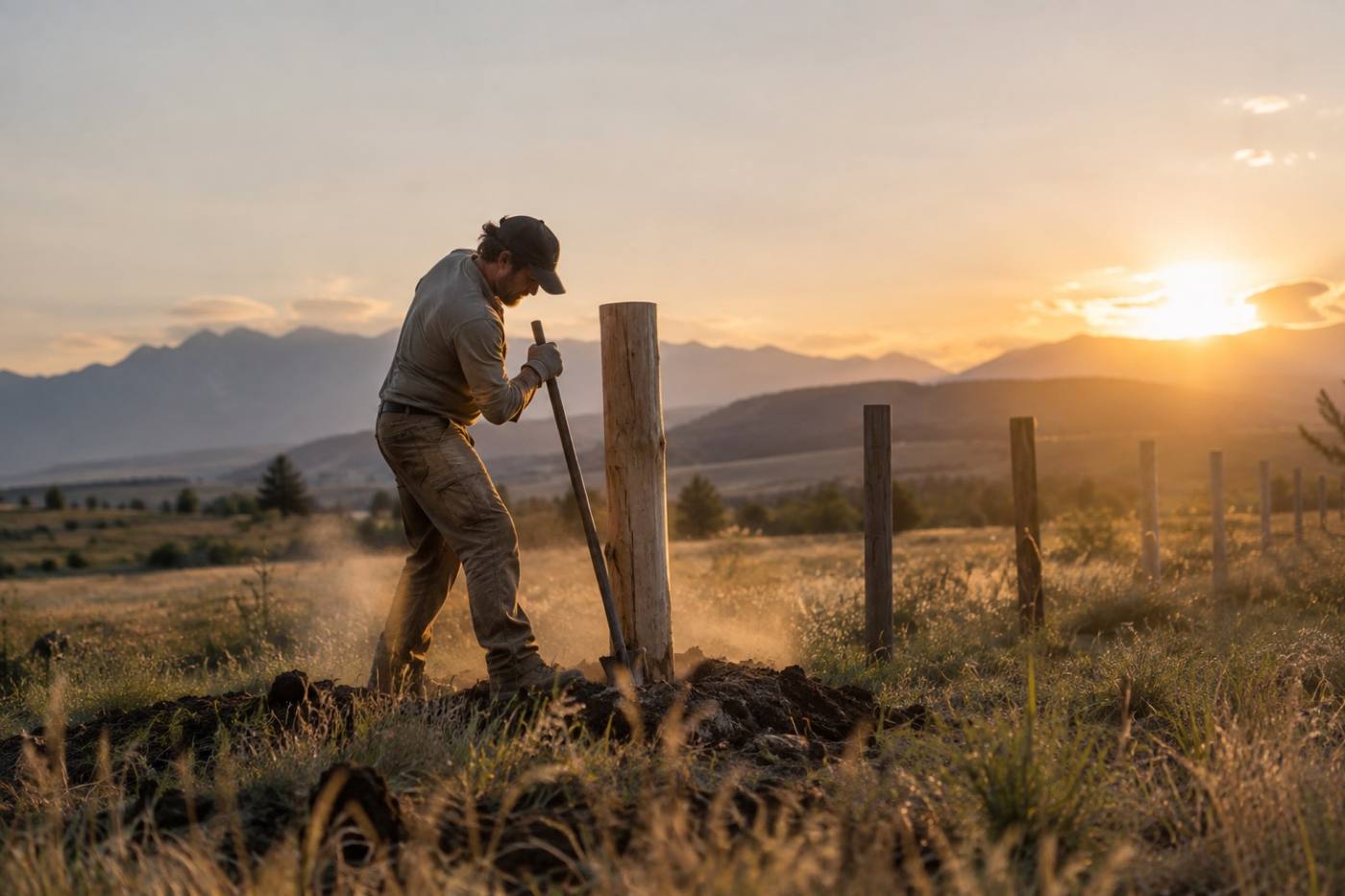
Posts go in first, plumb and deep enough for this ground, so every rail after them has something honest to sit on.
Rails follow the land instead of cutting across it. Then the gate goes on and swings the way you will actually use it, every day.
Where the line goes
The style follows the job. Tell us what the ground is doing and we will point you at the fence that suits it — not the other way round.
Privacy and frontage — a solid screen along the back, a lighter line at the street, and a gate that closes without a fight.
Long runs across open ground in ranch rail and chain link, with wide gates where the truck turns off the county road.
Steel and mesh around shops, equipment and runs — built to take a shoulder leaning on it and still hang straight.
Get a quote
Tell us where the fence goes and what it needs to do. We will come walk it, measure the runs, and send you a quote for the styles you are considering.