Sunspoke Solar Tucson, Arizona Book a consultation

Field guide · Tucson, Arizona

A homeowner’s field guide to solar in Tucson.

Rooftop design, ground-mount arrays, battery backup, panel cleaning, monitoring and the money — laid out in the order you actually have to decide them.

Route map — six stops from your roof to your switch Tucson · rooftop · ground-mount · battery

Route overview

Six stops. One clear route.

Most homeowners arrive with one question — what will this cost me? — and leave with twelve. The route puts them in order, so each answer builds on the one before it instead of landing all at once.

01 Rooftop design Layout, shade and what your roof can hold.
02 Ground-mount arrays When the roof isn’t the right answer.
03 Battery backup Power that stays on when the grid blinks.
04 Panel cleaning Keeping desert glass clear and scratch-free.
05 Monitoring setup Watching the numbers, catching the dips.
06 Financing Comparing the money on the same page.
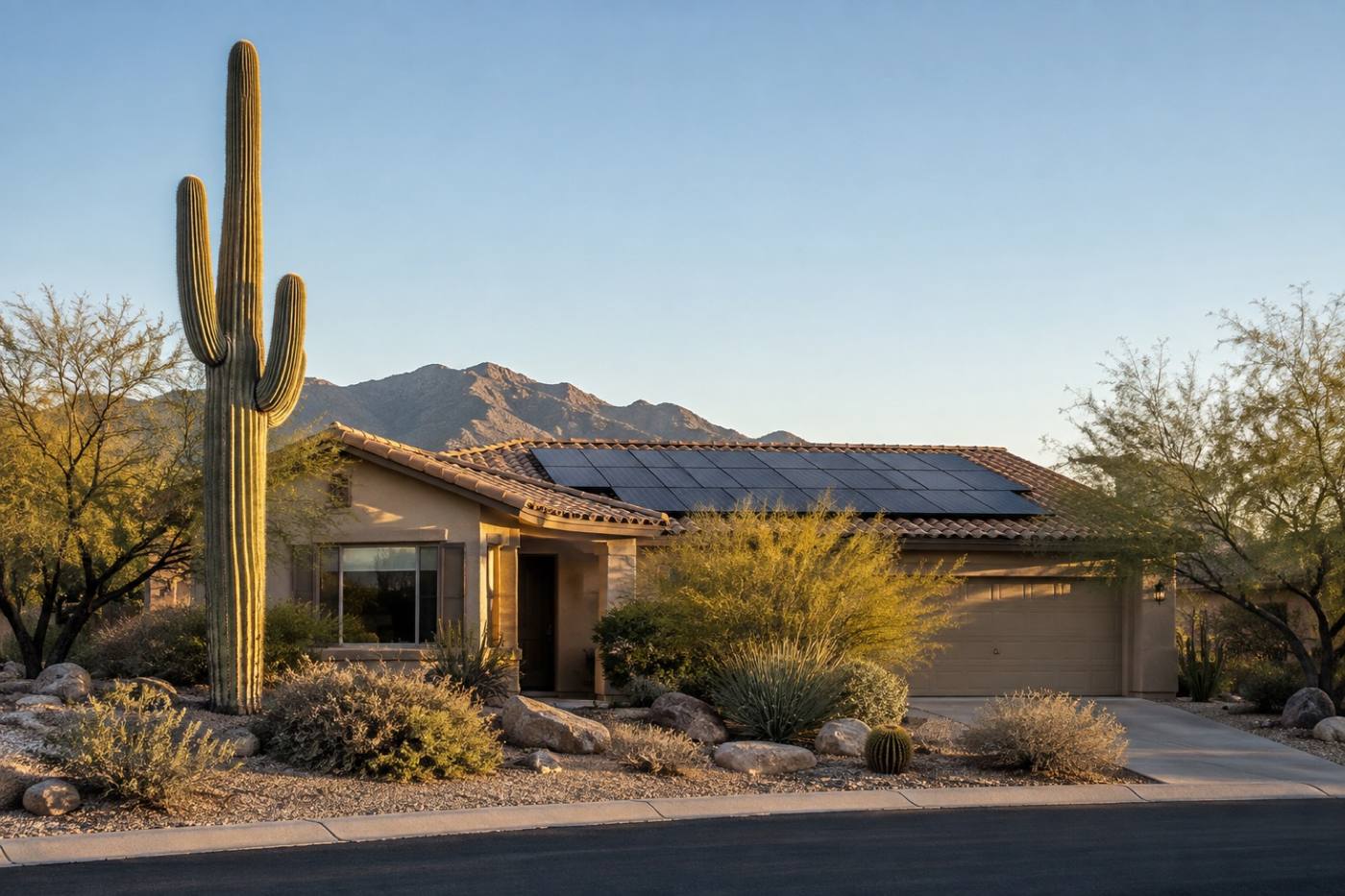
Rooftop solar panels on a Tucson home at golden hour
Stop 01 in real life — panels set along the roof plane that actually faces the sun.
Read it in order, or jump to the stop you’re stuck on.

Every stop is written the way we would explain it across a kitchen table. Skim the whole route first if you like — then bring your questions to a consultation and we will work through them against your own roof, shade and usage.

The six stops

The stops, in order.

Each stop is one decision. Read the plain-language version, then note the question at the end — those are the ones worth bringing to your consultation.

01

Rooftop solar design

We start on paper, not on your roof. Your roof planes, the shade that crosses them through the day, and the way your household actually uses power decide where panels go and how many. You see a layout you can read before anything is ordered or mounted.

Ask about how the design handles shade from a neighbor’s mesquite.
02

Ground-mount arrays

Not every Tucson roof is a good solar roof — some face the wrong way, some sit under shade, some are simply too small for what the household uses. A ground mount puts the array on its own steel frame in the yard, tilted toward the sun your lot really gets.

Ask about setbacks, trenching, and how the frame is anchored for desert wind.

03

Battery backup

A battery does two jobs. It keeps the circuits you choose running when the grid goes down, and it holds daytime solar for the evening, when most homes pull the most power. Which circuits matter is your call — the fridge, the internet and a few lights is a different system than the whole house.

Ask about which circuits you would want to keep on backup.

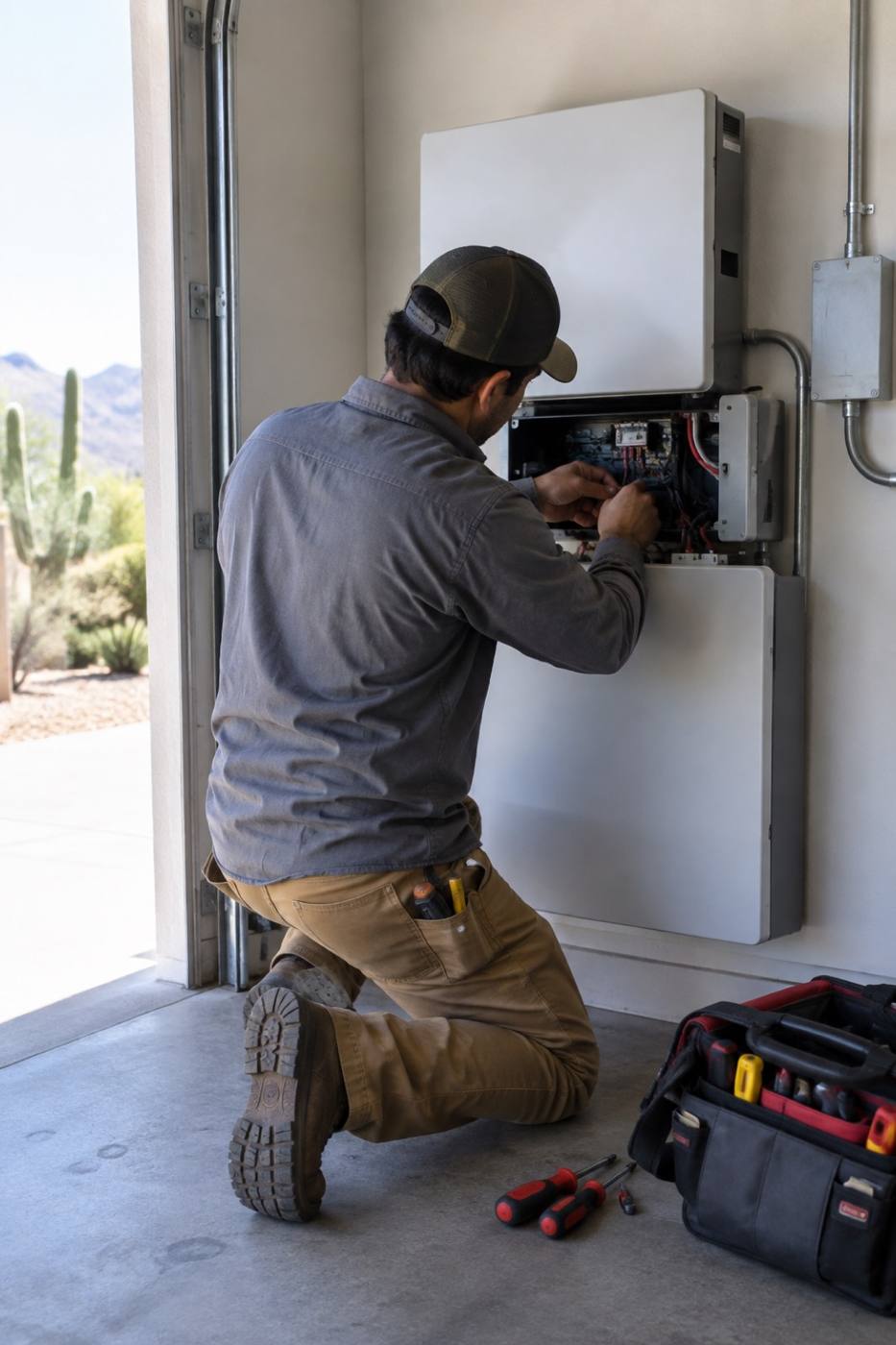
Technician installing a home battery backup unit in a garage
Stop 03 — a backup battery going onto a garage wall.
04

Panel cleaning

Desert dust, pollen and monsoon grit settle on the glass and stay there. A careful seasonal rinse clears the film without scratching the surface — and it keeps you from finding out about a dirty array through a surprising bill.

Ask about how often your part of town warrants a rinse.

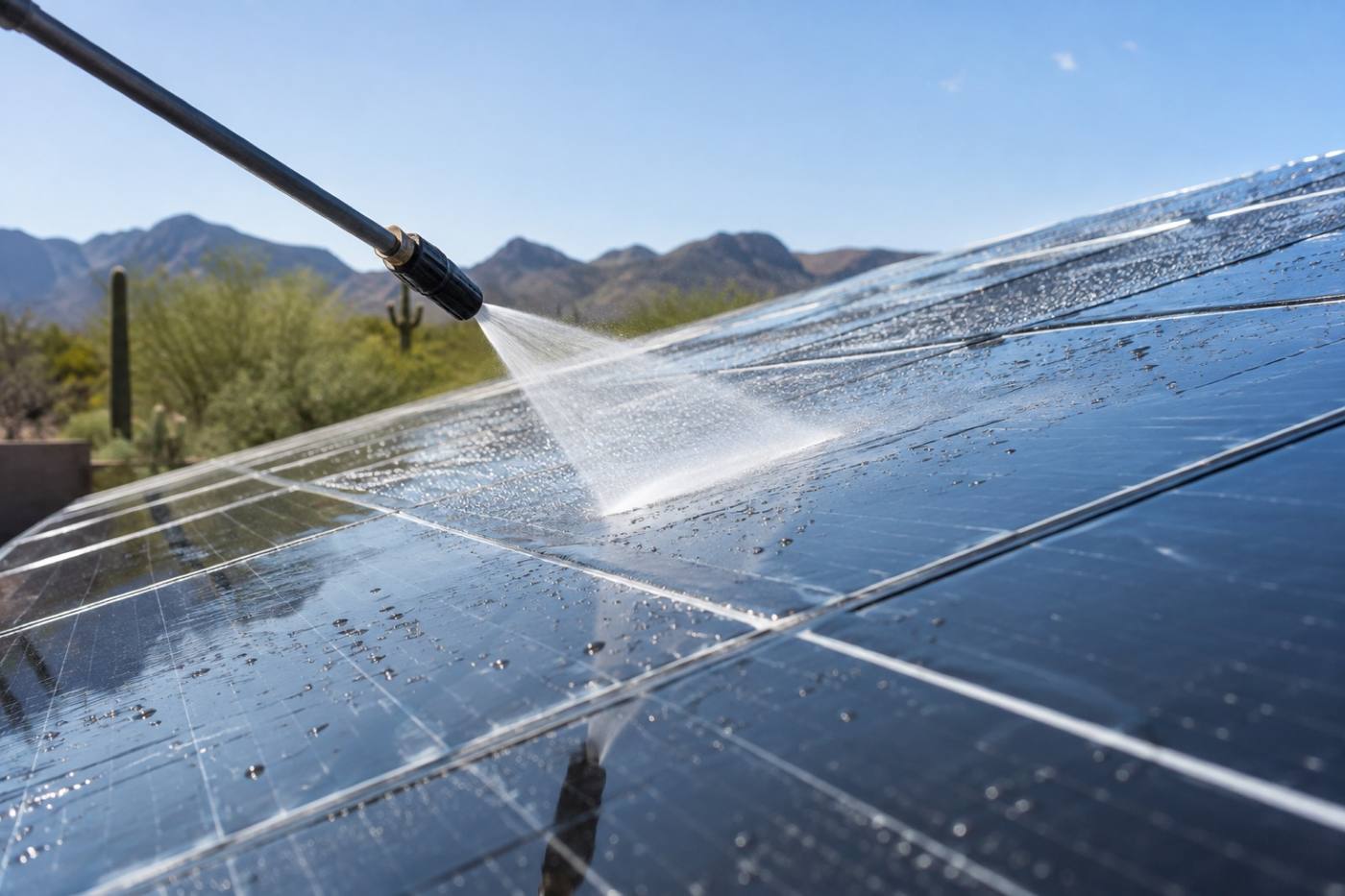
Solar panels being rinsed clean with water in desert sunlight
Stop 04 — a seasonal rinse on desert glass.
05

Monitoring setup

Your system should be able to tell you what it is doing. Monitoring puts production on your phone, so a dip shows up as a number you can act on instead of a bill that surprises you at the end of a season.

Ask about who watches the alerts, and who you call when one fires.

06

Financing consultations

Cash, loan, lease, power agreement — the words get used as if they all mean the same thing. We put the options side by side on one page, with the same numbers in each column, so you can compare them at your own kitchen table instead of in a sales conversation.

Ask about what the monthly figure looks like under each option.

Not sure where to start? Bring your roof, your shade and your last power bill to a consultation and we will walk the whole route against your property.

Book a consultation

Field notes for Tucson

What the desert asks of a solar system.

Tucson’s sun is the easy part. The things that decide whether a system performs the way it should are shade, dust and storm timing — three local conditions worth designing around from the first drawing.

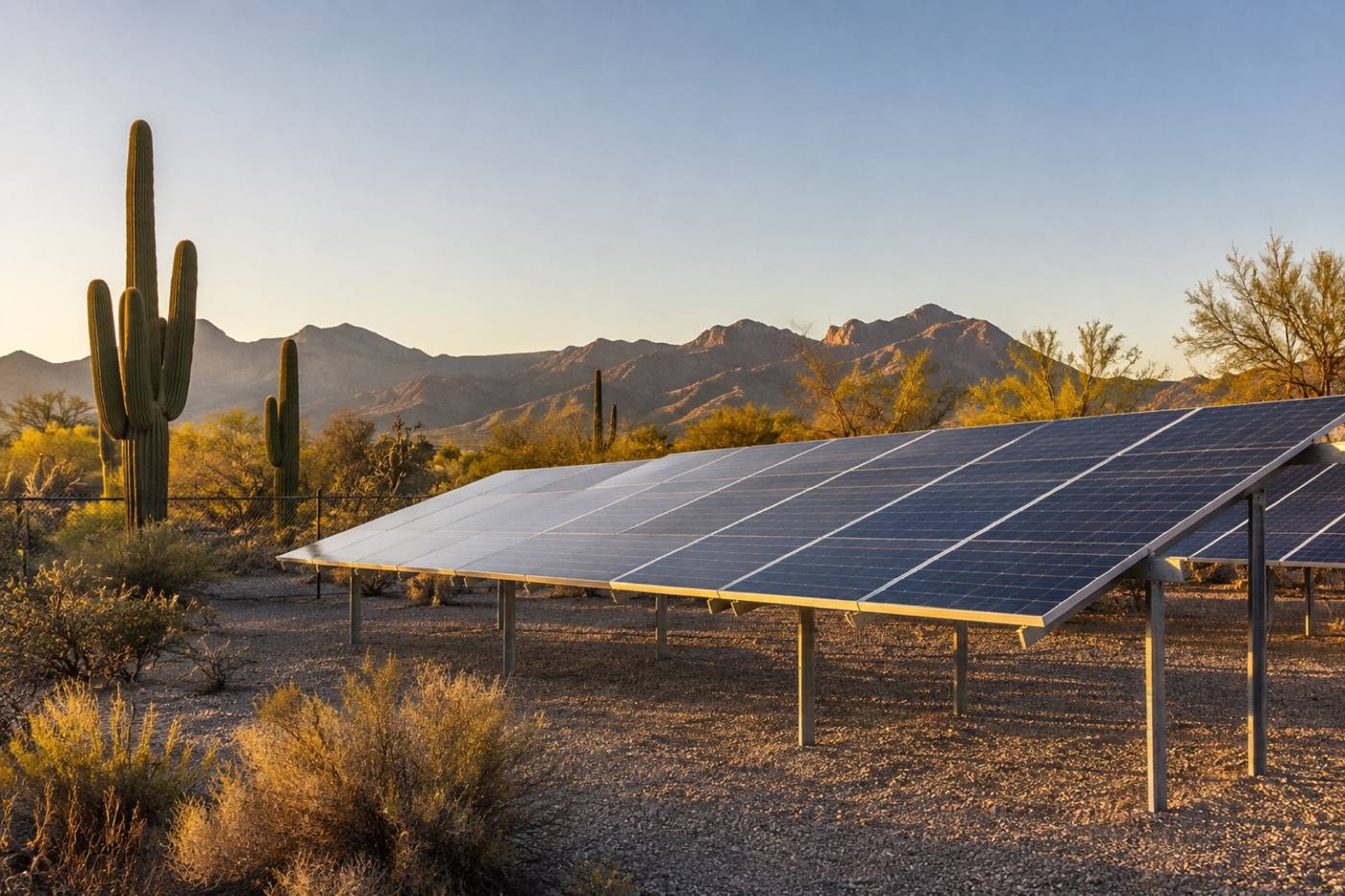
Ground-mounted solar array on a desert lot with saguaros nearby
Stop 02 on a desert lot — the array sits on its own frame, tilted to the sun.
01

Shade moves all year

The sun swings low in winter, so a tree that never touches your roof in July can shade it in December. Good design checks both ends of the year, not just the day we happen to measure.

02

Dust is a maintenance item

Cleaning is not cosmetic in the desert. It is part of how the system keeps performing, and it belongs on a schedule the same way a filter change does.

03

Monsoon is a design condition

Summer storms bring wind, grit and hard rain in a hurry. Mounting, flashing and drainage should assume all three from the start rather than get patched afterwards.

Trailhead

Start your own route.

Tell us a little about your home and what you are weighing. We will set up a consultation and walk the whole route with you — rooftop or ground, battery or not, and the money laid out plainly.

  • 01 Tell us about your home — the roof, the yard, the shade you already notice.
  • 02 We map your options and walk you through the six stops against your own property.
  • 03 You pick the route that fits — and decide when you are ready, not on the call.

Request a consultation

Six stops, one conversation. No jargon, no pressure.

We reply with a few times to meet. Serving Tucson and the surrounding desert communities.