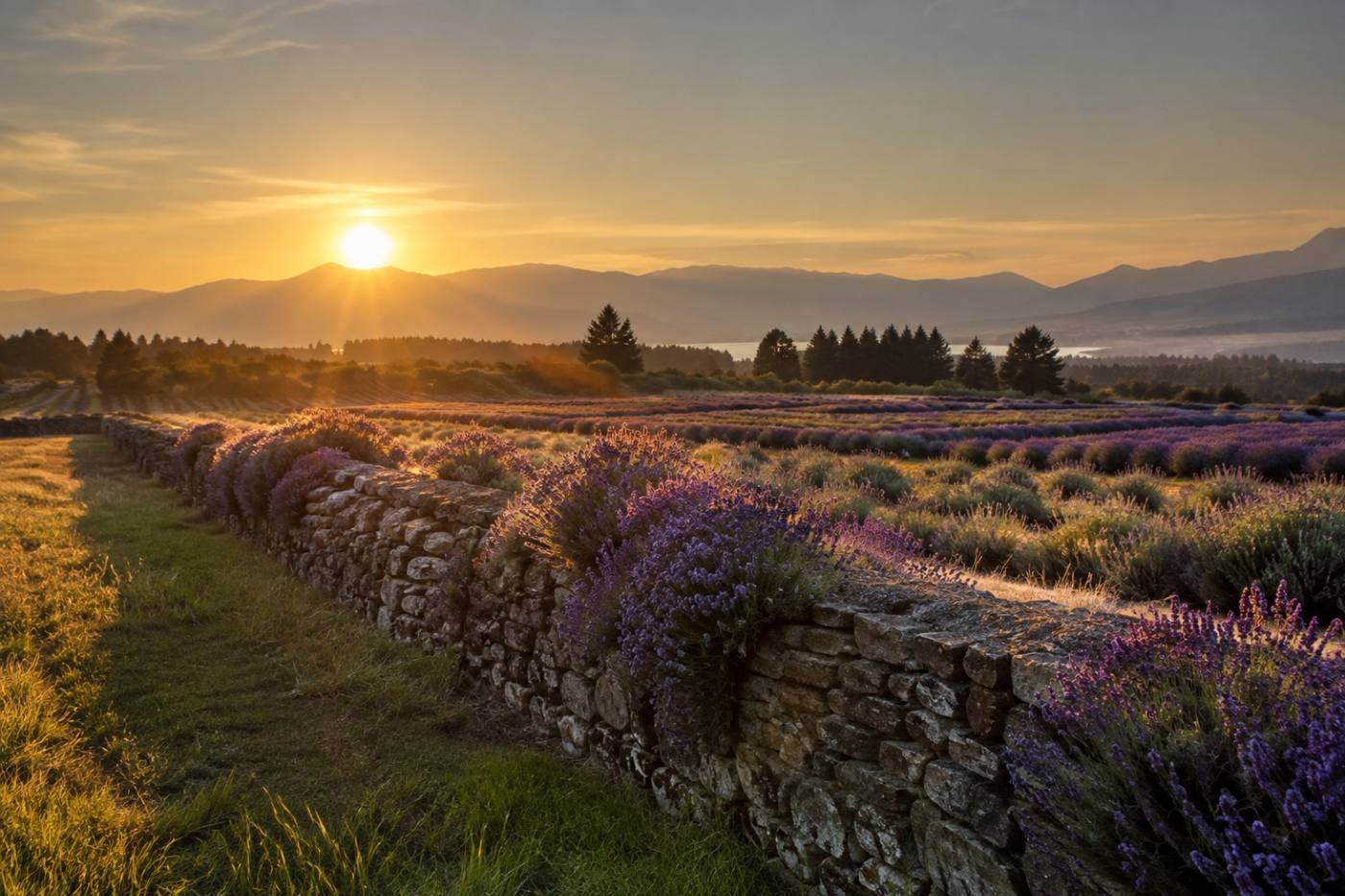
Lavender grown along a dry-stone boundary in Sequim, Washington. Bundles, essential oils and soaps from the same rows you can walk.
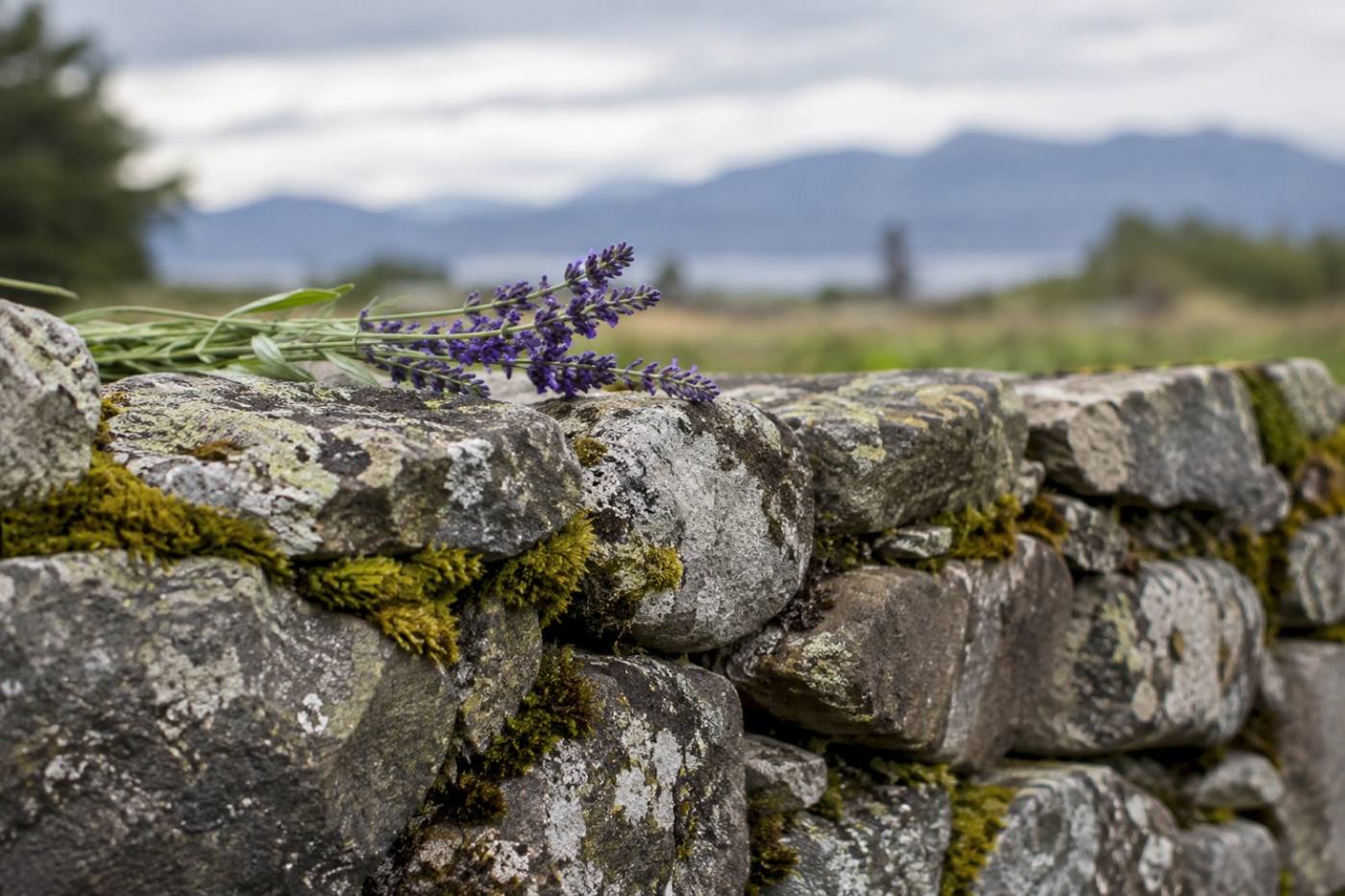
The farm takes its name from the dry-stone boundary that runs the length of the upper field — stone stacked on stone, holding the edge of the ground.
The lavender grows along its sheltered side. Every bundle, bottle and bar starts in the rows that wall protects.
It shelters the rows and holds the day's warmth along the field edge — the reason the lavender belongs on this side of it.
Dry summers, cool nights and long light. The ground the wall protects is the ground lavender was made for.
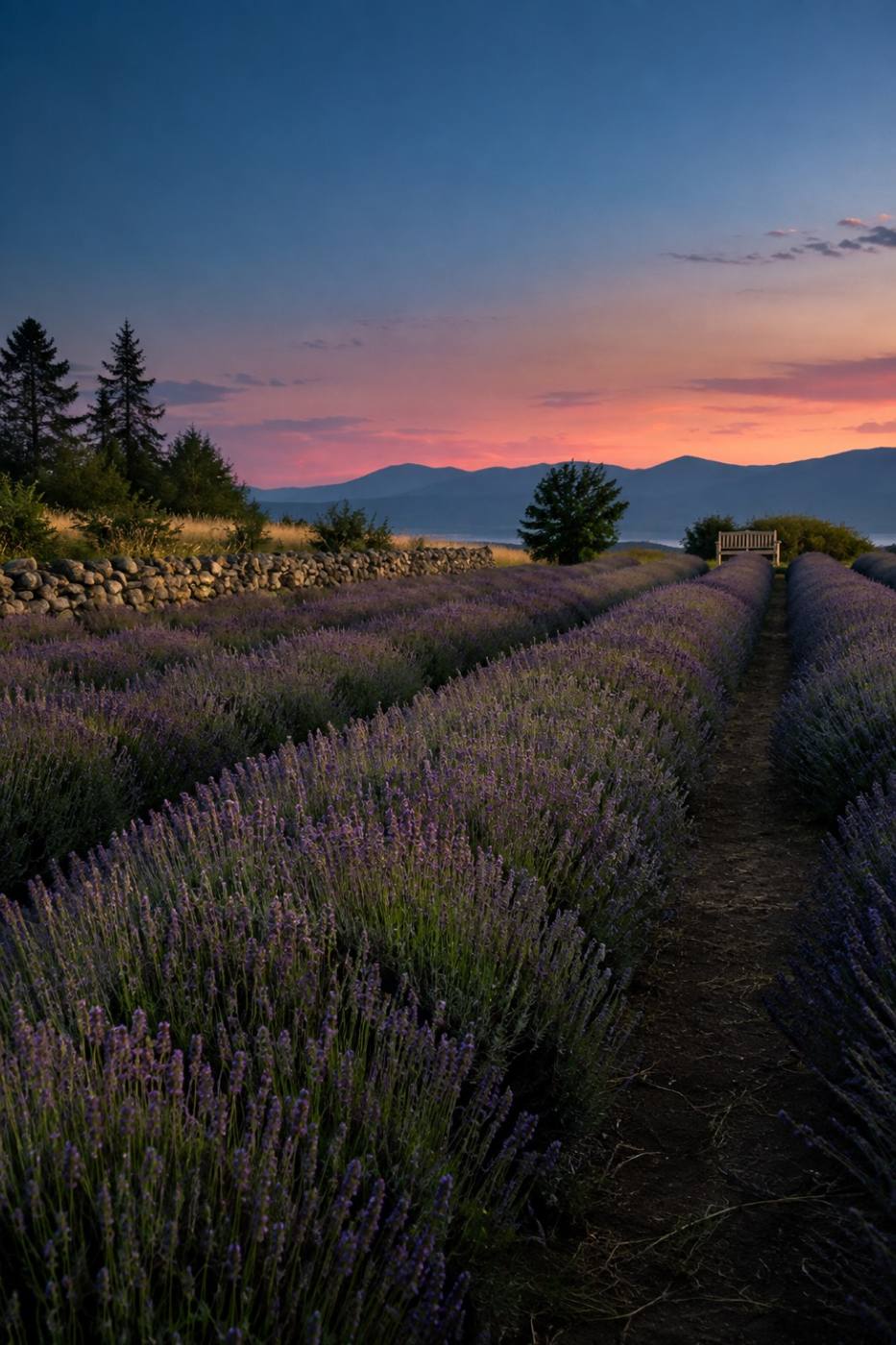
The same wall runs past the u-pick rows and the field we set for weddings. Walk it and you have seen the whole farm.
Walk the rows
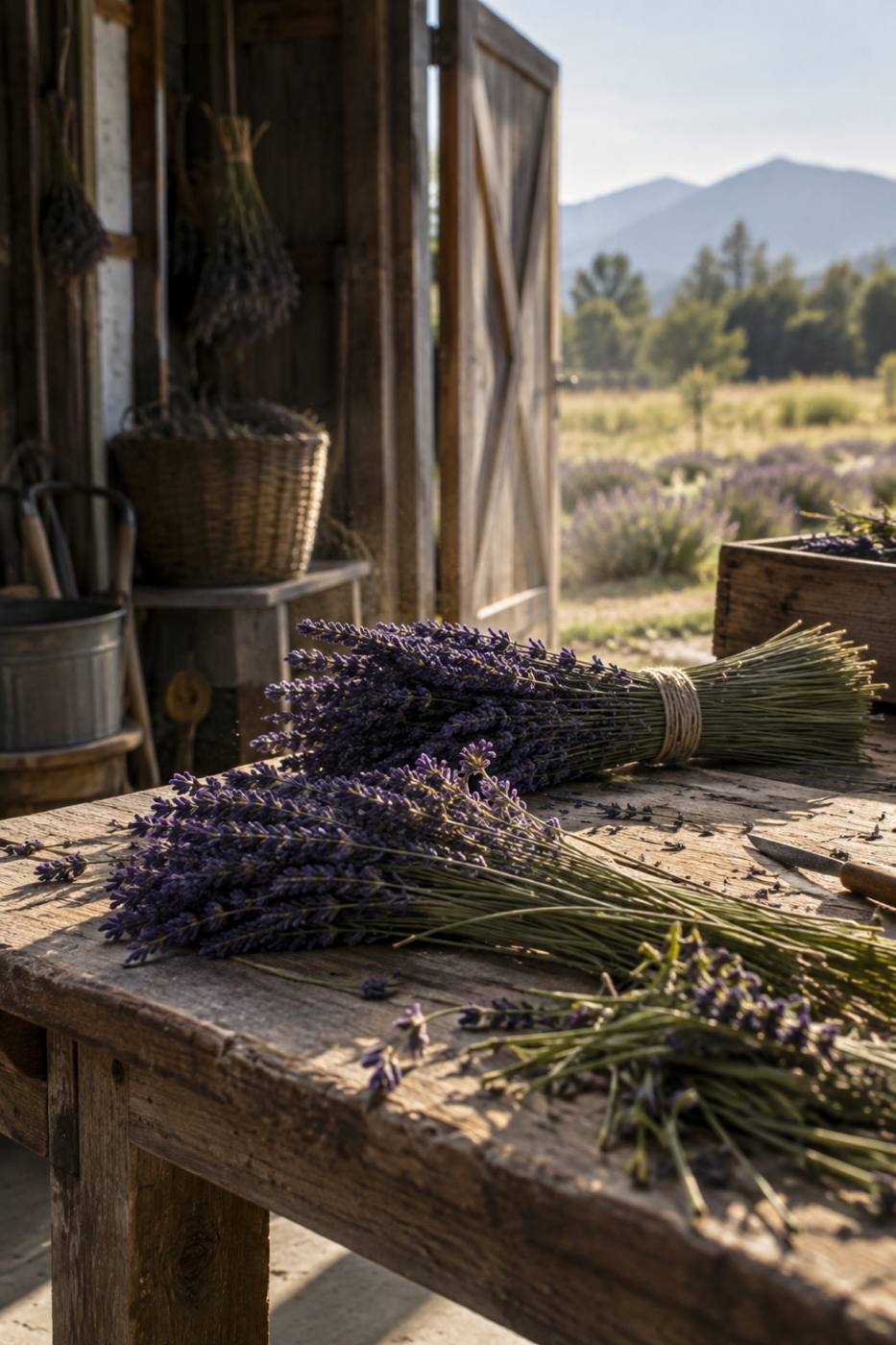
Cut at the wall, tied for the table.
The same rows, three ways to take them home. A bundle for the table, oil for the diffuser, a bar for the sink.
Long stems tied in bundles and hung to dry. Put them where you want the room to smell like the field.
Lavender oil in small bottles. A few drops in the diffuser, a drop on the wrist, a trace in the bath.
Lavender soap bars, wrapped for the shelf and easy to keep by the kitchen sink.
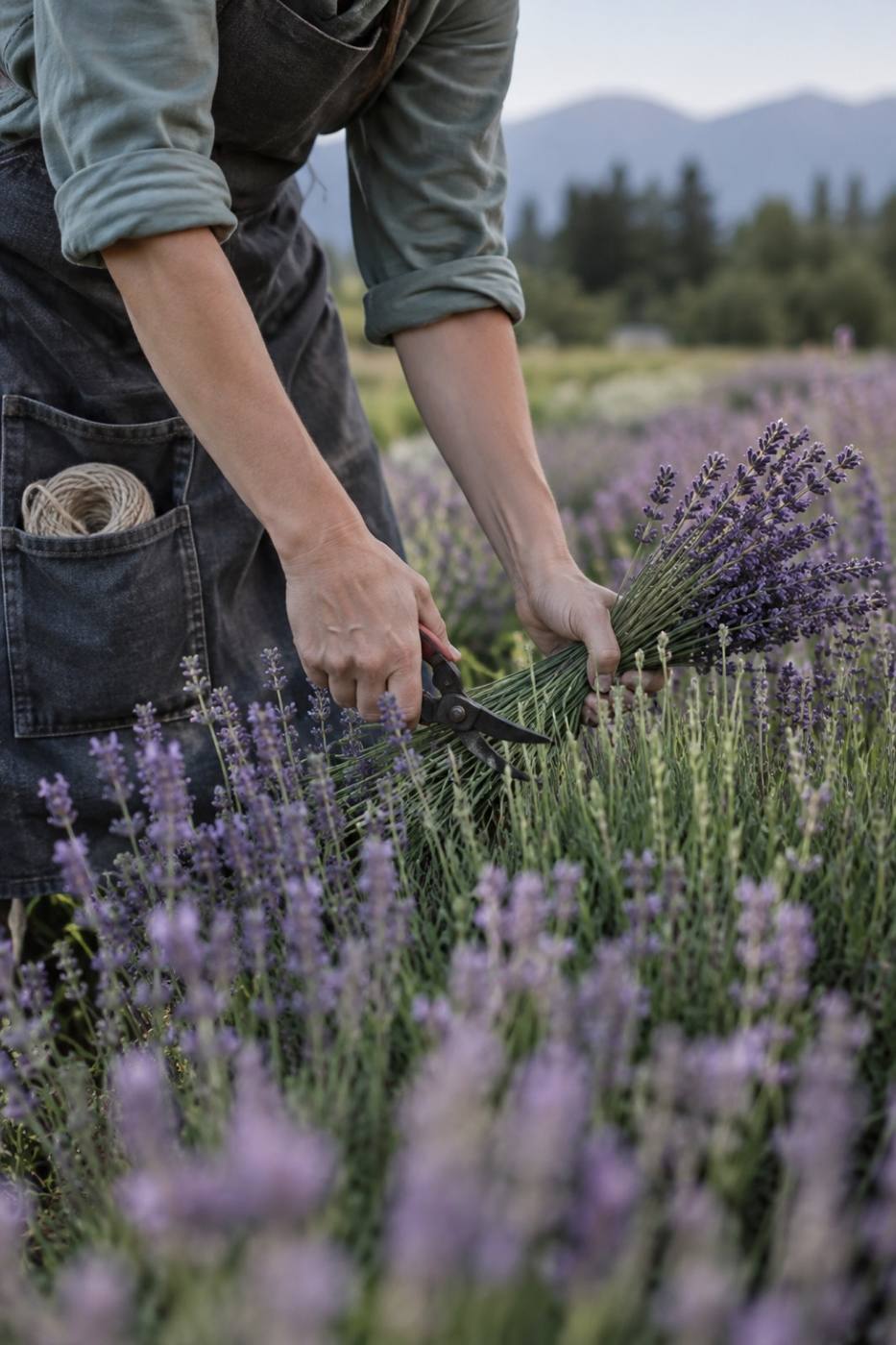
The rows open for u-pick and you take the stems home by the bundle. Three steps, and the wall shows you where to start.
Come out to the farm in Sequim and follow the rows down to the stone wall.
Pick a stem that is showing colour, cut low, and keep the bundle out of the sun.
Tie it and hang it to dry, or strip the buds for oil and soap.
The field along the wall is the venue: lavender rows on one side, dry stone on the other, and the Sequim sky doing the rest. Ceremonies at the edge of the rows, with the wall behind you.
The farm is in Sequim, Washington. U-pick, orders and wedding enquiries all come through the harvest letter — tell us what you are after and we will write back.