T9N · R16W · Buffalo County, Nebraska Soil · Pivot · Bin · Gateway

AgTech sensor networks

One gateway. Every pivot, bin, and probe on the same page.

Sandhill AgTech builds the field network — soil moisture probes, pivot telemetry, grain bin monitors, and the LoRa gateways that carry the readings — then puts all of it on one dashboard, pinned to the ground it came from.

654321 789101112 181716151413 192021222324 302928272625 313233343536 GATEWAY TOWNSHIP 9 N · RANGE 16 W · 36 SECTIONS SCALE — SECTION ≡ ONE MILE N
  • Sensor node
  • LoRa gateway
  • Mesh link
01Local to Kearney, Nebraska
02One dashboard for every system
03Start with a single field
04Built to add nodes later

The systems

If it’s in the field, it belongs on one map.

We install the probes, the radios, and the gateways — then pin each one to a coordinate, so a manager reads the whole operation the way a plat book reads a township. No four apps. No guessing which pivot a reading came from.

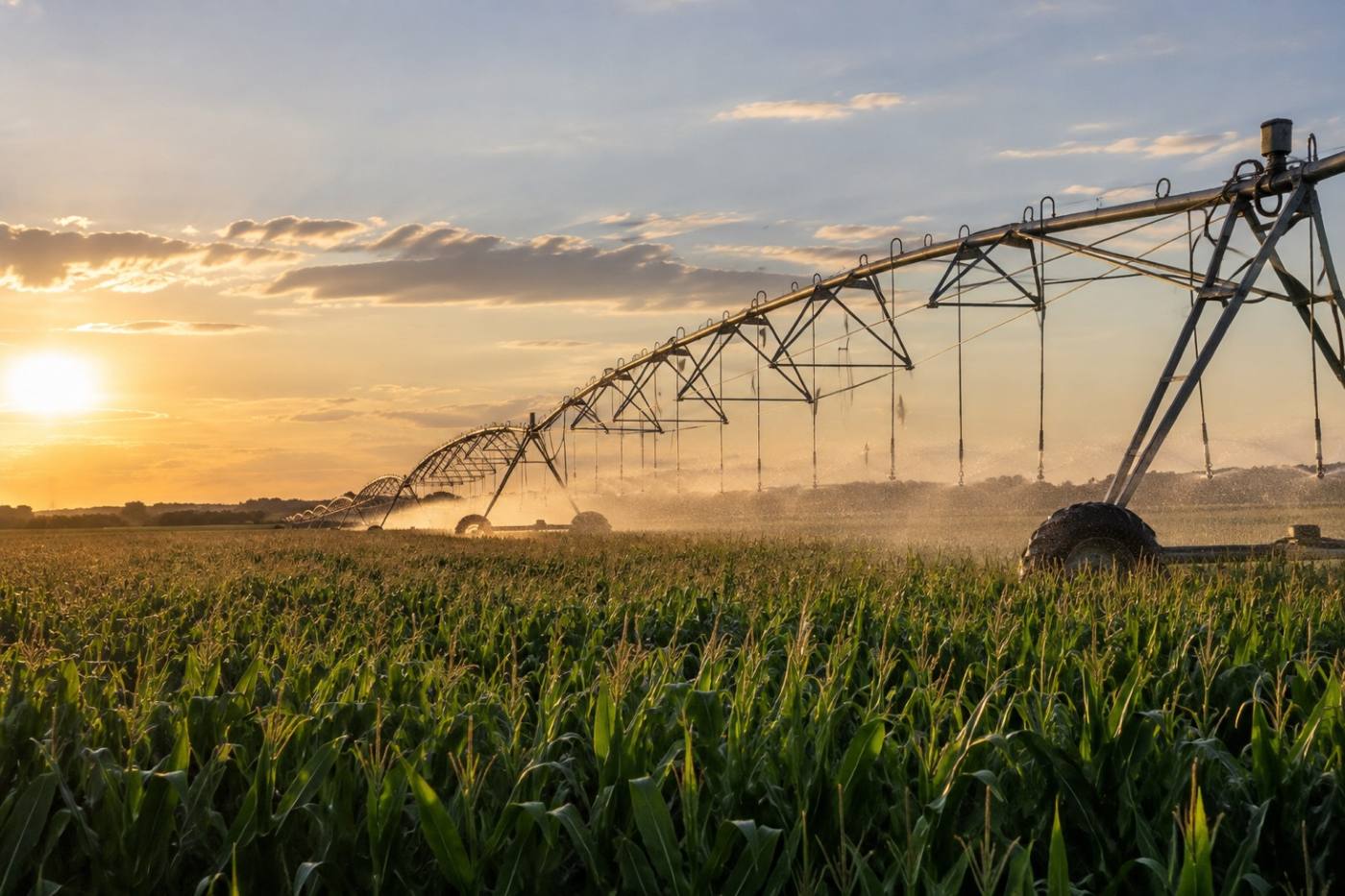
A center-pivot irrigation rig mid-pass over a cornfield
Plate 01 — Pivot mid-pass, south quarter
01

Soil moisture sensor networks

Probes sit in the root zone and report what the soil is actually holding, station by station — not one number standing in for the whole quarter. You see where the ground is dry and where it isn’t.

  • Probes set at your station points
  • Readings grouped by zone
  • Feeds the same dashboard as the pivot
02

Pivot irrigation telemetry

Telemetry on the machine reports where the pivot is and whether it’s running, so a check doesn’t cost a drive to the far corner of the field.

  • Position and run status
  • Start and stop events logged
  • Read against the moisture probes
03

Grain bin monitoring

Cables in the bin report temperature and moisture into the same dashboard you use for the field, so the bin site stops being a separate trip.

  • Readings by bin, not by site
  • Aeration cycles recorded
  • Alerts when a bin needs a look
04

LoRa gateways

The backbone of the network. Gateways get sited on high ground, a bin roof, or the shop, and they pass readings node to node until the data reaches the yard.

  • Long-range, low-power radio
  • Sited where the signal sees the field
  • Built to add nodes as you grow

See how all four systems read together →

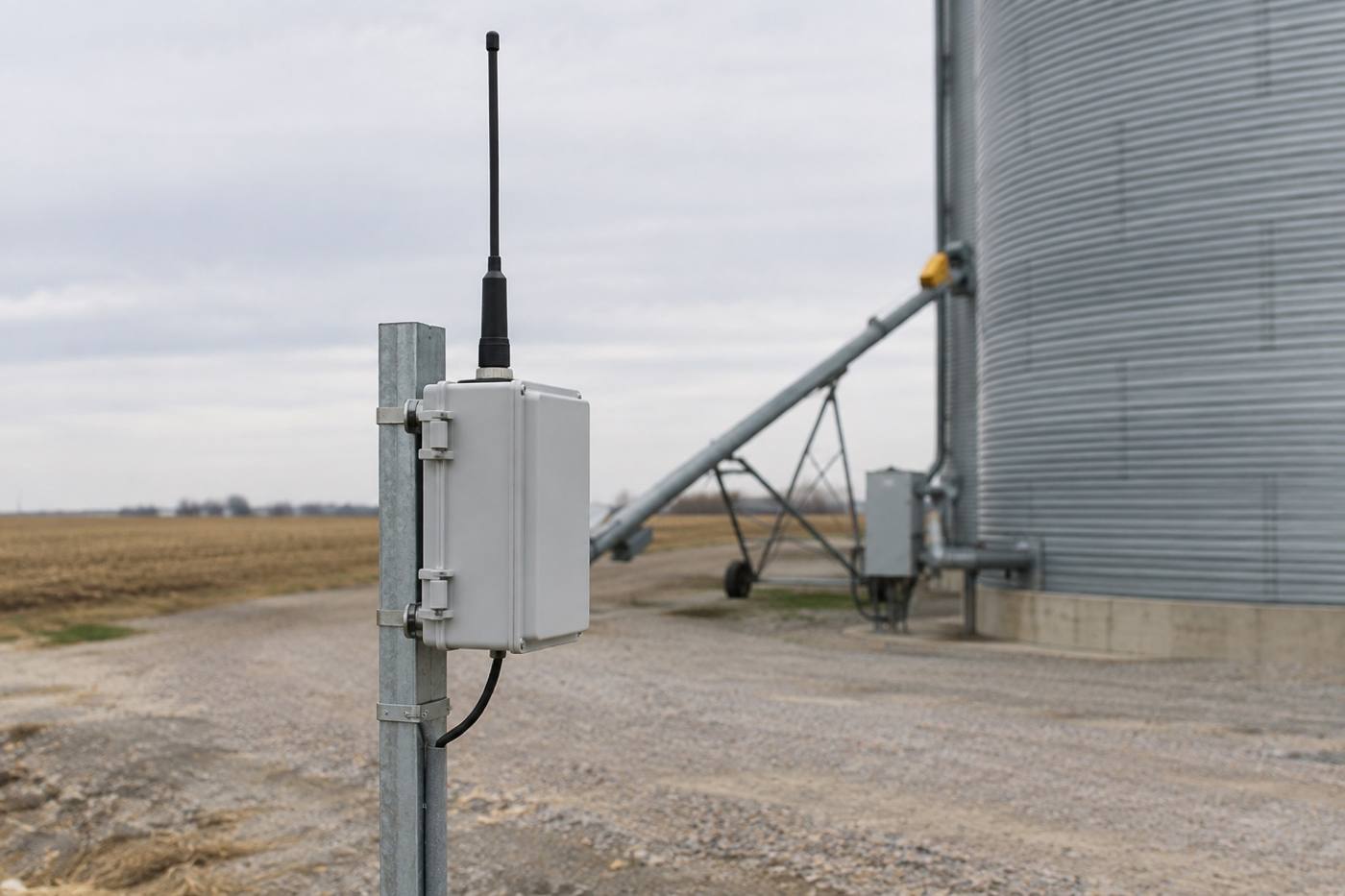
A telemetry enclosure and antenna mounted on a post at a grain bin site
Plate 02 Gateways and nodes get mounted where the field can see them — high ground, a bin roof, the shop wall.

Coverage planning

Where the signal goes.

A reading is only useful if it arrives. We site the gateway, then walk the ground to see what the radio can reach — and where a node needs to stand in the way of the signal.

  1. 01

    The probe reads

    A sensor in the root zone takes its reading and hands it to the nearest node.

  2. 02

    The node passes it on

    Nodes relay to each other across the field, so a far corner doesn’t need a straight line to the yard.

  3. 03

    The gateway collects

    The LoRa gateway gathers everything in range and sends it in to the dashboard.

  4. 04

    The dashboard shows it

    Moisture, pivot, and bin readings land together, pinned to the section they came from.

GATEWAY HIGH GROUND / BIN ROOF MESH LINK NODE COVERAGE PLAN · NOT TO SCALE
Fig. 01 — One gateway, mesh links out to the nodes.
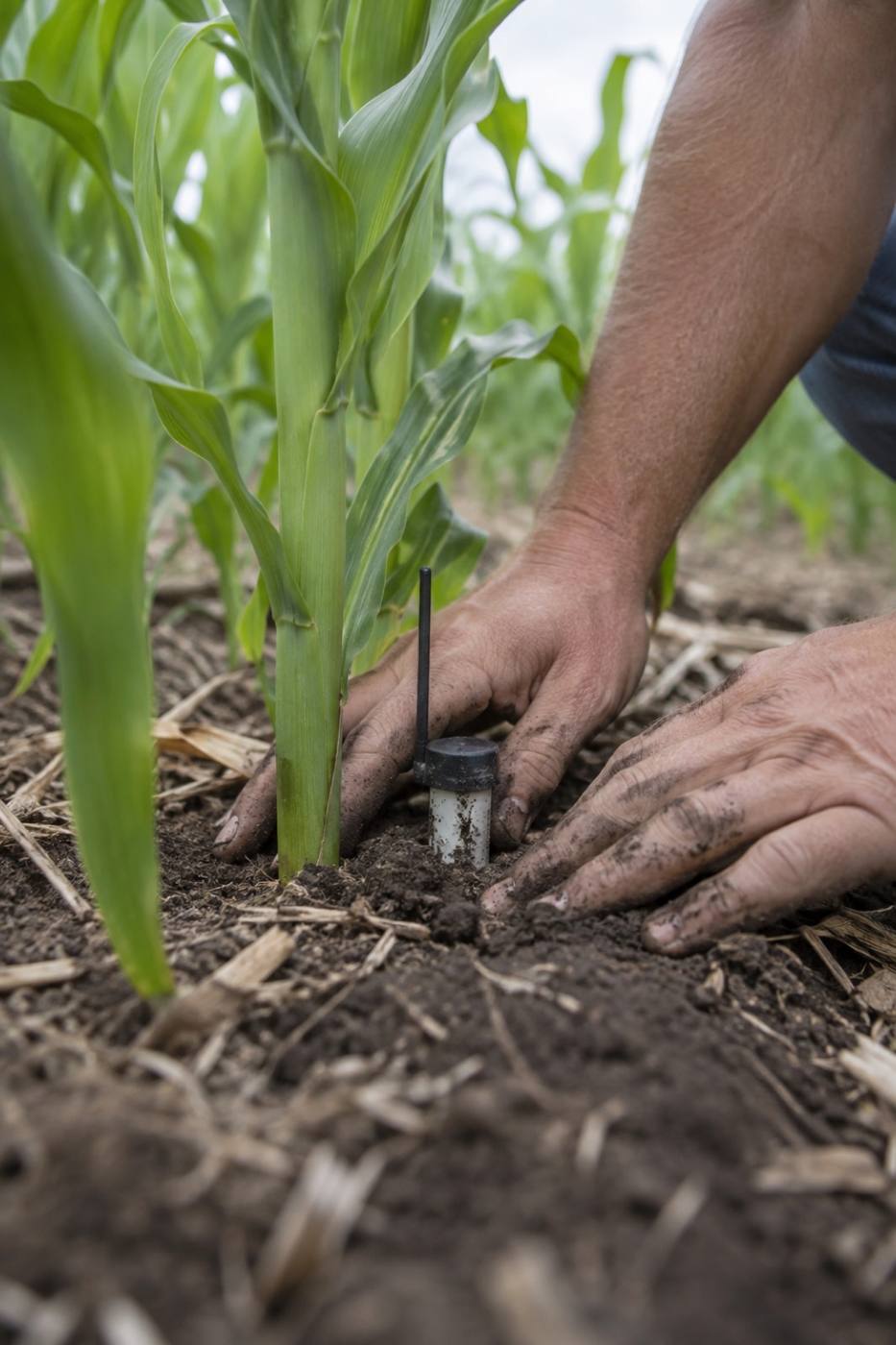
Hands pressing soil around a sensor probe at the base of a corn row
Plate 03 — Probe set in the root zone
FIELD DASHBOARD / SOUTH QUARTER LIVE NODE MAP · T9N R16W NODES 6 · GATEWAY 1 MESH LINK ACTIVE SOIL MOISTURE BY STATION DRY ZONE PIVOT RUN / STOP RUN STOP GRAIN BIN TEMPERATURE
Fig. 02 One screen: node map, moisture by station, pivot timeline, bin temperature.

The farm data dashboard

One page for the whole operation.

Readings only matter when they’re read together. The dashboard puts the probes, the pivot, and the bins on the same grid view, so a decision about water is made with the whole field in front of you.

  • 01Pinned to the sectionEvery reading carries the township and range it came from, so you always know where it was taken.
  • 02History, not just right nowLook back at how a field behaved through the season, not only this afternoon.
  • 03Built for a tailgateReadable on a phone in the cab, or open on the shop computer.
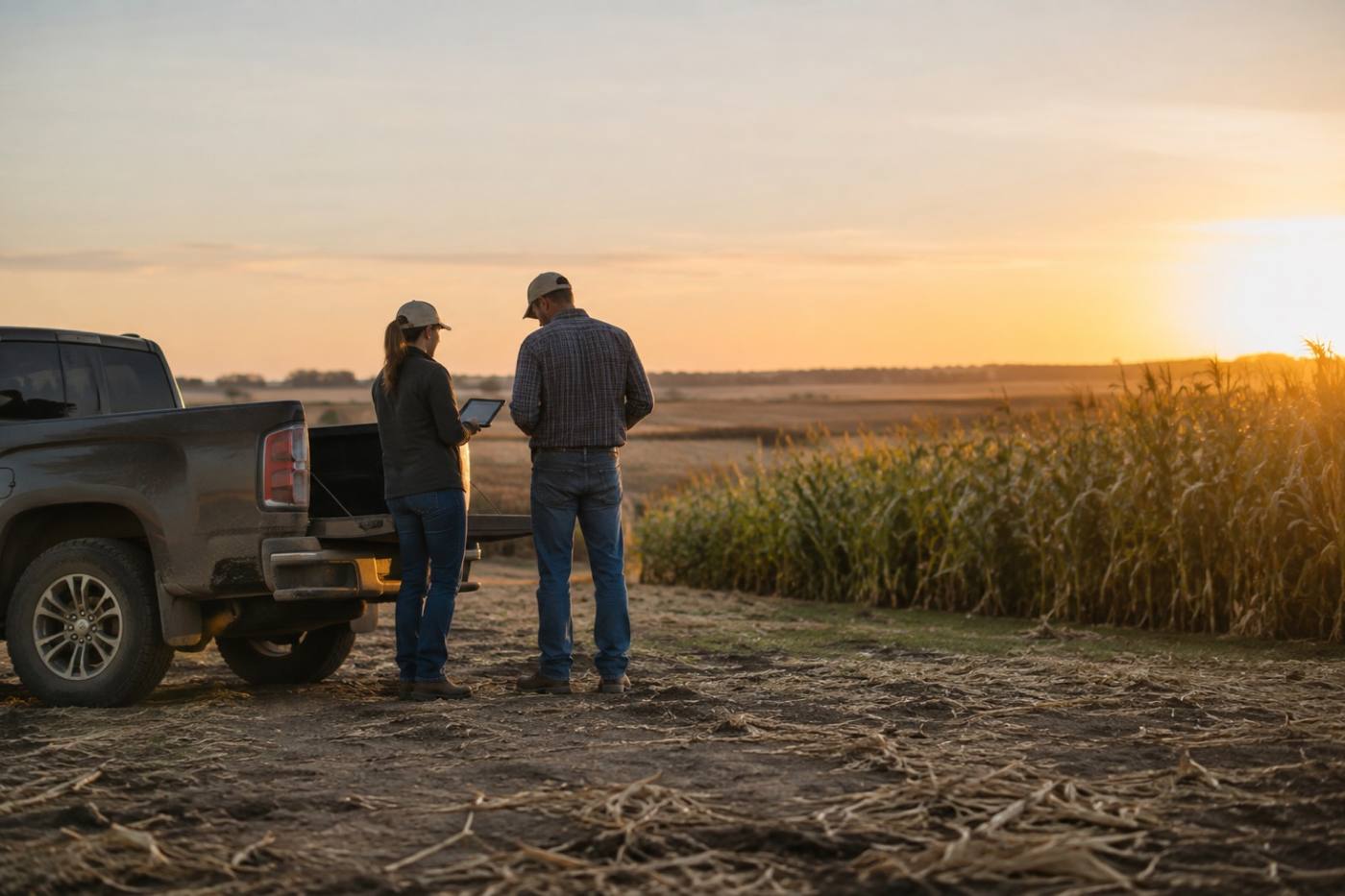
Two people at an open pickup tailgate looking at a tablet in a field
Plate 04 — Checking the field from the tailgate

Start with one section, not the whole farm.

Most operations begin with a single field and a single gateway. The network is built to take on the next pivot, the next bin, and the next quarter when you’re ready — the map just gets more pins on it.

Field walk

Book a field walk.

We come out to the ground, look at the pivots and bins you want on the map, and walk the coverage. You leave with a plan for where the nodes and gateways would stand.

  • 01We walk the field and the bin site with you.
  • 02We mark node and gateway placements on a map.
  • 03You get the coverage plan and a scope to think over.
Field walk request Kearney, NE
What should we walk first?

Serving Kearney and the surrounding row-crop country.