Riverbend Castings pours gray and ductile iron in Dubuque, Iowa. We make
castings and we make the patterns that shape them. Everything we do
happens on the way down.
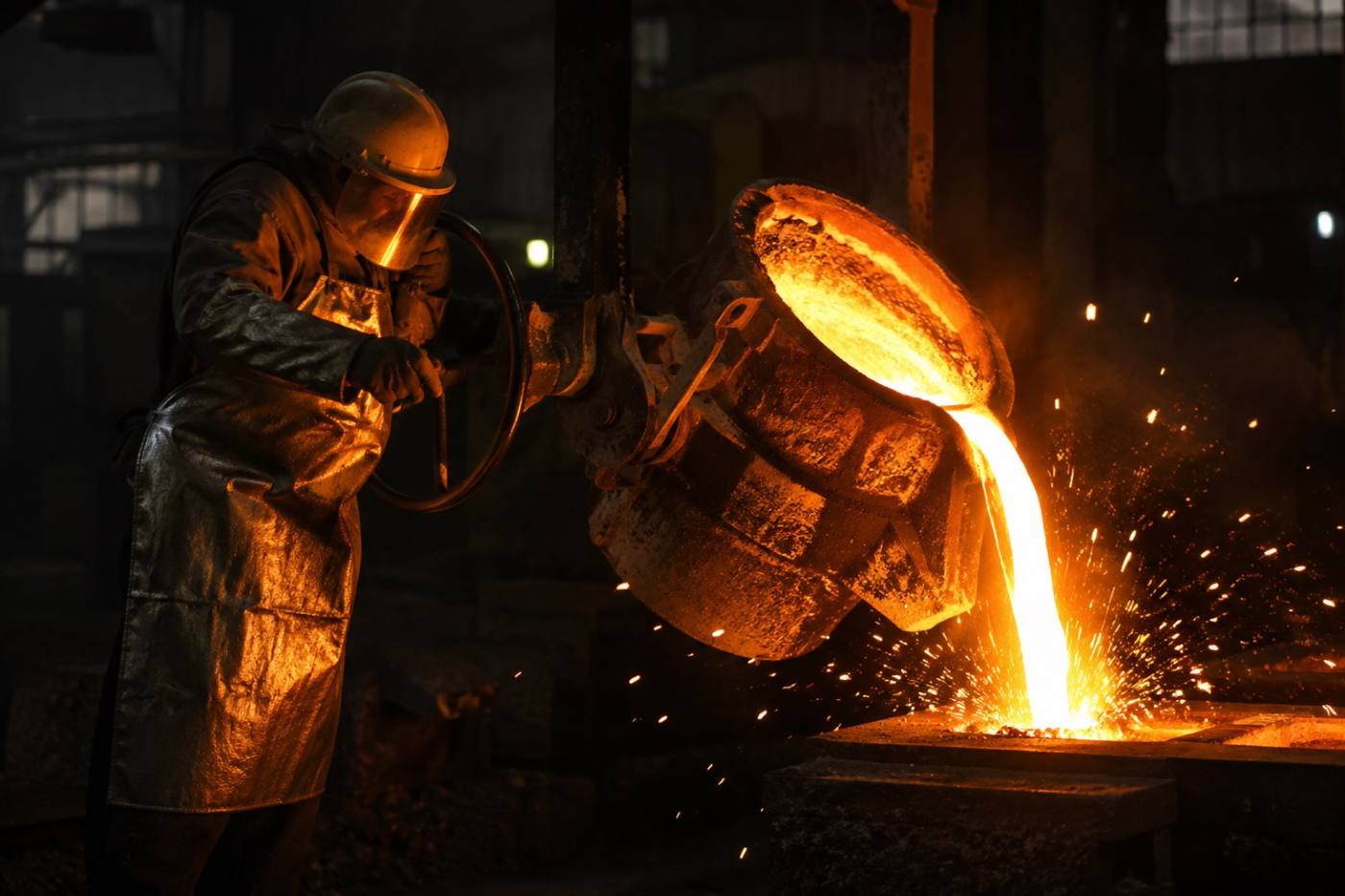
The pour — where every casting starts, at the hot end of the curve.
The cooling curve — pouring, solidifying, machining
Pouring
Station 02 — Molding & sand
Every casting begins as a hole in the sand.
Sand casting is the oldest trick in the trade and still the most
flexible one. A pattern makes a cavity, the cavity holds the metal,
and the metal takes the shape it is given. It is quiet, repeatable
work — the part of the curve where the iron is still moving.
01
Sand
Sand is prepared and packed around the pattern until the mold is firm and the corners are true.
02
Cores
Cores sit inside the mold to hold the internal passages a casting needs and leave them hollow.
03
Closing
The mold is closed, weighted and made ready, and the sand waits for the iron to arrive.
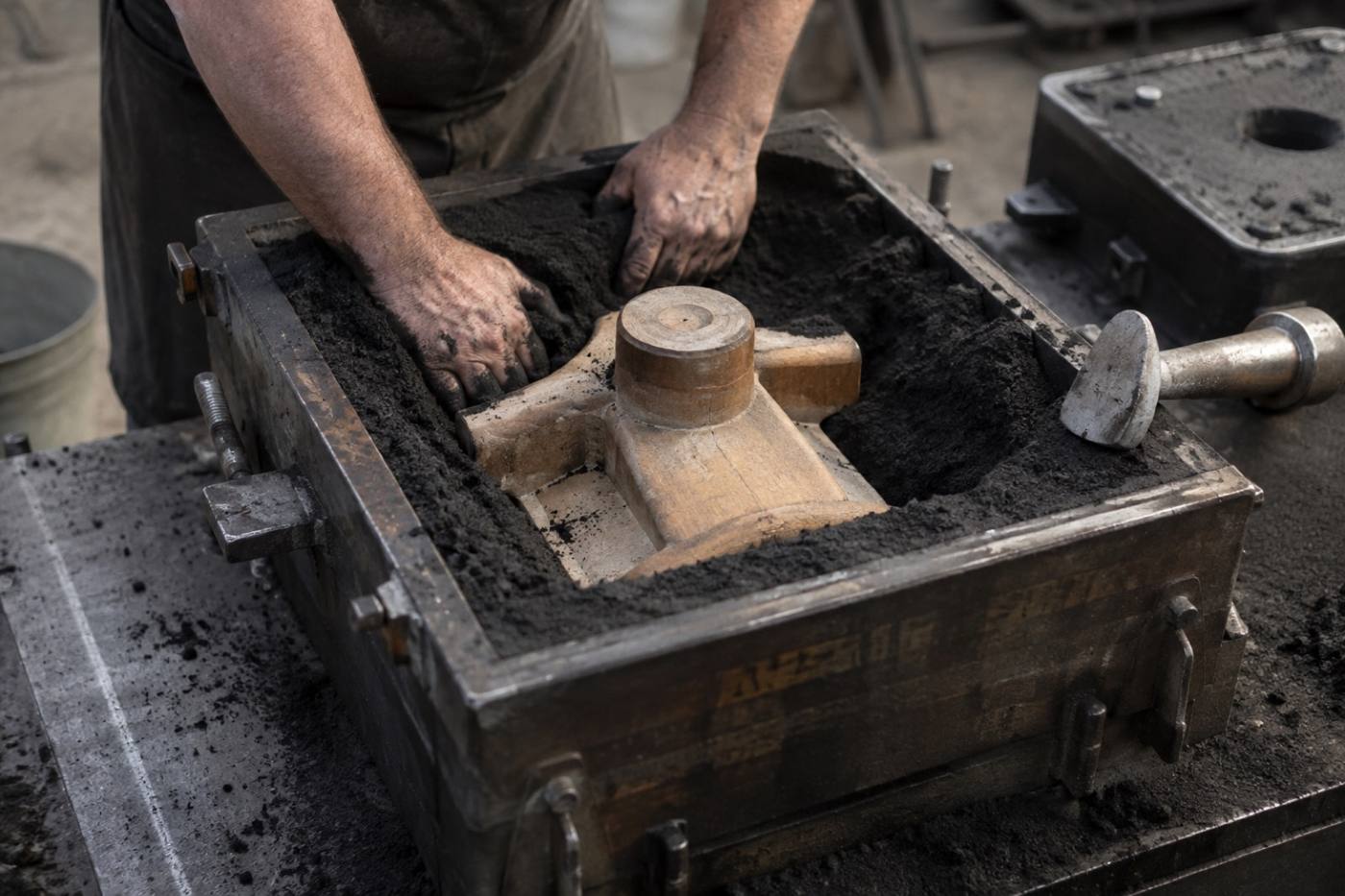
Packing a mold by hand — the negative space the iron will fill.
Solidification
Station 03 — Solidification
The graphite decides before the metal does.
Both irons come out of the same furnace. What separates them happens in the
seconds while the casting freezes, when the carbon inside either grows into
flakes or rounds into nodules. That single difference sets the whole
character of the part.
Flake graphite
Gray iron
Carbon freezes as flakes that thread through the metal. Those flakes
make gray iron a natural damper — it swallows vibration and machines
freely — which is why it suits bases, housings and anything that has
to sit still and hold its shape.
Damping · Machinability · Thermal stability
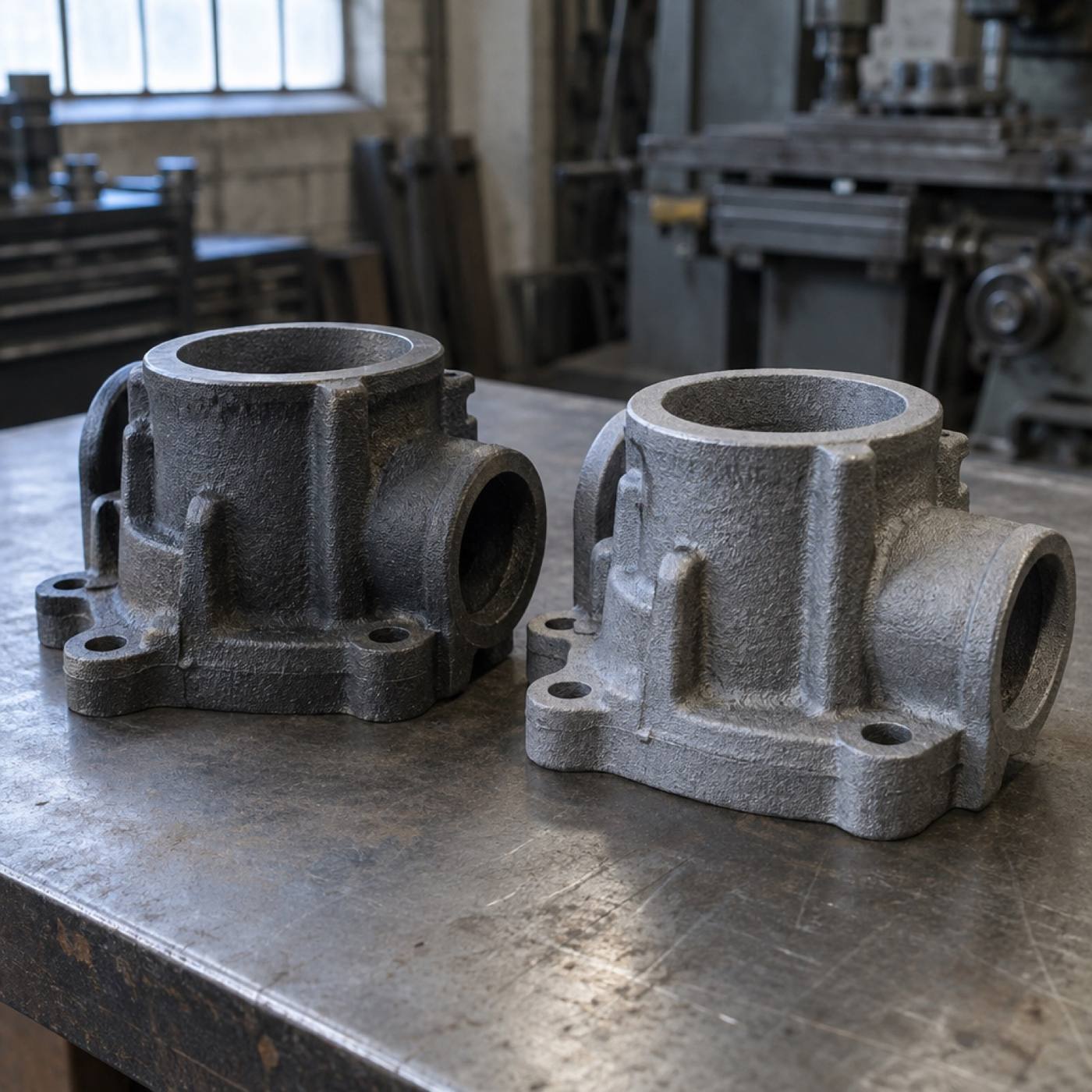
Two irons, one furnace, different graphite.Nodular graphite
Ductile iron
A treatment in the ladle turns the graphite into nodules instead of
flakes. Rounded graphite does not cut the metal the way a flake does,
so ductile iron takes more load and actually stretches before it
fails — the difference between a part that cracks and a part that
yields.
Strength · Ductility · Impact resistance
Machining
Station 04 — Pattern & machining
The cold end is the exact end.
Pattern making
Every casting is a copy of a pattern. We build them here, so the
accuracy a part needs is settled before the first pour — and the
first pour is not a guess.
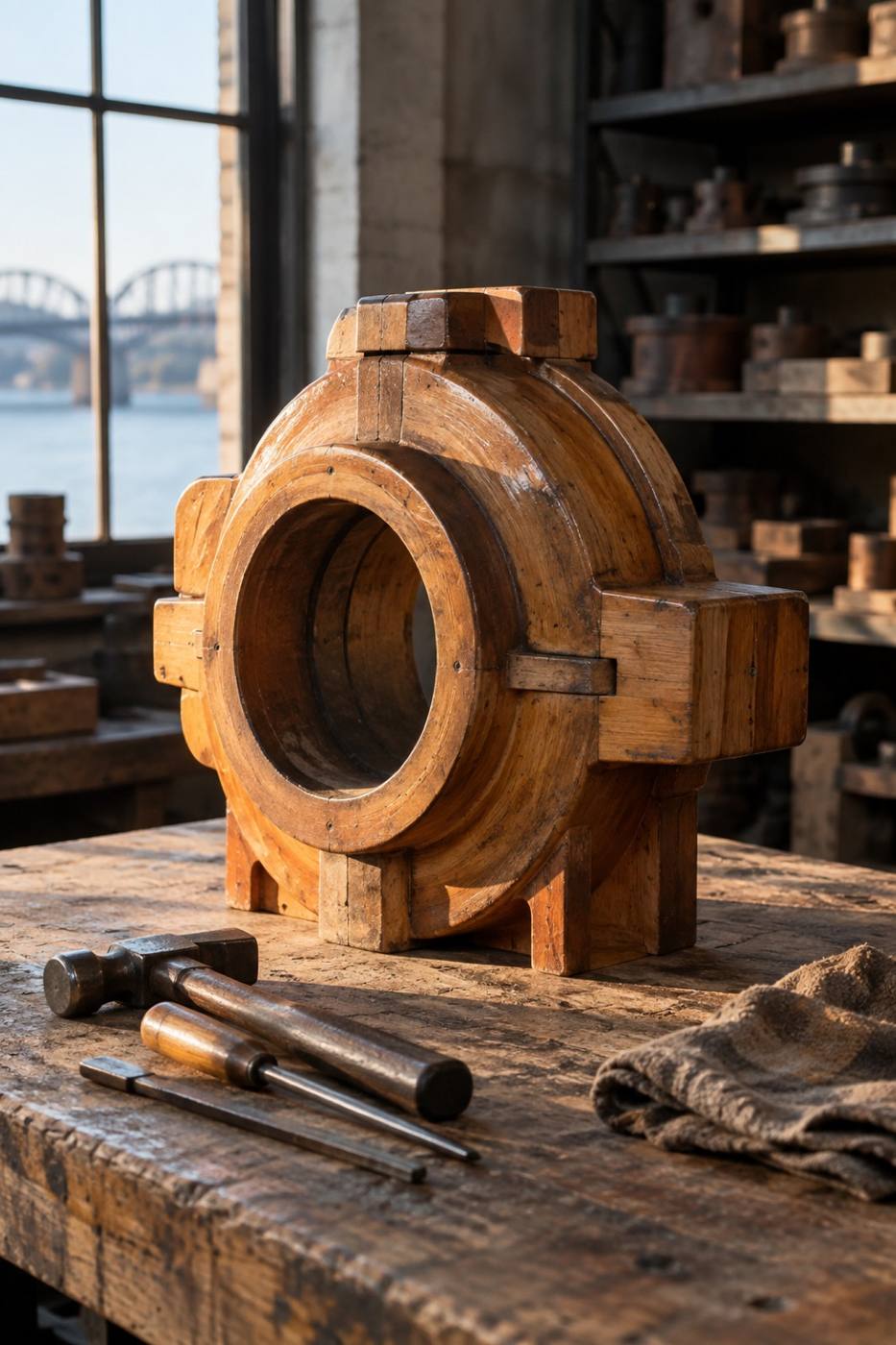
Pattern making — where the tolerance is set.
Machining
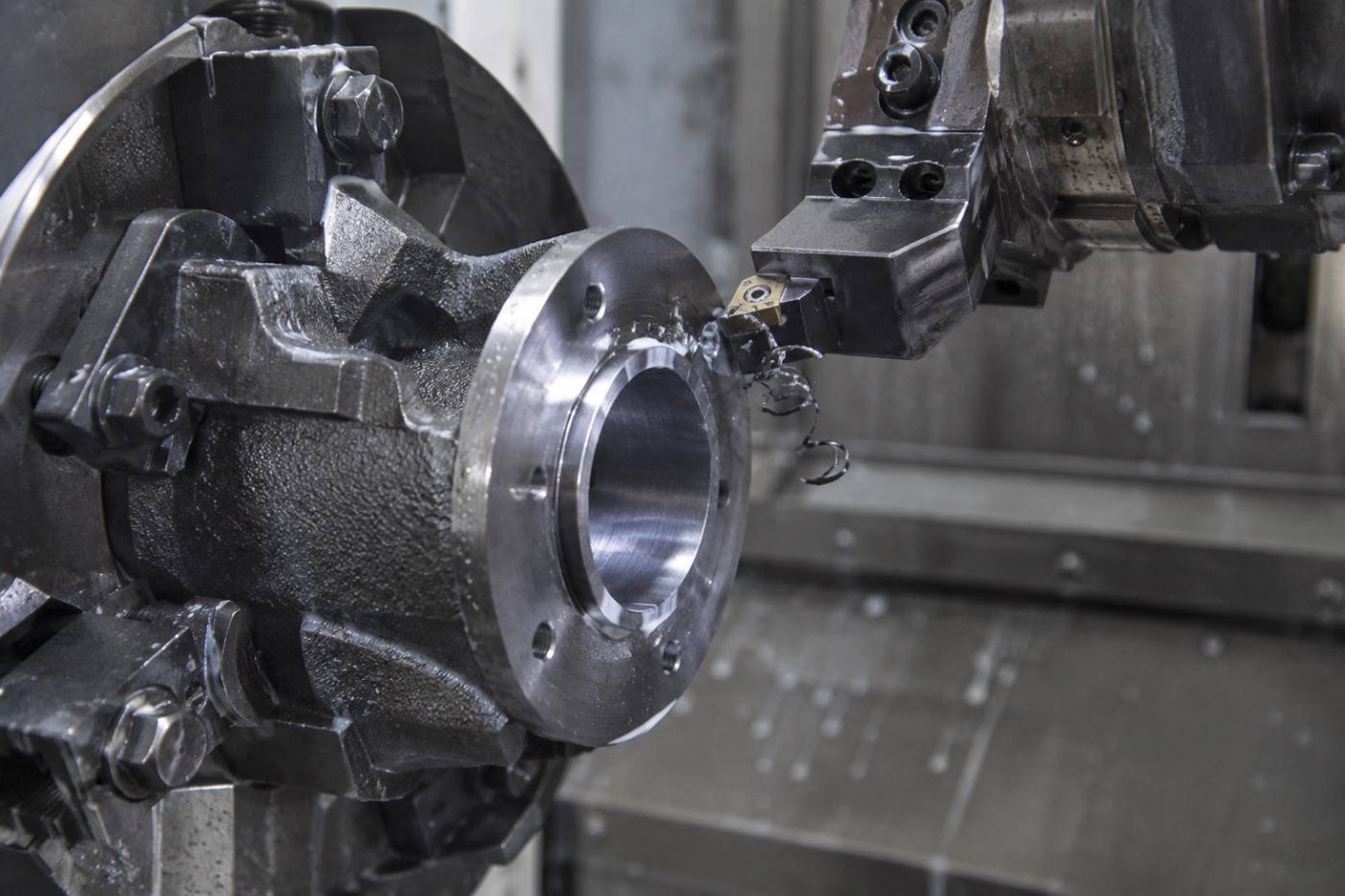
Casting gives the rough shape; machining makes it accurate. Once the
iron is cool and settled, we take the surfaces a drawing calls out
down to size, with the crisp edges the cold end of the curve is
named for.
Machining — reading a drawing in iron.
Surfaces finished to drawing
Cast and machined in one shop
Gray iron & ductile iron
Room temp.
Station 05 — Room temperature
At room temperature, it’s a part.
This is the end of the curve, and the point of the whole page. Here is what
we do, and here is how to ask us for it.
01
Gray iron
Flake graphite iron for parts that need to hold their shape, damp vibration and machine cleanly.
02
Ductile iron
Nodular graphite iron where the part has to carry load, take a knock and yield rather than crack.
03
Sand casting
Molds packed, closed and poured on site — the core of everything that leaves the floor.
04
Machining
Cast surfaces taken to size after the iron has cooled and finished moving.
05
Pattern making
The tooling the whole casting is a copy of, built in-house.
Request a quote
Send the drawing or describe the part. Tell us which iron you have in
mind, or tell us what the part has to do and we will talk it through.
Riverbend Castings
Dubuque, Iowa
Gray & ductile iron