Midland, Texas — Energy grid services
Substation · Transmission · Wildfire · Restoration · Compliance
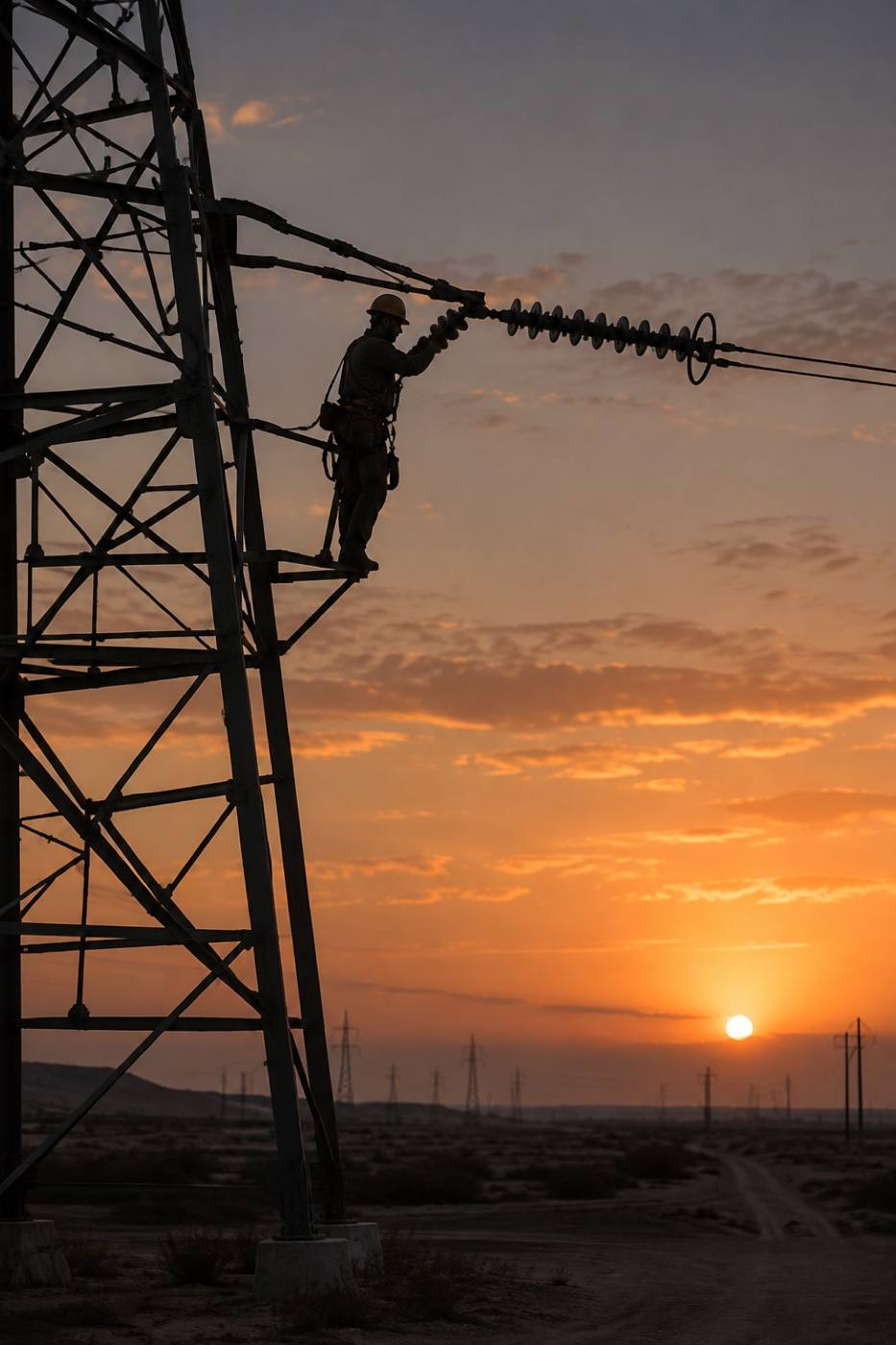
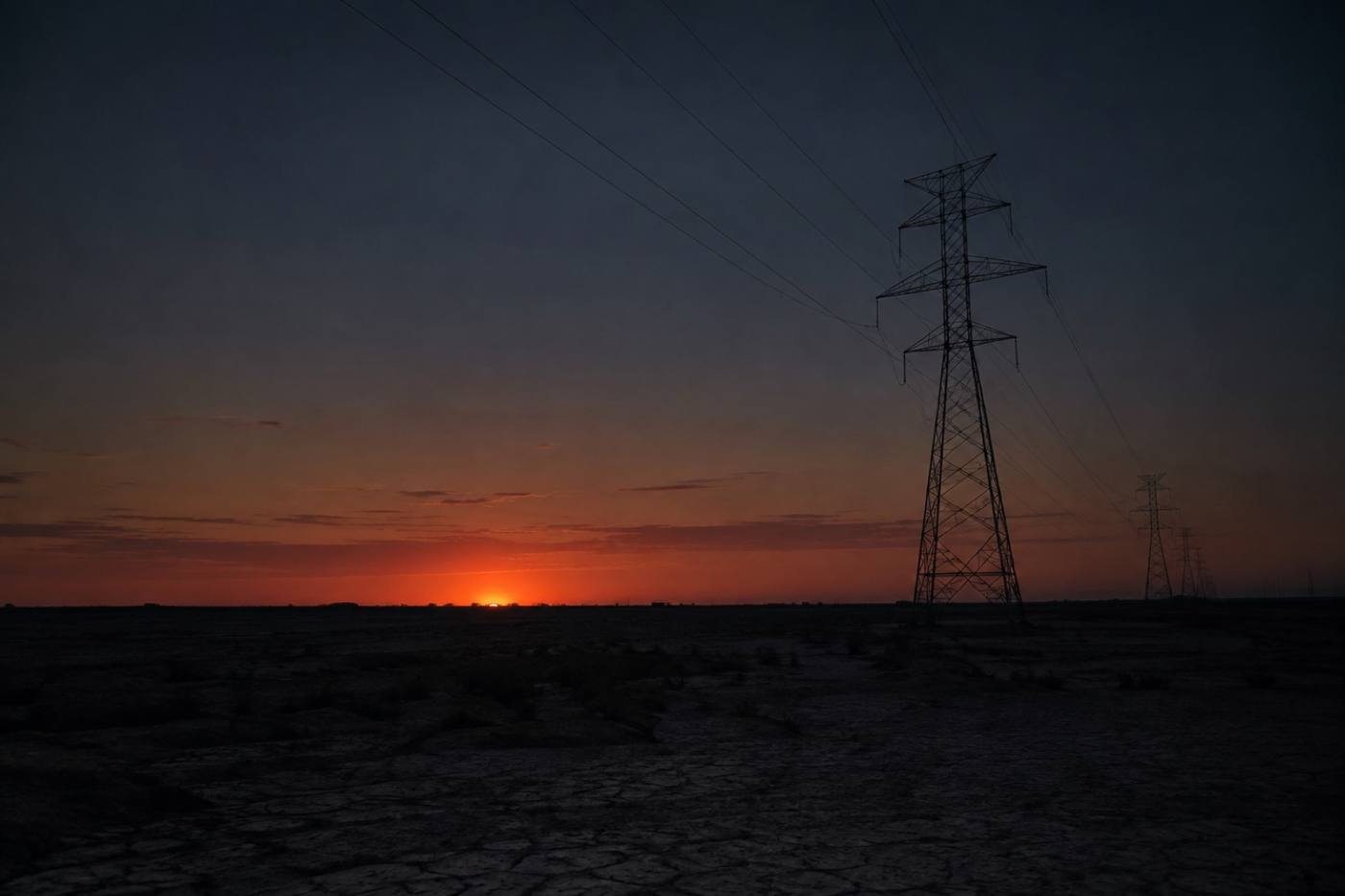
Crews on dark desert ground across West Texas — walking structures, holding the right-of-way, and putting lines back in service when the weather takes them down.
01 — Services
Long days, hot steel, ground that gives back everything the sun put into it. Most of what keeps a grid standing is found by looking closely at it — structure by structure, in the last usable light.
Structures, hardware and conductors walked and looked at closely — from the ground and from the air — with every finding photographed and reported back to you.
Breakers, transformers, relays, bus and the steel that holds them, planned inside the outage windows your operations team can hand us.
Reducing ignition risk along the right-of-way and around the structures, before the dry months and the wind arrive together.
Storm, failure, forced outage. Crews mobilized, hazards isolated, the line put back in service alongside your people.
Everything we find and everything we touch, written down, photographed and handed over in the format your utility expects.
02 — Night maintenance
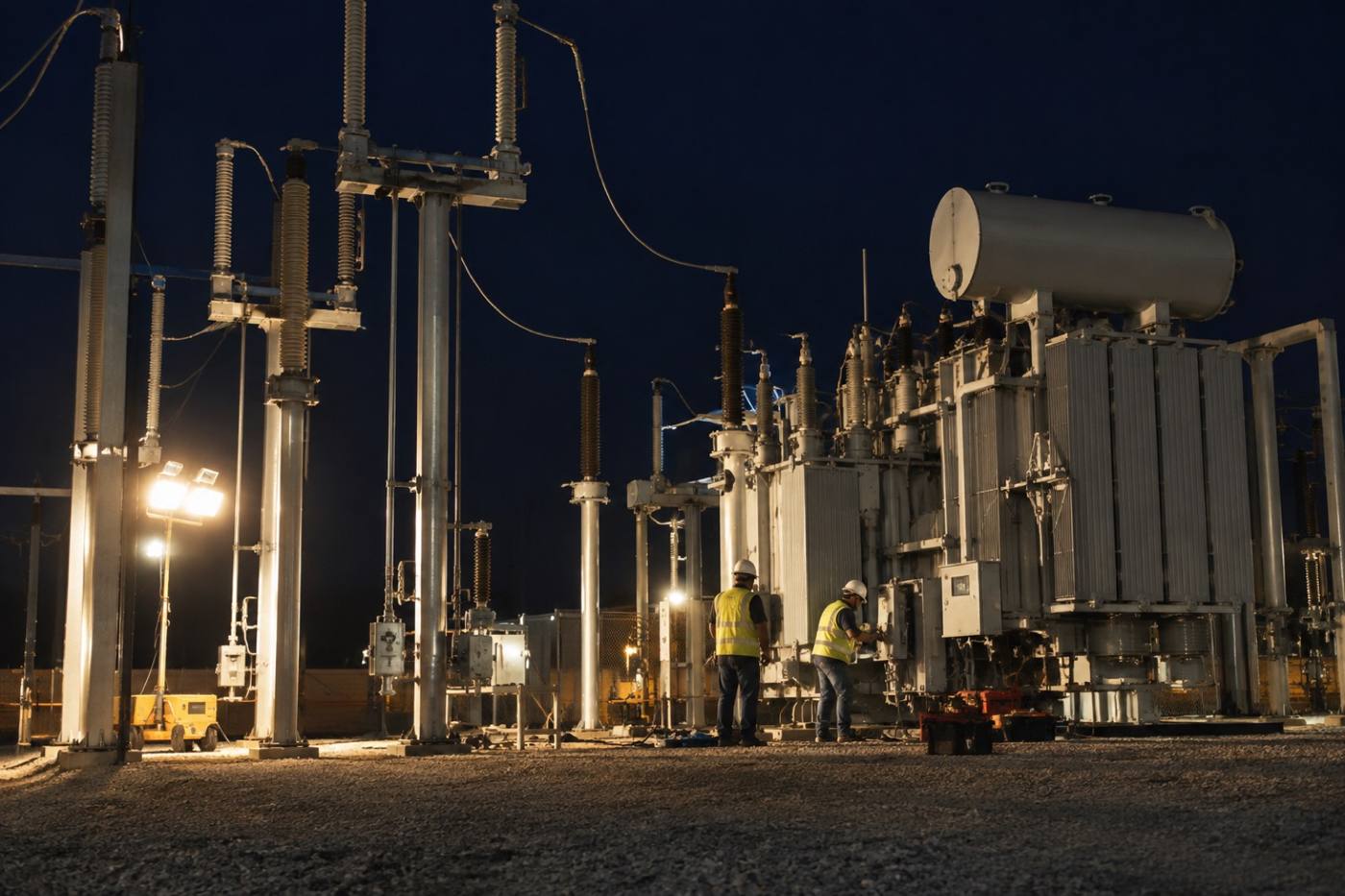
Much of the work happens after the load drops — under work lights, on cold steel, with the desert finally quiet.
Substation work usually needs the station out of service. We plan against the window your operations team can spare, work to your switching and clearance procedures, and hand the station back in its proper configuration before we leave the yard.
Breaker maintenance, relay checks, terminations, bus work — the tasks that can only be done de-energized. Overnight the system can spare the outage, and the desert gives the crews a break from the heat.
Nothing we find stays in a notebook.
Compliance reporting is part of the job, not an afterthought. Findings, repairs and photographs are compiled and handed over in the format your utility and its regulators expect — so the work is on the record the day it's done.
03 — Wildfire watch
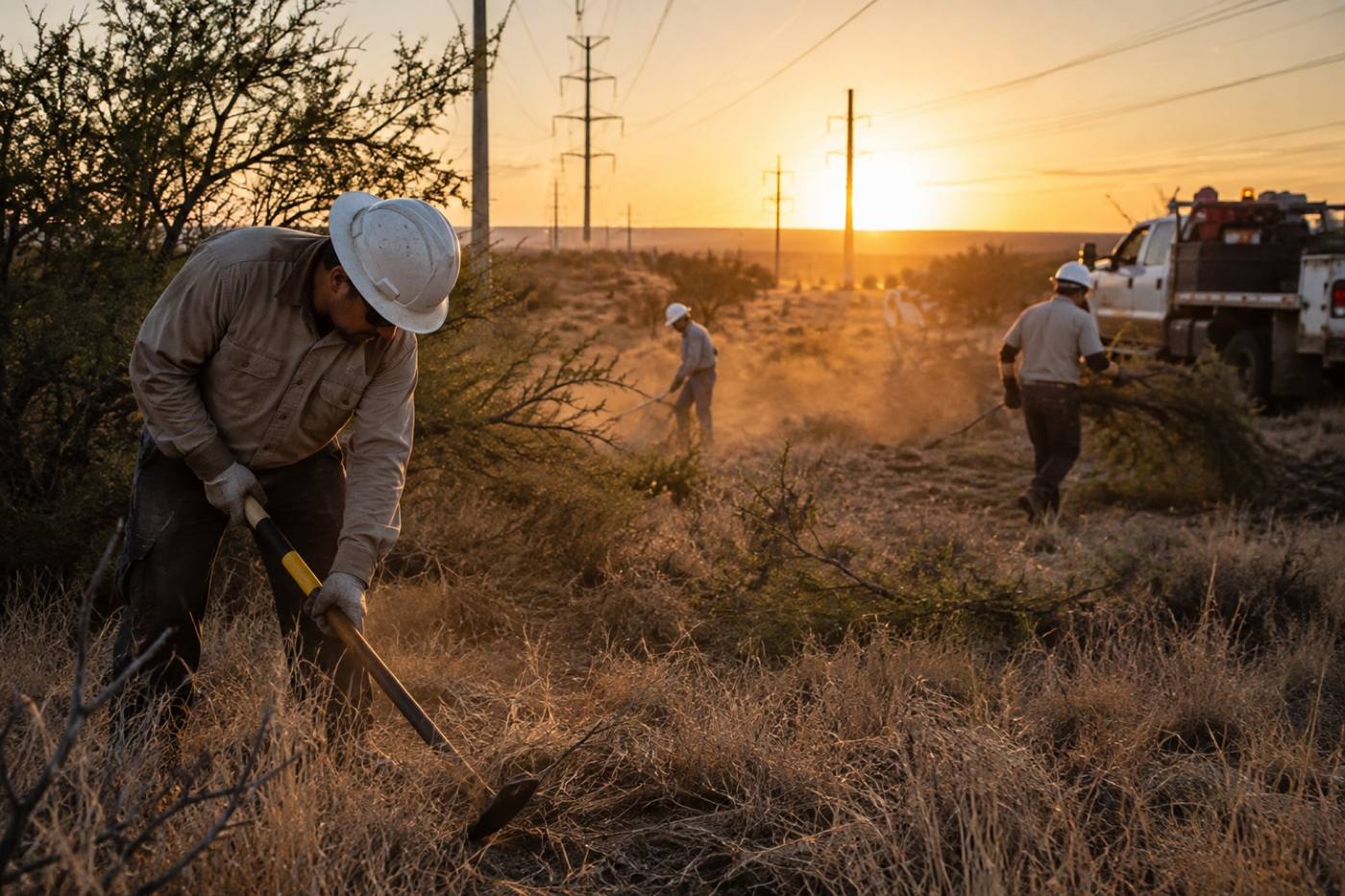
Dry grass, wind, and a single spark are all it takes. Almost all of our wildfire work happens long before anyone smells smoke — out on the right-of-way, in the heat, reducing what a fire would find to burn.
Keeping clearance under and around the line, where regrowth and dry fuel load up fastest.
Finding the cracked insulator, the loose clamp, the corrosion that turns into a fault on a windy night.
Every visit recorded and reported, so your mitigation work stands up when it is reviewed.
04 — Emergency response
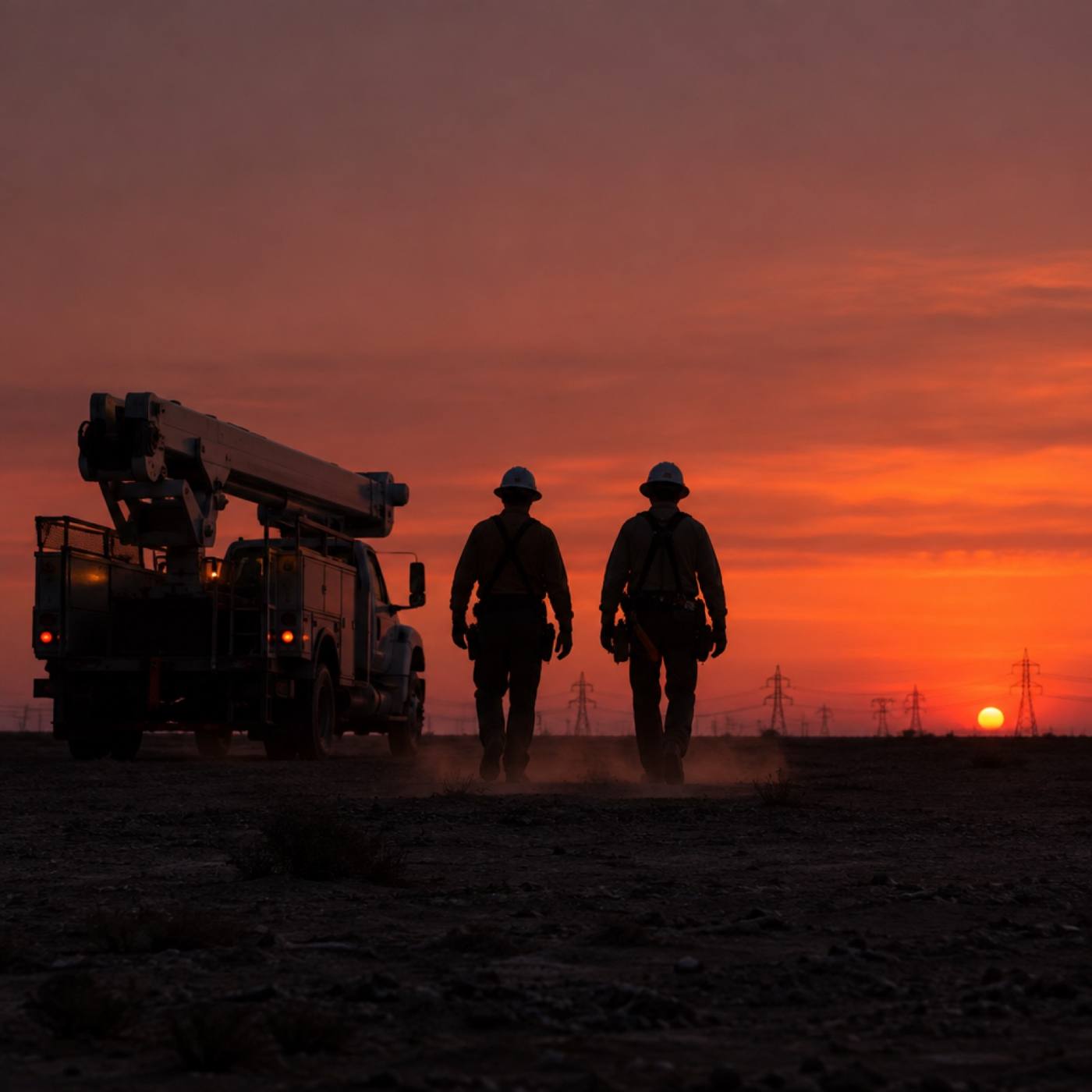
Storms, failures, forced outages. Emergency restoration is the work nobody schedules. We mobilize, make the area safe, and put the grid back in service alongside your operations team.
Crews and equipment assembled and moving toward the affected line.
Damage walked, hazards isolated, the scene made workable before anything is rebuilt.
Repair and rebuild, documented as it happens, handed back with the line in service.
05 — Contract inquiries
Tell us what the work is and where it sits. Whether it is a scheduled inspection, a maintenance window or a line that is already down, the conversation starts the same way.