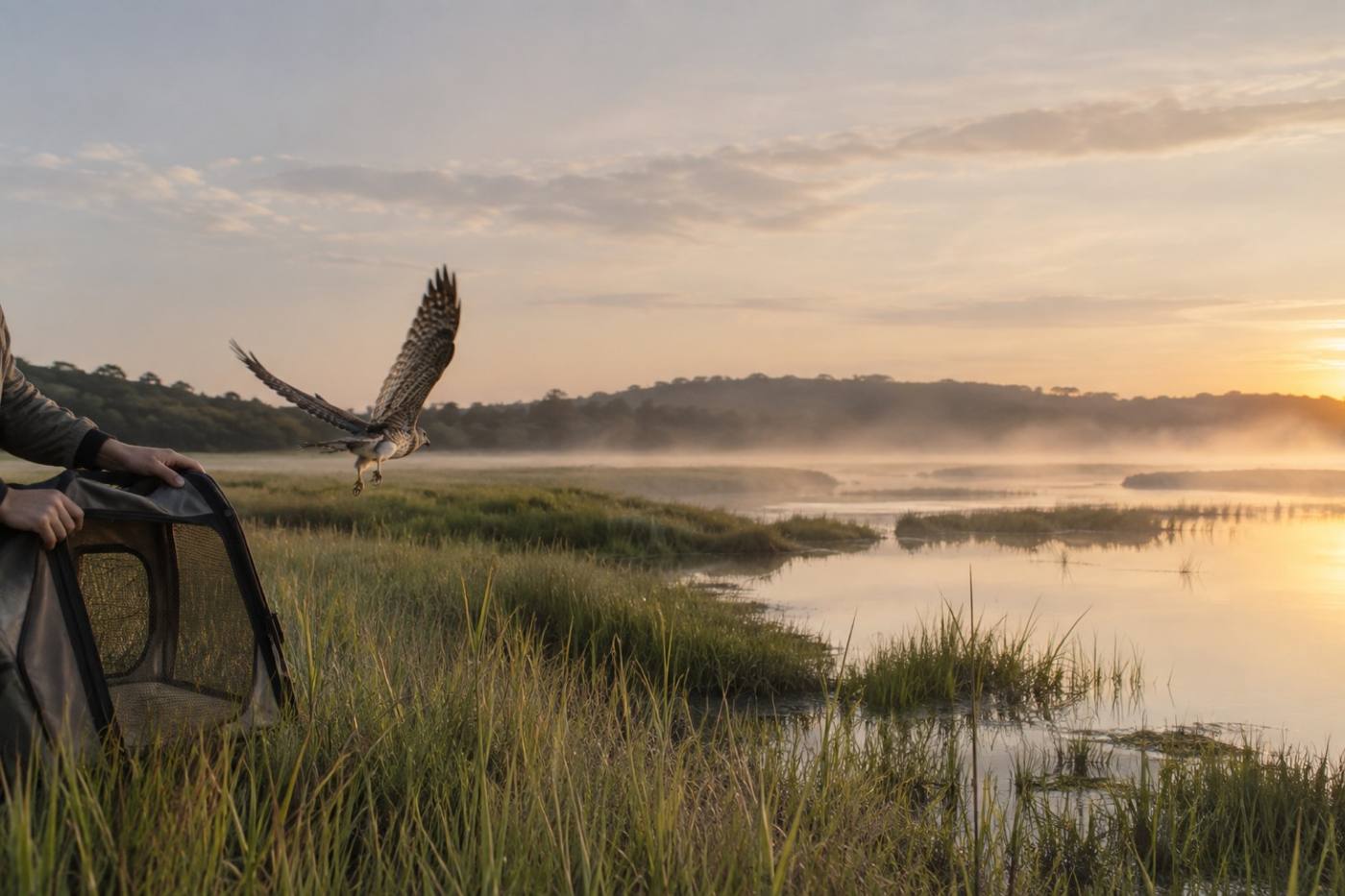
At the edge of the marsh
Great Marsh Wildlife Rehabilitation · Ipswich, Massachusetts
Injured songbirds, raptors and turtles come to us from around Ipswich. Each one is treated, conditioned and carried back to open air. Nothing about that is quick.
Intake · Rehabilitation · Flight conditioning · Release
How care works
Every animal that comes through the door moves up through the same structure — assessment first, then recovery, then the long work of flight. Release sits at the top, and nothing skips a level.
A songbird from a window, a turtle from a road crossing, a raptor that will not fly. Every animal is looked over before anything else happens.
Treatment, feeding and quiet recovery run side by side. Care lasts days for some animals and whole seasons for others.
An animal that cannot fly cannot be released. Raptors take up the most room here, building strength in the long aviary until flight is ordinary again.
The carrier is opened at the edge of the marsh. Most birds do not look back.
Two paths through the aviary
Raptor rehabilitation is the visible part of the work, but turtle rescue and songbird intake move alongside it all year, at their own pace.
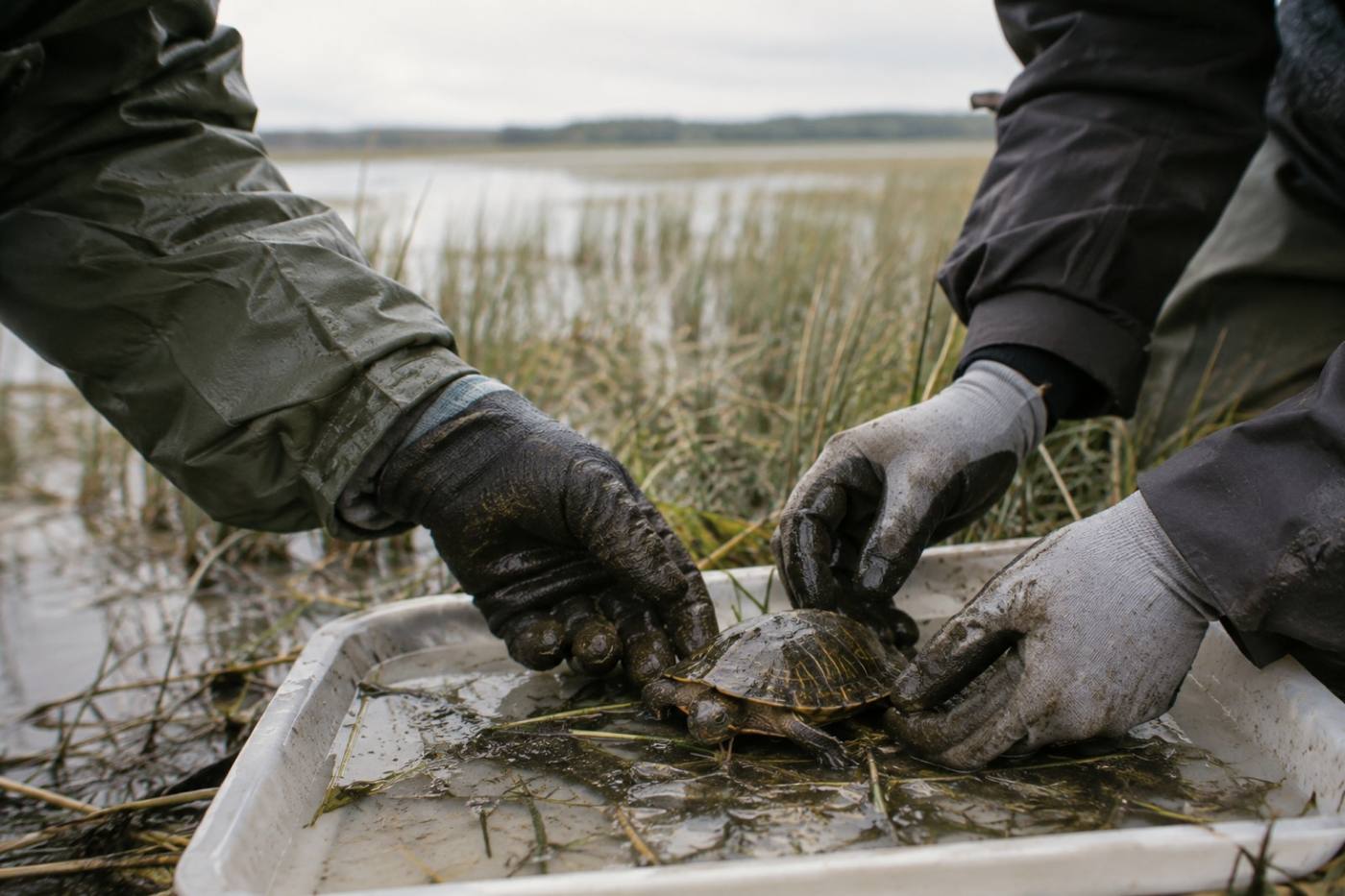
Turtles reach us after road crossings, mower strikes and cold water. They are slow patients in every sense: assessed, treated, and held until the marsh is ready to take them back.
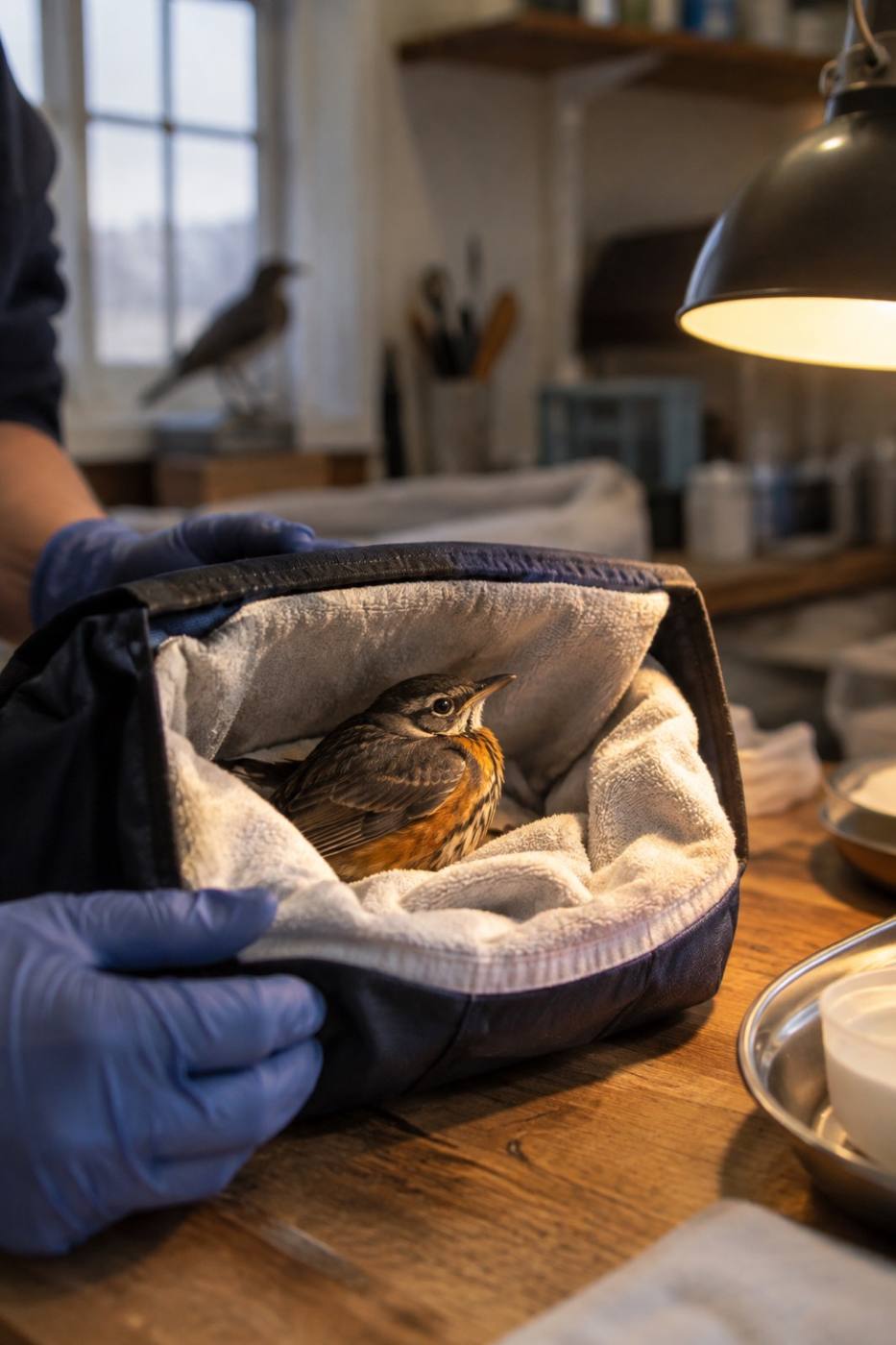
Songbirds are the quiet majority of the work: window strikes, cat injuries, nestlings found on the ground. Many are with us for days rather than seasons. Some need nothing more than rest and a safe night.
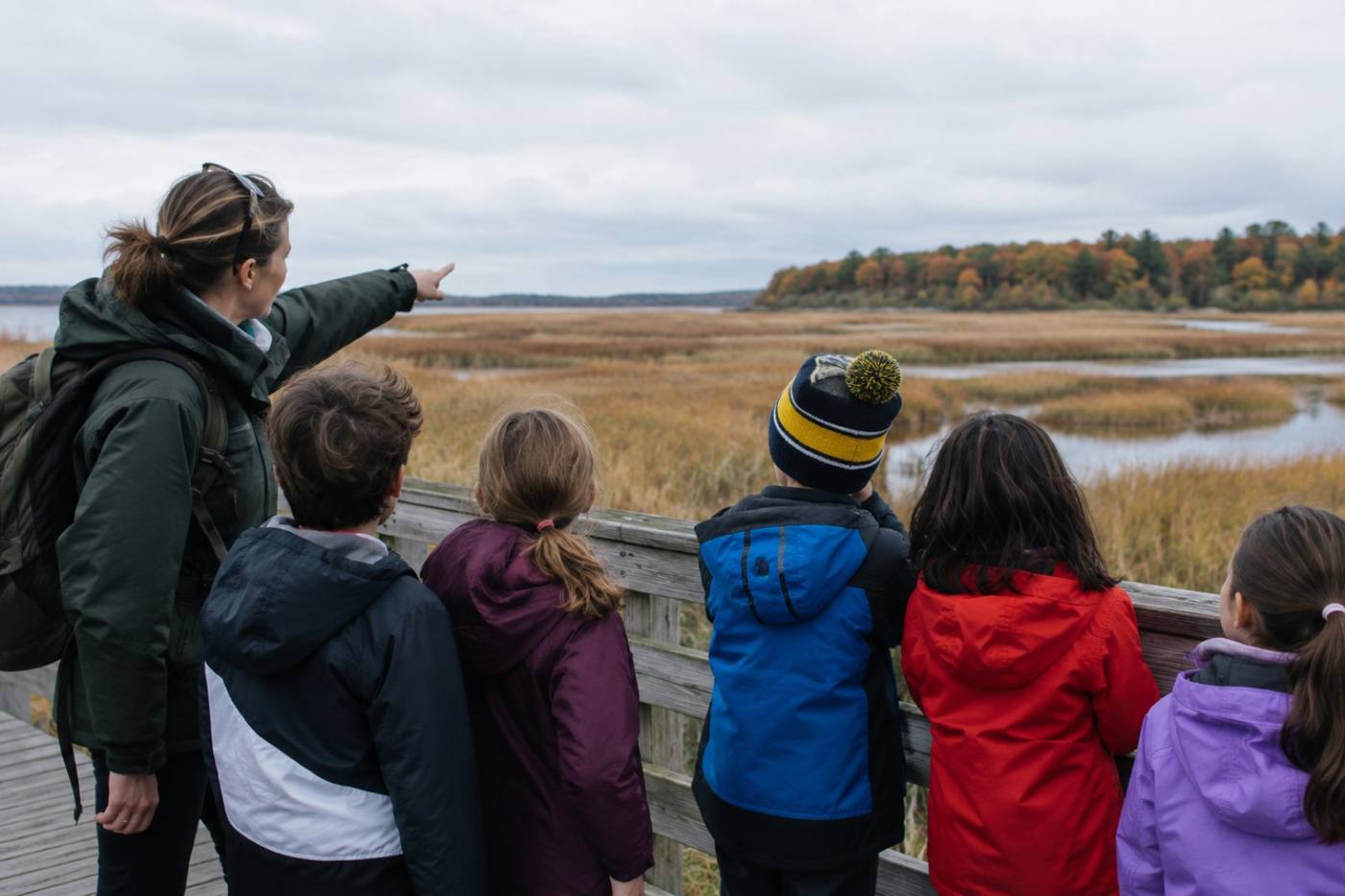
Education programs
School groups come out to the marsh to see what rehabilitation actually looks like — the intake table, the long flight aviary, and whichever animals happen to be in care that week.
Member sponsorships
Membership keeps intake open. It pays for the ordinary things a recovering animal needs, week after week, right up to the morning the carrier opens.
Public release events
Releases happen when an animal is ready, not on a schedule we choose. Members are told first, and the public is invited to stand at the edge of the marsh and watch the last level of the climb happen.