Pollination placement · Red River Valley
Pollination placement for row crops and orchards around Wahpeton. Hive rentals, bloom-window timing, and contracts written around your fields.
01 — Placement & flightlines
Placement is decided from above. Before a single hive is loaded, we read your quarter sections the way a dispatcher reads a route map: where the bloom is, where the wind comes from, and how far a forager has to fly to reach it. The pins go on the map first. The truck follows.
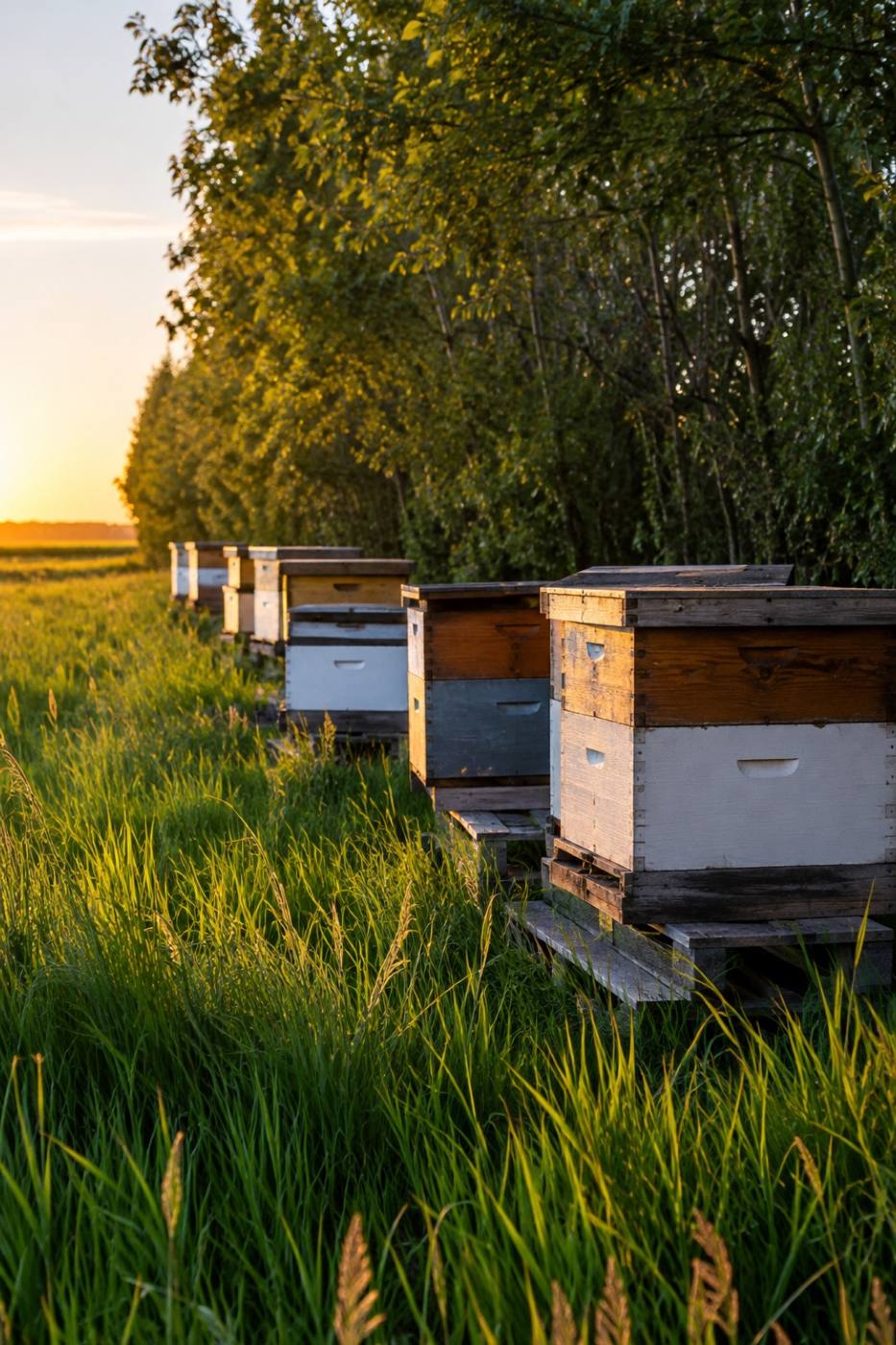
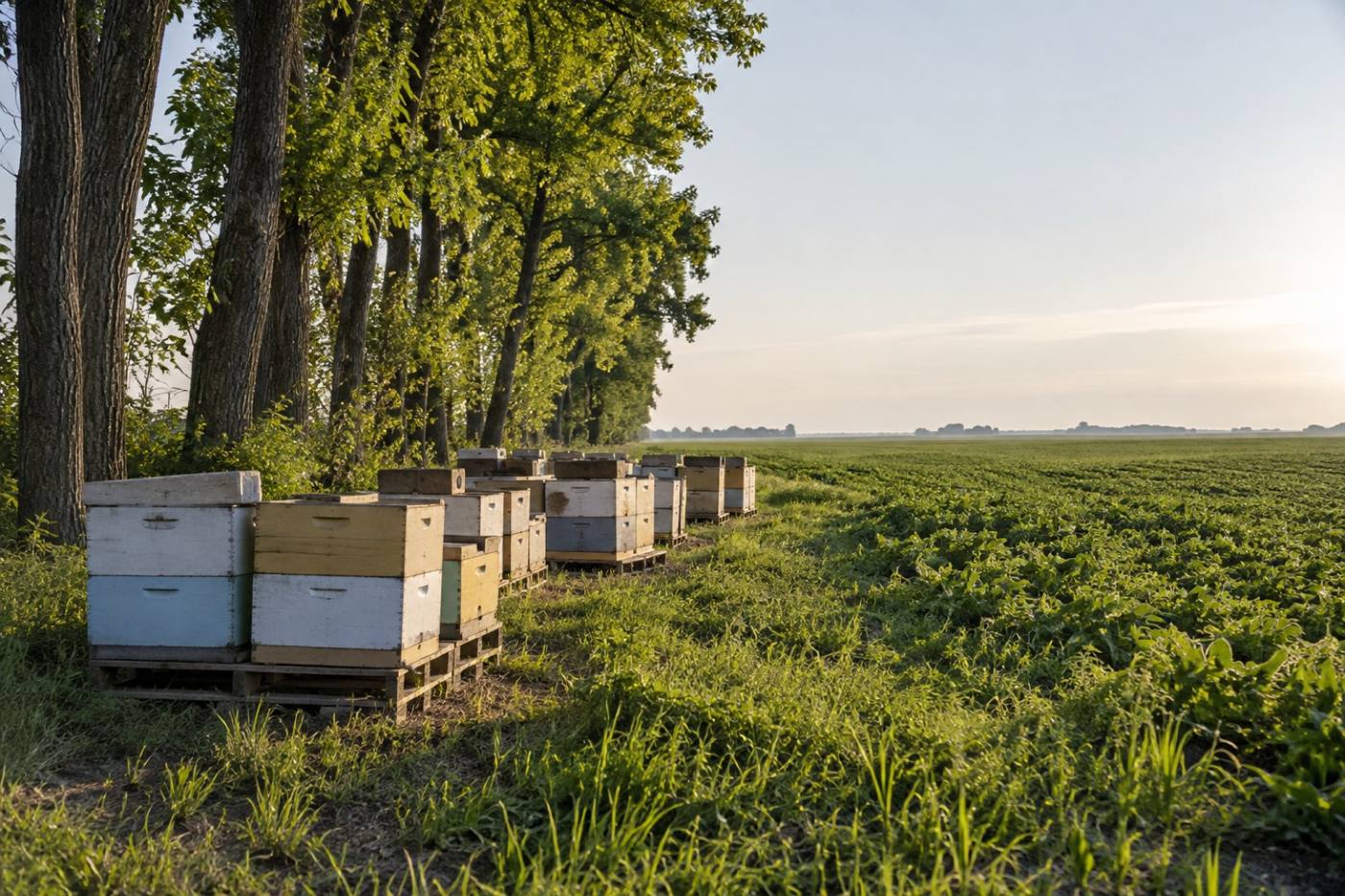
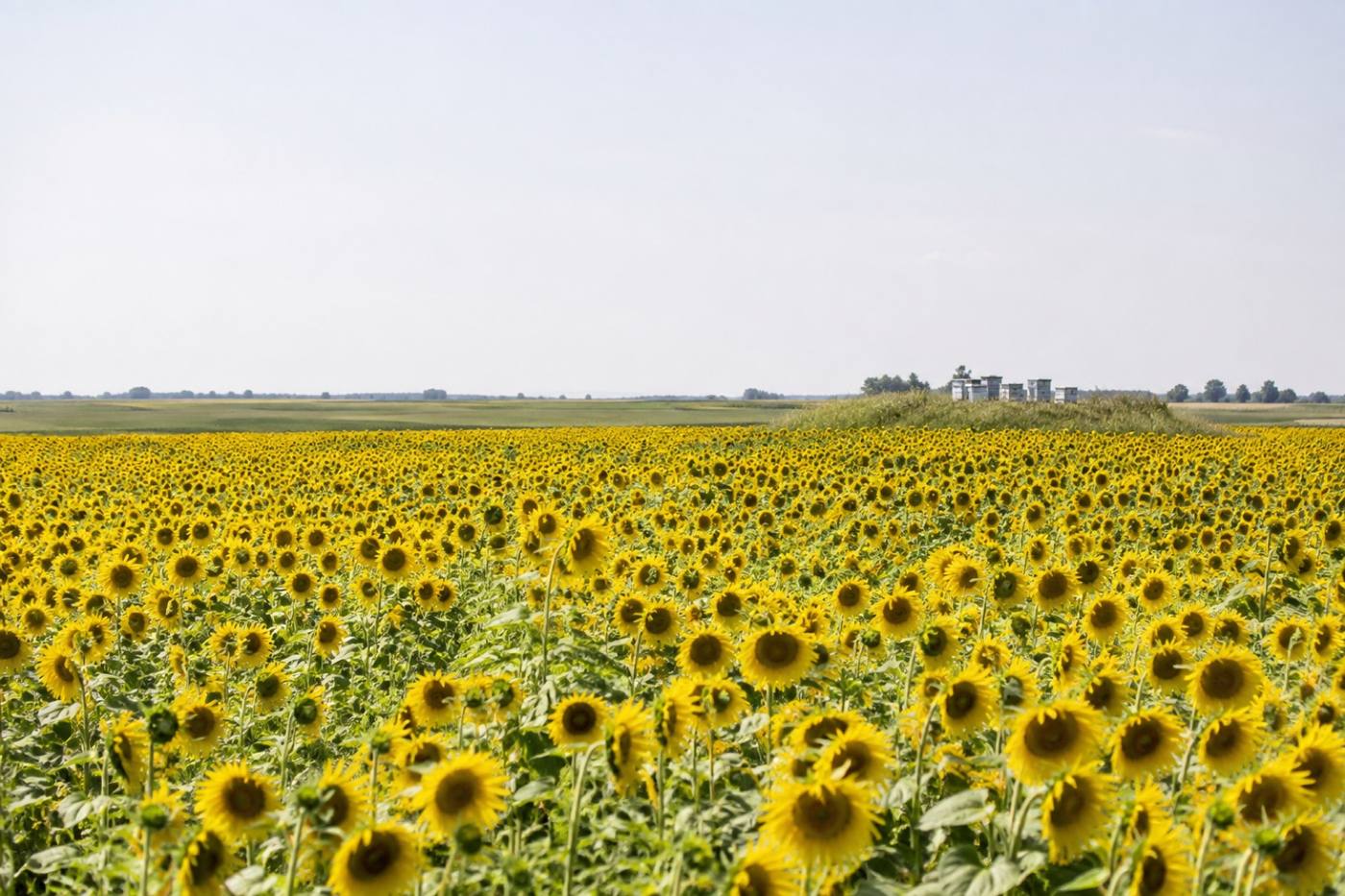
Yards back into the trees. Hives set in the open take the prairie wind straight at the entrance; hives set on a shelterbelt send foragers out into the crop instead of into the weather.
Entrances face the shortest line to the bloom. On a pivot corner or an orchard block, that line gets drawn and measured, not guessed at on delivery day.
A yard needs clean water and afternoon shade inside a short flight. Without both, foragers spend the day hauling instead of working your crop.
Pins sit clear of turn rows, spray routes and equipment paths, with a lane wide enough for a truck and a loader to work without crossing your field.
02 — Bloom timing
A pollination contract is dated to flowering, not to a calendar week. We build the schedule around the crop that is actually in the field and the window your variety runs — then hold the hives to that window.
Bars show the flowering window by crop; the amber tick marks peak bloom. Bloom dates shift with variety, heat units and spring moisture — the delivery window is set with you at contract, then confirmed against the field as the season moves.
03 — Hive strength
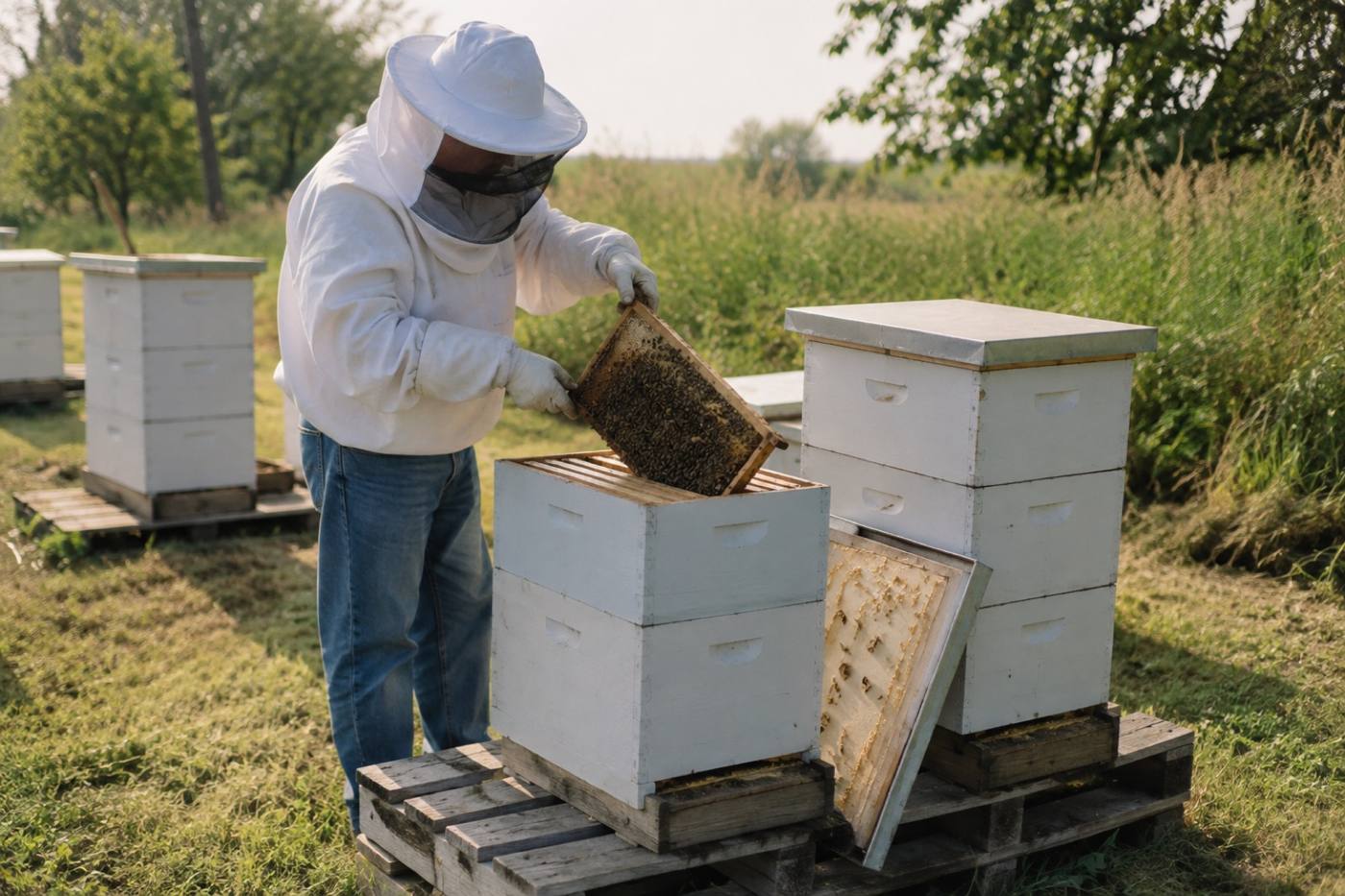
Open a hive before you sign for it. You are welcome in the yard — count frames of brood, find the queen, watch the traffic at the entrance, and see how the pallets are set long before anything moves to your field.
04 — Contracts & delivery windows
Every pollination contract follows the same order of work. You know the date the hives arrive, the count that is coming, and the date they leave.
We look at the ground before we quote: bloom source, windbreak, water, spray schedule, turn rows and access. The pins come back to you drawn on your own field.
Hives per acre is a function of crop, bloom length and how much of the field is actually flowering. The contract sets the window, the count and the delivery date.
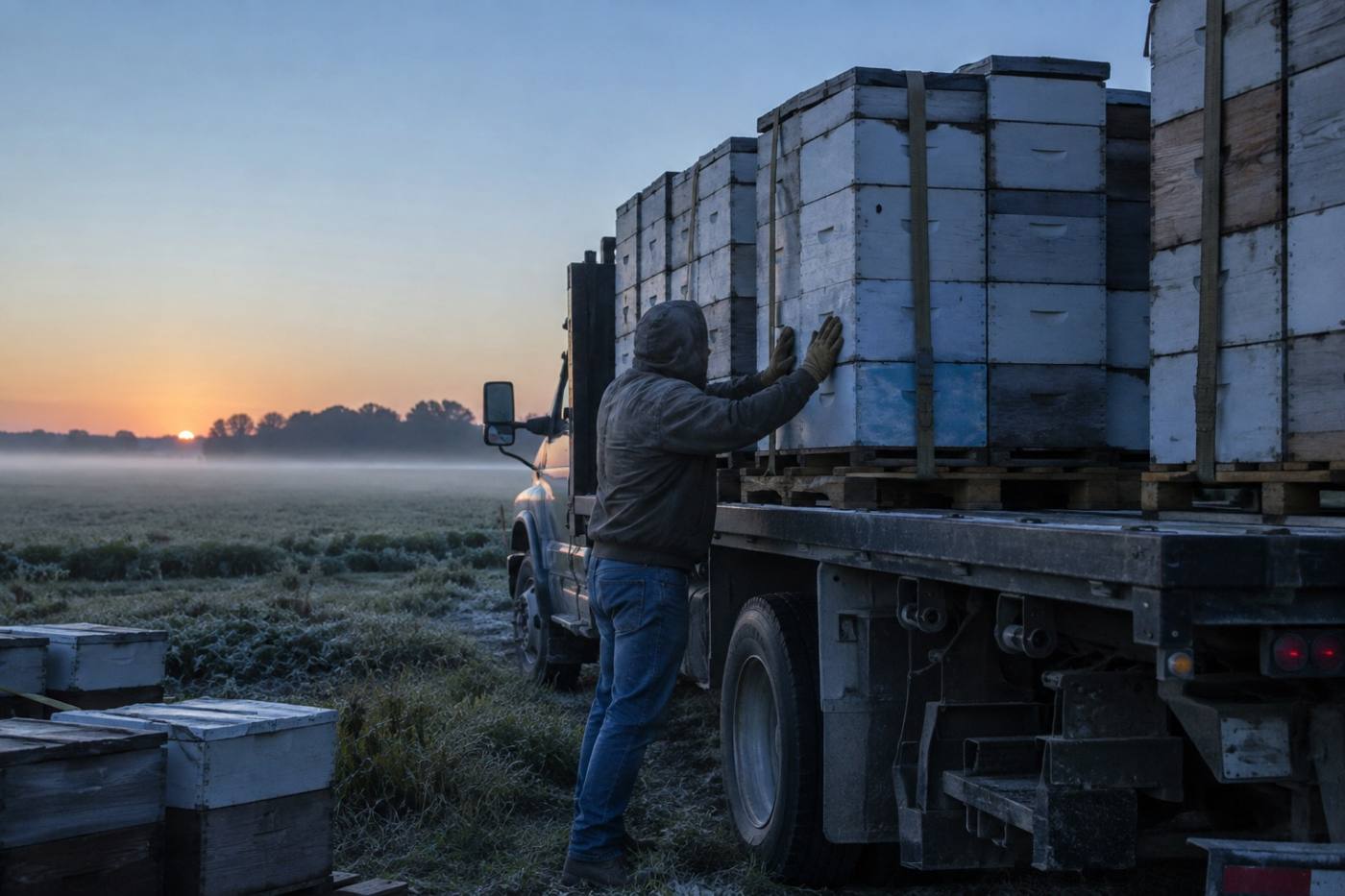
Hives arrive on pallets, set on the pins, entrances opened, water in place. Setup is part of a hive rental — you should not have to handle a box.
We watch the yards through the window, then pull the hives when bloom is done so they are not sitting in your crop after it has finished flowering.
05 — Plan your drop
Send the field details and we will come back with a placement plan, a hive count and a delivery window built around your bloom — for row crops, orchards and specialty seed fields across the valley.