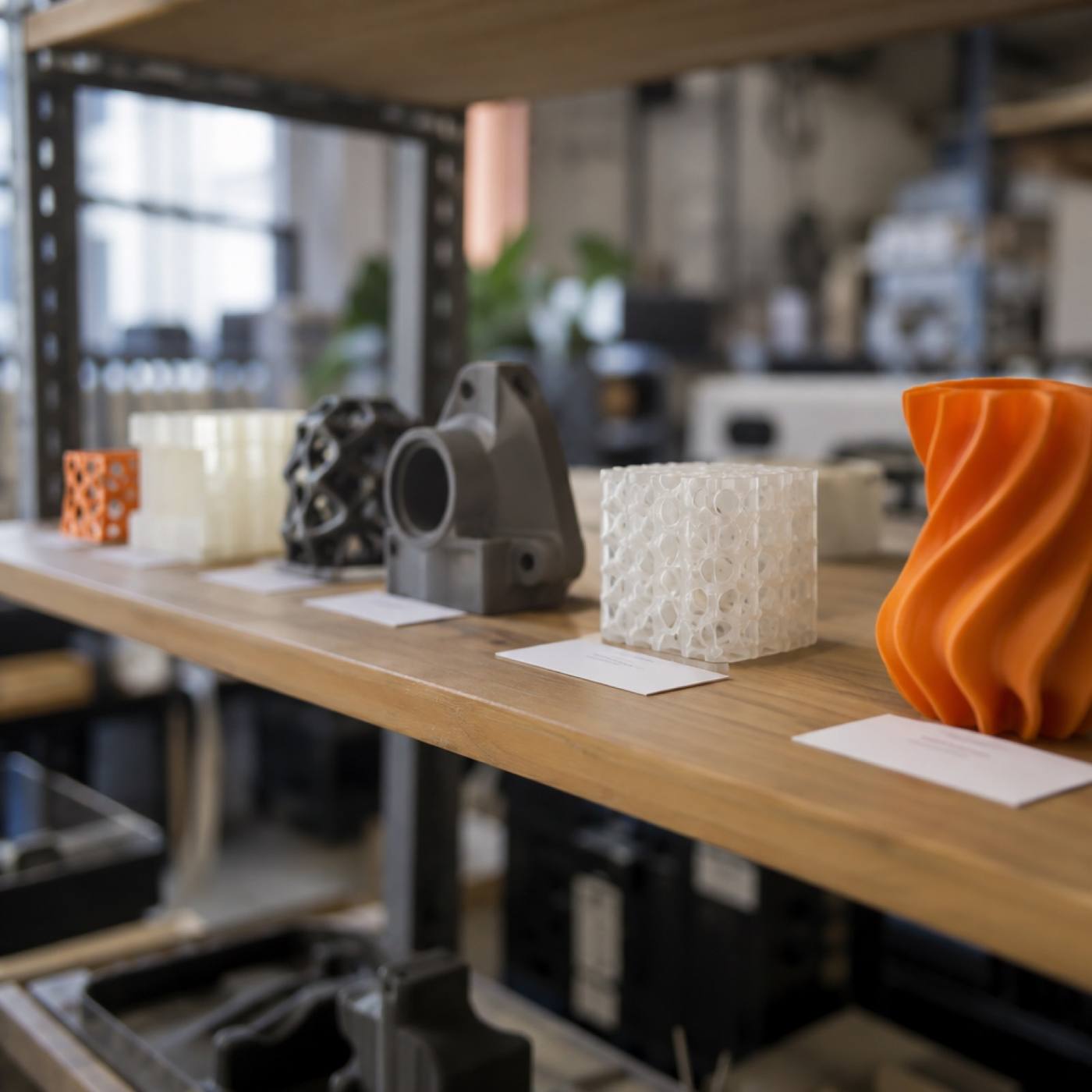
01
FDM printing
Fused deposition modeling for parts that have to survive. Fixtures, enclosures, jigs, brackets, and form-fit checks where toughness and cost matter more than a mirror surface.
Providence, Rhode Island · 3D printing service bureau
Forge & Layer prints FDM and SLA parts for designers, engineers, and small manufacturers — rapid prototypes, short production runs, design for additive manufacturing, and finishing. Every quote starts with the file you send.
The crib — every process in its own drawer
What we run
FDM and SLA under one roof, plus prototyping, small-batch production, design for additive manufacturing, and finishing. Material selection guidance comes with every quote — tell us the part's job and we'll say which drawer to pull.
Fused deposition modeling for parts that have to survive. Fixtures, enclosures, jigs, brackets, and form-fit checks where toughness and cost matter more than a mirror surface.
Resin for fine detail, smooth walls, and tight tolerances. Master patterns, small precision components, and models that need crisp features at a small scale.
Iteration speed is the point. Send a revision, we print it, you hold it in your hand, and we print the next one — cycles built for design reviews.
When injection molding is the wrong tool. Repeatable batches printed to one spec sheet, finished and packed — no tooling, no mold.
Bring the model and we work the geometry — wall thickness, orientation, supports, tolerances, and part consolidation — so the design suits the process instead of fighting it.
Support removal, sanding, surface work, and the finish you specify. A printed part that looks like it was made on purpose.
Material selection guidance
Every part arrives with a job to do. These are the questions we ask before a spool or a resin bottle comes off the shelf — and the answers we give you back in plain language.
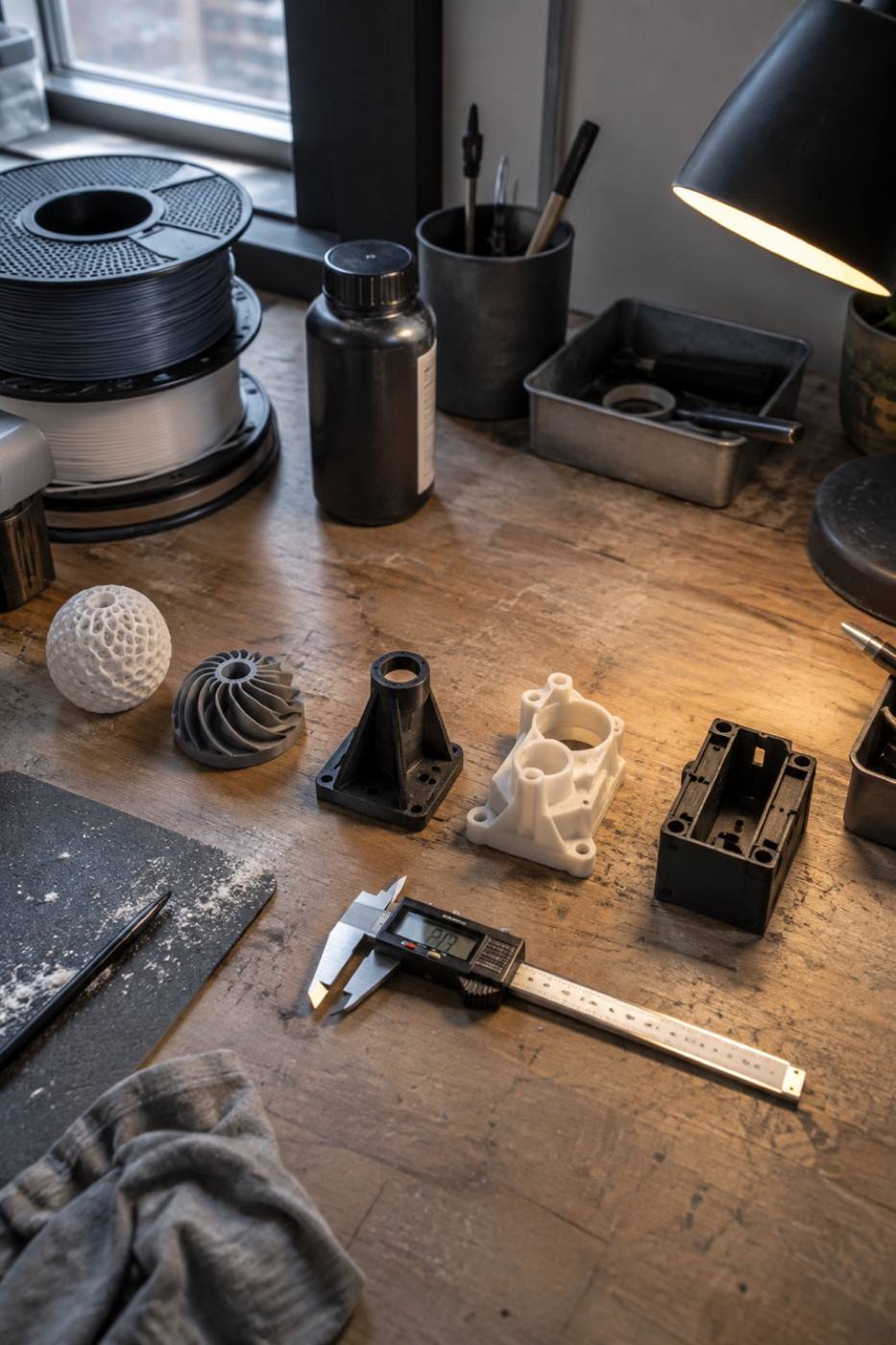
Parts that take a force get a different answer than parts that just hold a shape. Tell us where it bends, presses, or hangs and the material choice narrows fast.
Heat, sunlight, moisture, chemicals, repeated handling. Service conditions decide whether an engineering filament or a resin is the honest answer.
Snap fits, thin ribs, engraved features, and small bores push toward resin. Bulk and toughness push toward FDM. We'll say which way your part leans.
Layer lines visible or sanded back? Matte, satin, or paint-ready? Finishing starts as a material decision, not a final step.
One-off, a dozen, or a short production run — quantity changes orientation, nesting, and how the job is batched so every piece matches.
How it runs
Four steps, no mystery. The same sequence runs whether you're printing one prototype or a short production run.
Send the model with your process, material, finish, and quantity notes.
The geometry is priced against the process and material you choose, so you see the number before anything is printed.
Orientation, supports, and machine time are set. The part comes off the bed and goes straight into post-processing.
Finished, checked, and packed to the spec sheet you approved. Pickup in Providence, Rhode Island.
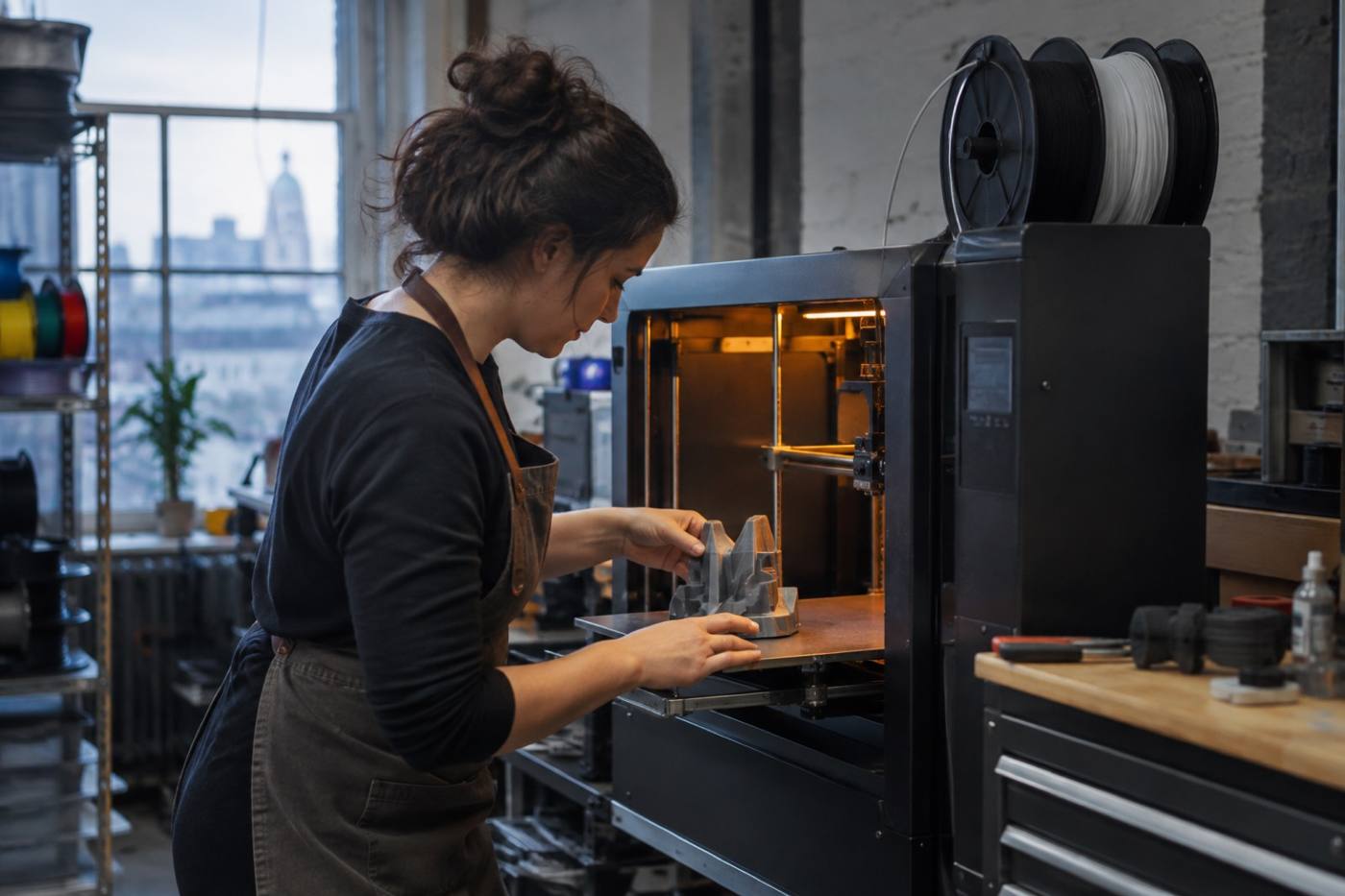
The job ticket
This is the ticket we pin to the crib. Give us the model and the job it has to do, and the quote comes back to you.
Still deciding?
Send the file even if the material isn't settled. We'll read the geometry, name the process that fits, and quote it — with the finishing and quantity you actually need.