Fern & Field Landscapes Request a consultation
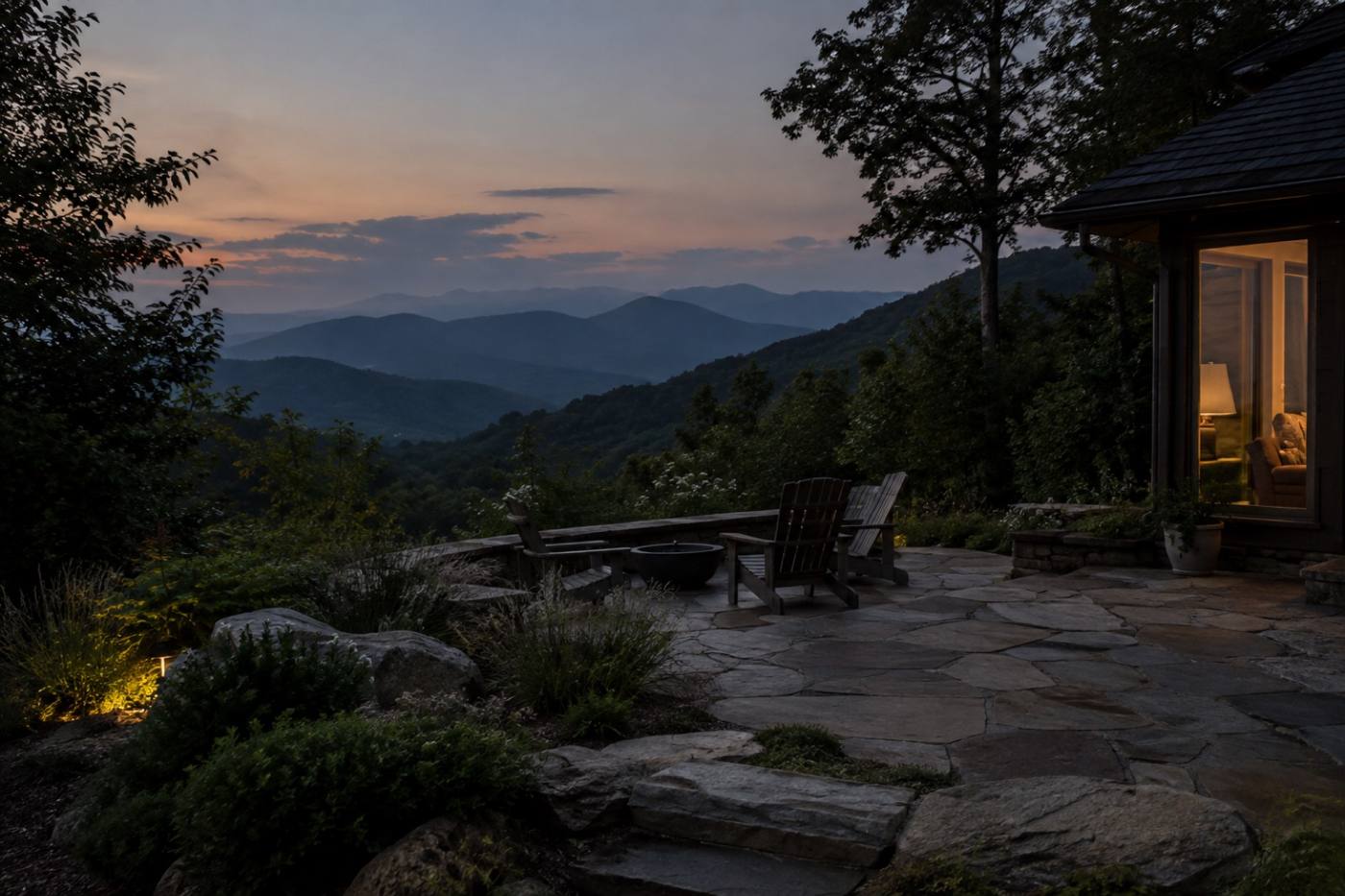
A finished stone patio at dusk with a mountain ridge behind it

Landscape design and seasonal tending

Gardens that belong to this ground.

Native plantings, stone patios and walls, and the tending that carries a garden forward — in Asheville, North Carolina.

  • 01Design
  • 02Planting
  • 03Stone
  • 04Tending

Now taking design consultation requests for the season ahead.

Request a consultation
Services
  1. Design

    Where the ground wants to go, drawn first. Grades, bed shapes, materials and plant palettes settled on paper before anything is dug.

    01
  2. Planting

    Native plants that belong to this ground — ferns, sedges, mountain mint, oakleaf hydrangea — set where they can go on filling in on their own.

    02
  3. Stone

    Patios, walls and steps laid from regional stone, set to the fall of the land so water goes where it should and the ground holds its shape.

    03
  4. Tending

    A garden is not finished in a season. We come back through the year for pruning, dividing, mulching and the small corrections that keep it true.

    04
The Work

The yard that asked
for less.

Two views of the same ground: the planting in its first season, and the stone that holds the slope.

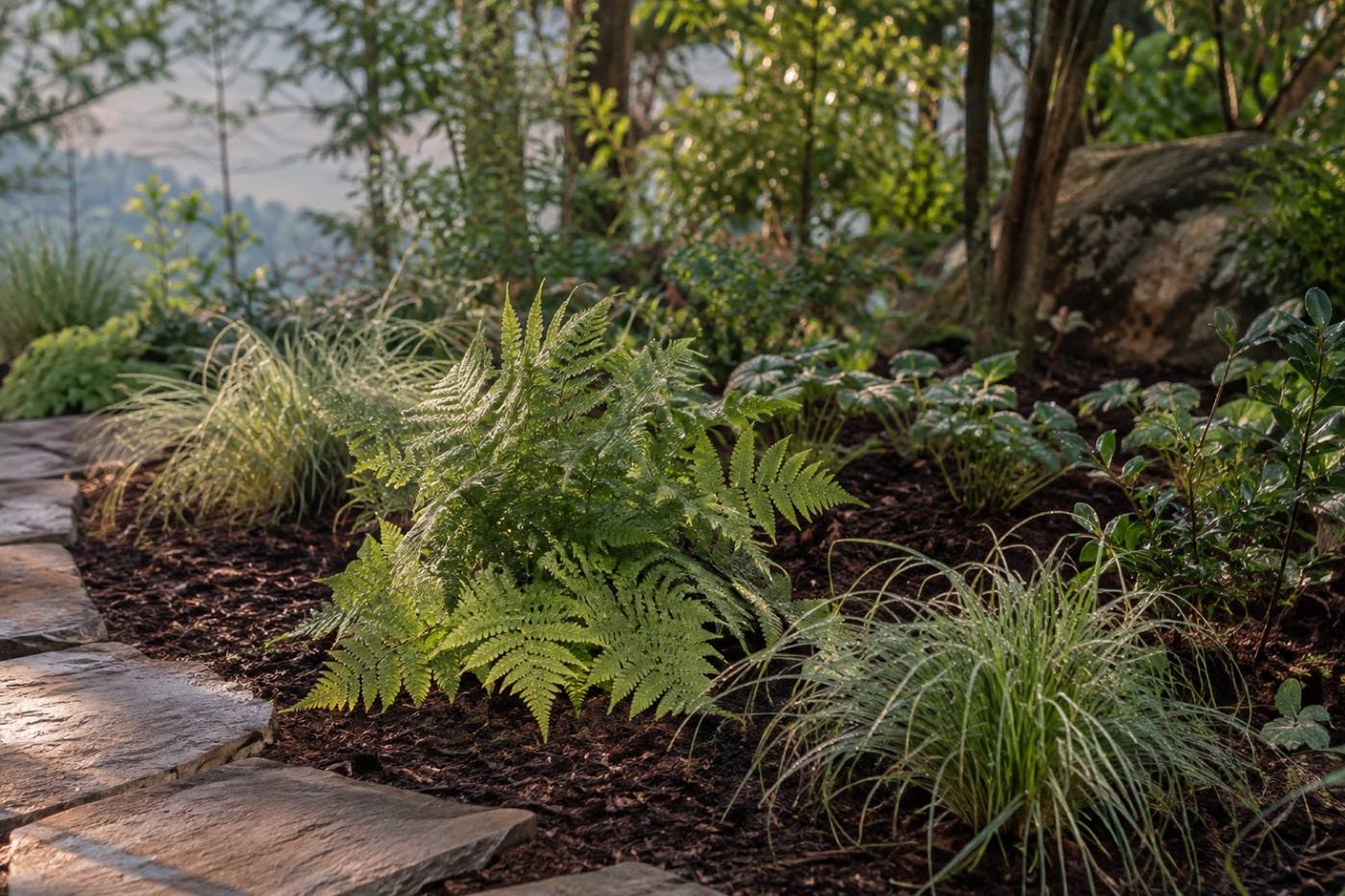
A newly planted native bed beside a stone path edge in morning light
01 — The planting

A garden is read slowly. The first season is mostly subtraction — the ground is cleared, the grade is corrected, and the shape of the beds is settled before anything goes in. What is planted afterwards is chosen to look like it arrived on its own.

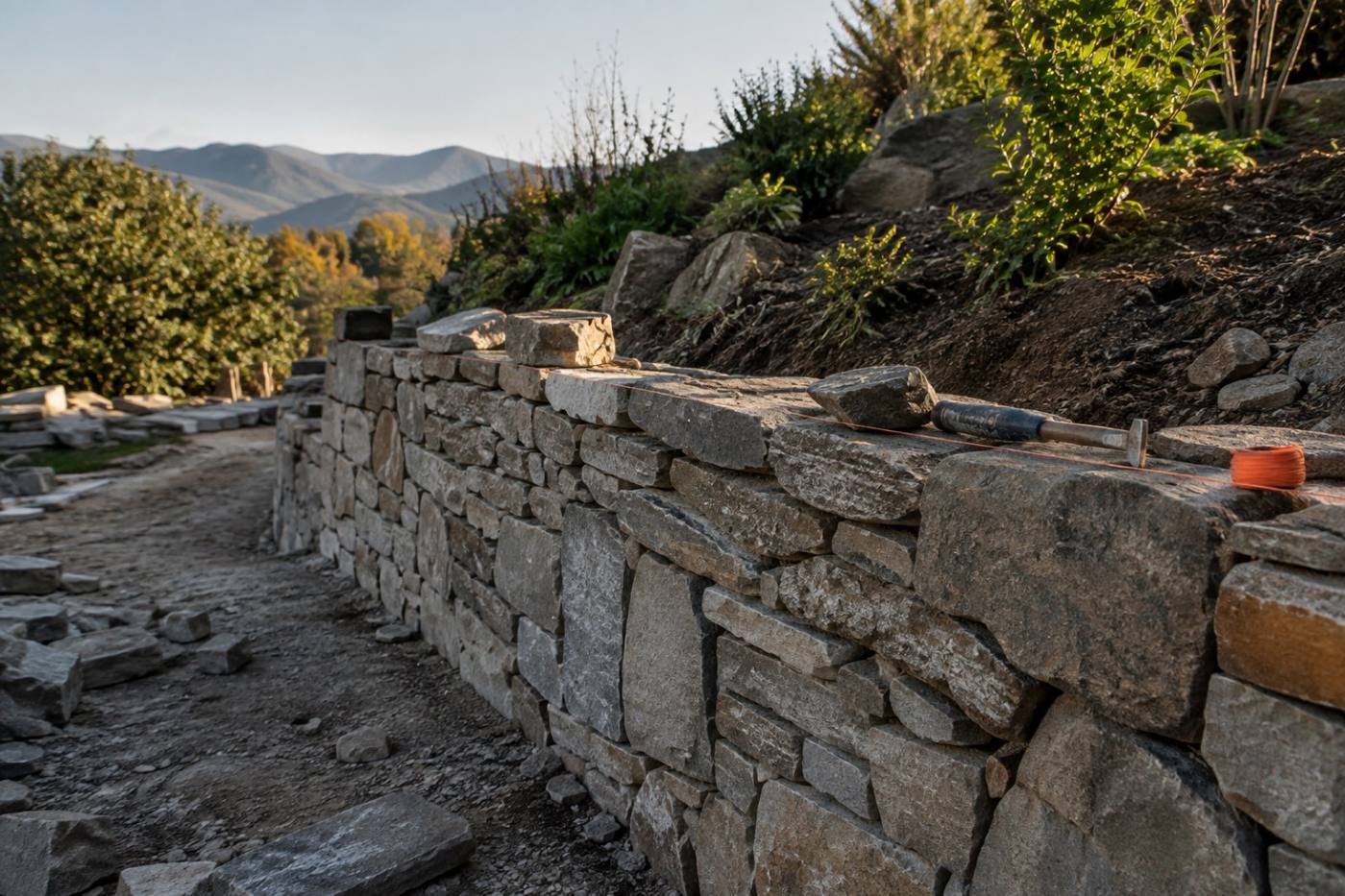
02 — The stone

Stone is chosen for the place it will sit in. Wall stone from the region, laid dry where water moves, and set with the fall of the slope so a patio still behaves after a hard rain. It is the part of the work that does not change with the season.

A dry stone wall in progress along a garden slope in late afternoon light
Tending

A garden is not finished in a season.

Seasonal maintenance carries the design forward: cutting back, dividing, mulching, and the small repairs that keep stone and paths true. The work changes with the weather, and the planting is allowed to go on filling in.

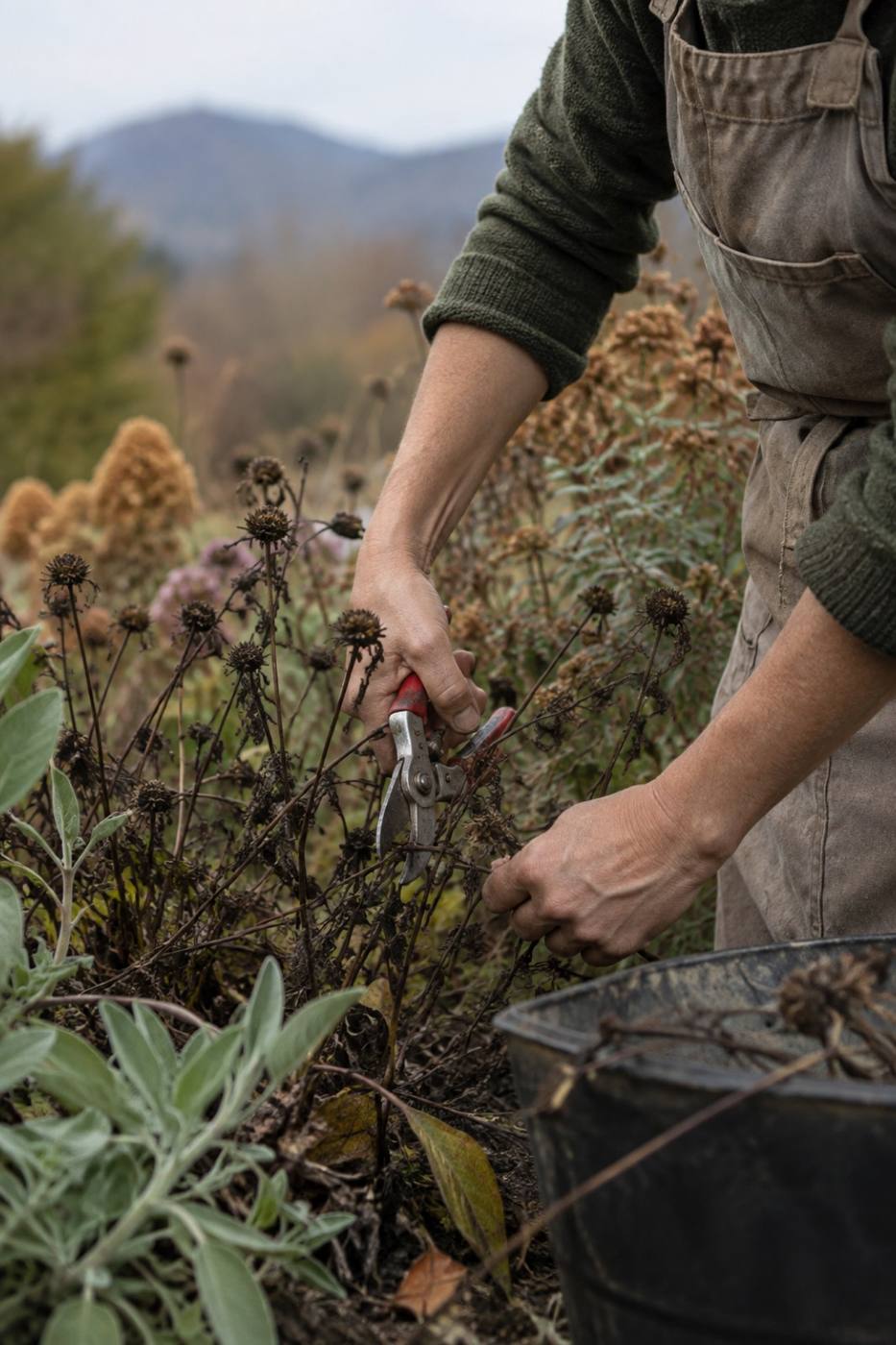
A gardener cutting back spent stems with hand shears in an autumn border
  1. Spring

    The beds wake. Cutting back what winter left, dividing what has crowded itself, and mulching before the heat settles in.

  2. Summer

    Holding the shape. Edges, water, and the light pruning that keeps a planting loose rather than tidy.

  3. Autumn

    The planting season. New natives go in now, while the ground is still warm and the rain has returned.

  4. Winter

    Structure shows. Stone, paths and grades are best judged and mended when nothing is hiding them.

How it begins

How a project begins.

Every garden starts with a walk. Tell us about your ground and we will come out, look at the slope, the water and the light, and take it from there.

01

A walk of the site

We meet you on the ground, walk it together, and talk about how you want to use it — where you sit, what you grow, what you would rather keep.

02

The design

A drawn plan: grades, bed shapes, stone, and a plant palette chosen for this site, this soil and this light.

03

Planting, stone, tending

We build what we drew — then return through the year for the pruning, dividing and mulching that keep it true.

Request a consultation

Consultation

Send us a note about your ground.

Design consultation requests start here. Tell us what you have — a bare slope, a tired lawn, a patio that no longer sits right — and we will arrange a walk of the site.

  • How the ground is shaped, and where the water goes
  • How you want to use it — sitting, growing, keeping open
  • What is already there that you would rather keep

Consultations are held on site, in Asheville and the valleys and ridges around it.

Request a design consultation Asheville, NC
A few lines is plenty to begin.