Cascade Industrial Automation
Ready Schedule
HMI-04 · Plant overview Running

Ready, running,
or nothing.

We program the controllers, integrate the robots, build the panels, specify the sensors, and hand your team an HMI they can actually run. Industrial automation for plants that cannot afford a maybe.

See the six services
Line 1 · overview Infeed PLC-01 Robot cell RC-02 Outfeed CV-03 State trend · last 12 hours
Services · six faceplates Running

Everything the line needs to run.

Six services on one console: what is programmed, what is wired, and what your own team will be able to operate without us.

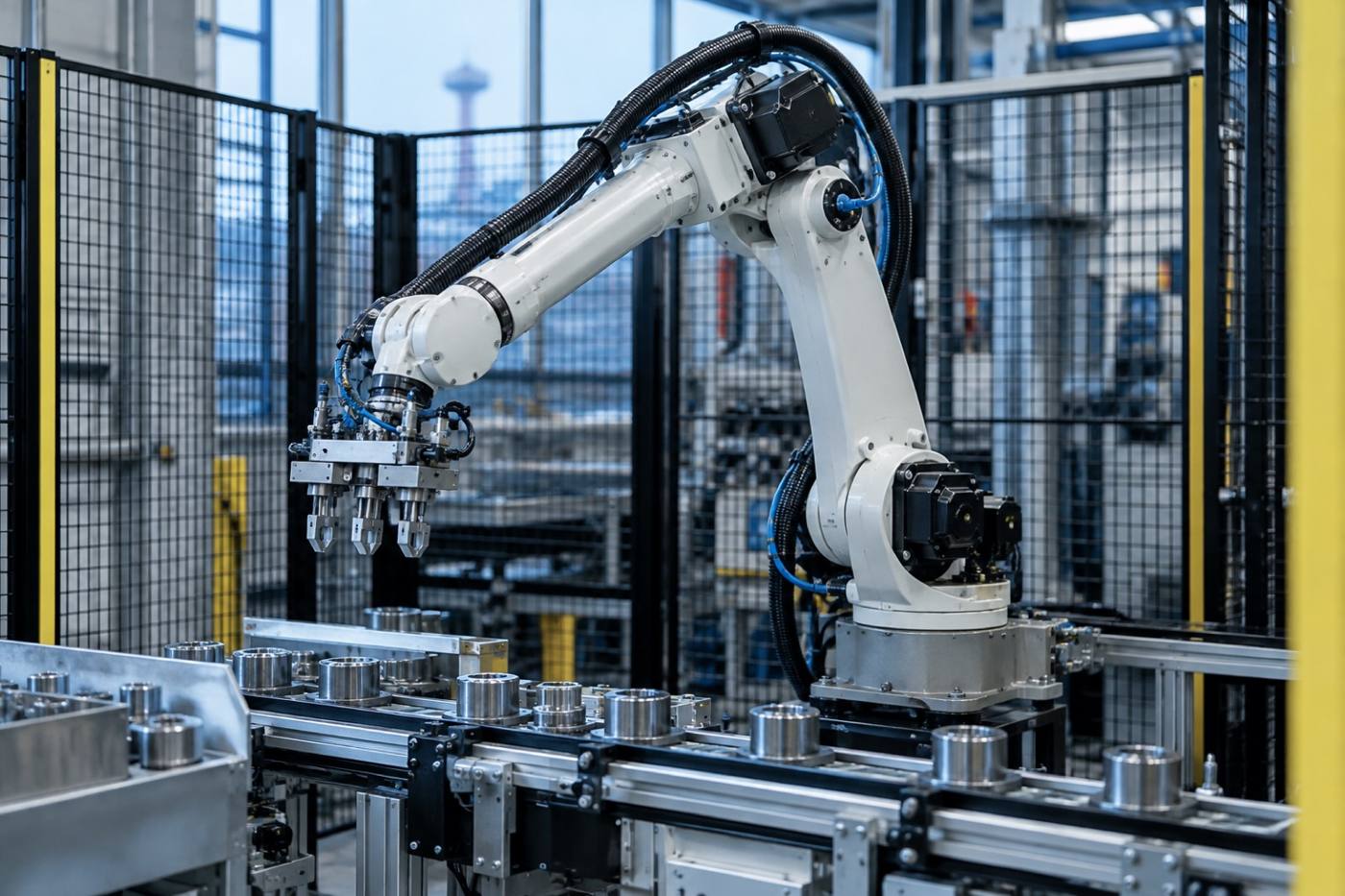
Robotic arm working inside a guarded cell on a production line
Robot cell · line side
FT-01 Running

PLC programming

Logic that matches the machine: sequencing, interlocks, fault handling and the notes your maintenance team will actually open at 2 a.m. Programs are versioned and handed over with the drawings they belong to.
  • Sequencing
  • Interlocks
  • Fault handling
  • Handover docs
FT-02 Running

Robotics integration

Cells, end-of-arm tooling, safety zones and the handshake between the robot and the rest of the line. We prove the cycle on your floor before it runs production.

  • Cell layout
  • End-of-arm tooling
  • Safety zones
  • Robot–line handshake
FT-03 Running

Control panels

Built, wired and labeled to match the drawings your maintenance team keeps.

FT-04 Running

Sensors

Detection, measurement and feedback, specified for the environment they sit in.

FT-05 Running

HMI

Screens operators read at a glance: state, alarms and the next action.

FT-06 Learning

Training

Your team learns the line, not just the manual, on your floor and your equipment.

Approach · three states Idle

Run is the state that pays. Idle is the one we fix.

Run

Every controller, cell and panel reports into one view. Alarms arrive with a cause instead of a number, and the screen tells your operators what the line needs next.

Idle

Clipboards instead of data. A cell waiting on a handshake nobody wrote down. A panel whose wires stopped being labeled two owners ago. This is the state worth changing first.

Ready

We scope the line, program the controllers, integrate the robots, build the panels and hand over a console your own crew can run. Then we train them on it, on your equipment.

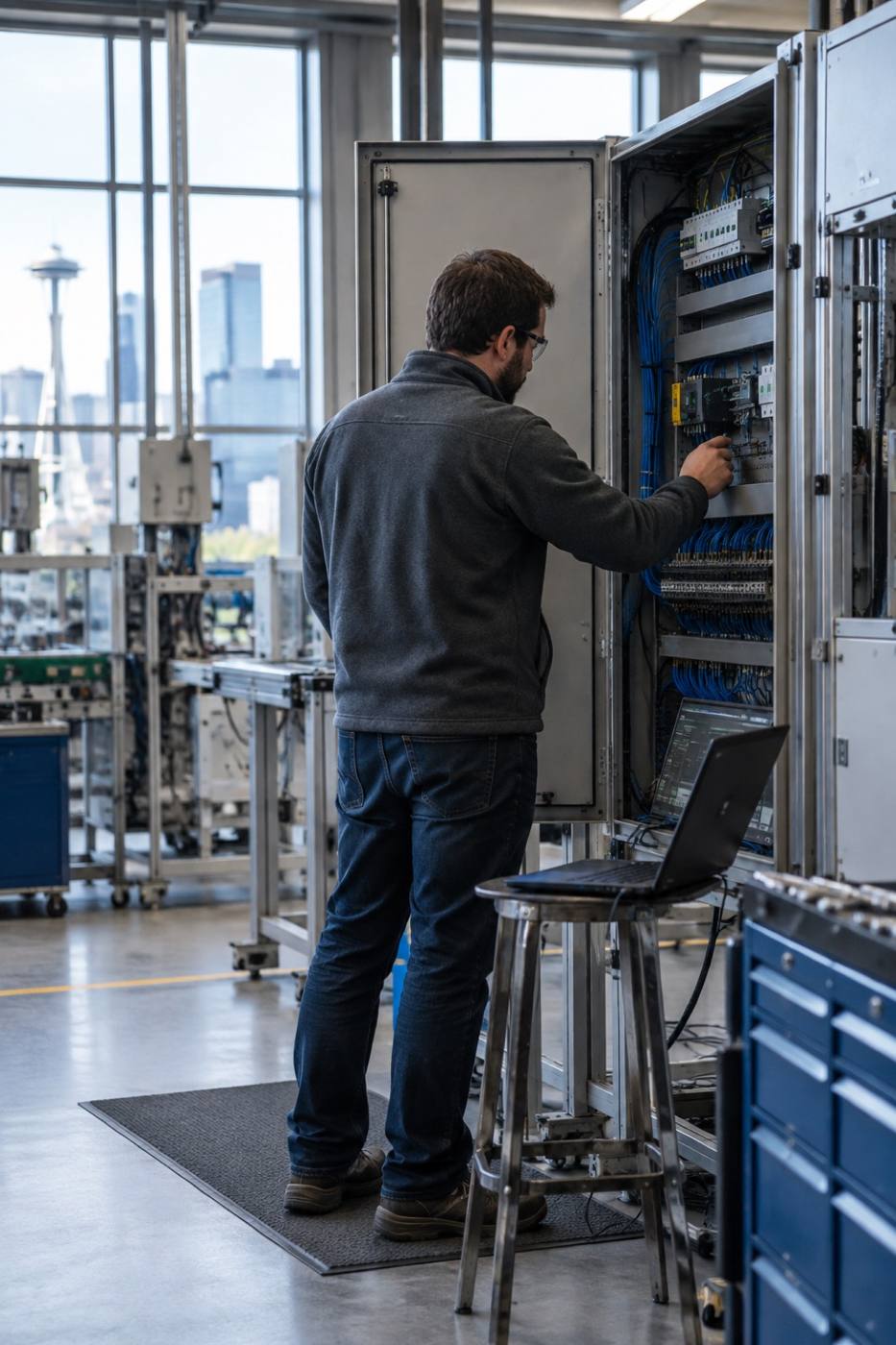
Automation engineer commissioning an open control cabinet from a laptop
Commissioning, line side · Seattle, Washington
Process · start to finish Ready

Five phases, one sequence.

You know what happens at each phase, who is on your floor, and what your team holds at the end: running equipment, current drawings, and the people who know how to keep it that way.

Book a consultation
  1. 01

    Scope

    Walk the line

    We list the machines, the controllers, the existing drawings and the outcome you need, then put the scope and the schedule in writing before work starts.

  2. 02

    Program

    Logic and screens

    Controller logic, robot handshakes, alarms and HMI screens, written against your sequence and versioned as we go.

  3. 03

    Build

    Panels and wiring

    Panels assembled, wired and labeled to match the drawings, then powered and tested before they ship.

  4. 04

    Commission

    Prove it on your floor

    Install and integration inside your production window: sensors, drives, network and safety, proven at full cycle before handover.

  5. 05

    Train

    Hand it over

    Operators and maintenance learn the line on your equipment, with the drawings and the logic they will need after we leave.

Next step · consultation Ready

Let us put the line in Run.

Tell us the machines, the site and the window you can give us. We come back with a scope and a commissioning schedule, not a brochure.

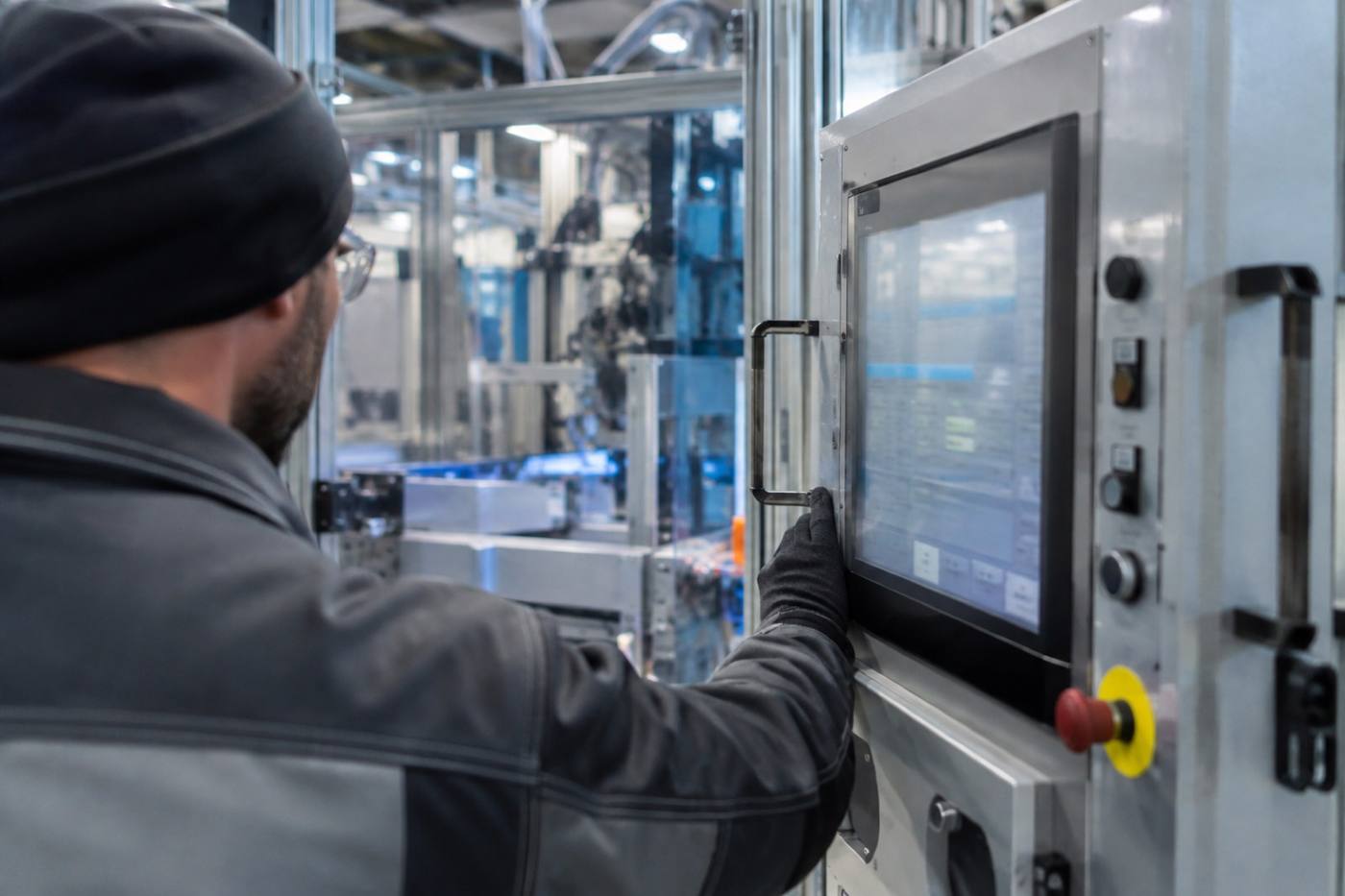
Operator using a touchscreen HMI panel on a plant floor
Operator terminal · plant floor